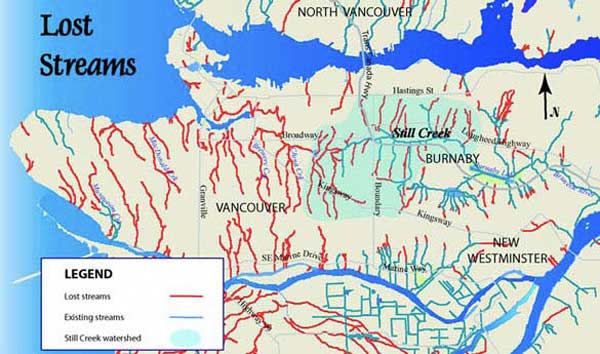
In Seattle there’s an amazing secret: real rivers flow beneath streets, parking lots and even schoolyards. But almost no one sees them! Many years ago people simply buried these streams in pipes and forgot about them. Along with the streams, the salmon nearly disappeared — the fish that return from the ocean each year to the little creeks where they were born to continue their families. Then ordinary city residents — moms, dads and especially children — turned into real nature detectives.
The mystery of the vanishing streams
Imagine you live in a city that once had more than 50 small rivers and creeks. Salmon swam in them right in the center of town! But then people decided the creeks got in the way of building houses and roads. They hid the water in underground pipes, covered the banks with soil and built anything on top — shops, schools, parking lots.
Years passed and city residents forgot that water still flowed beneath their feet. They forgot until they noticed something strange: the number of salmon in Seattle was getting smaller and smaller. These remarkable fish can find their way from the vast ocean back to the very stream where they were born. But how can they find home if it’s been buried under asphalt?
Scientists raised the alarm: if the salmon weren’t helped, they could disappear from the city entirely. But how to help? First they had to find all the hidden streams. That’s when real detective work began.
Neighbors become investigators
In different neighborhoods of Seattle groups of ordinary people began to form — teachers, retirees, students, parents with children — who decided to find all the lost creeks in their area. They called themselves “stream stewards” or “friends of the salmon.”
These volunteers did what scientists and city officials hadn’t had time to do. They studied century-old maps showing all the rivers. Then they walked the streets with these maps and tried to figure out: “Here used to be Thornton Creek. Where did it go? Ah — that pipe under the parking lot — that’s it!”
One group of neighbors in the Piper Creek area discovered that their beloved creek, where some salmon still remained, was being poisoned by dirty water. They traced the pollution’s source and found that people were pouring motor oil, detergents and paint into street drains (the very grates on the roads where rainwater goes). Everyone assumed that water just went away somewhere. But no — it flowed straight into the creek where the little salmon were trying to survive.
Colorful fish on the pavement
Then the children came up with a brilliant idea. Students from environmental clubs took paints and stencils to the streets. They began painting bright pictures of salmon and signs on the pavement near each storm grate: “Only rain! This water goes to the creek” or “Salmon live here — don’t litter!”
Imagine walking down a normal street and suddenly seeing a cheerful orange salmon with big eyes on the gray pavement. A nearby arrow points toward the storm drain. It’s like a little magical reminder: whatever you pour here will end up with the fish.
Children painted hundreds of these pictures across the city. They explained to passersby that storm drains are not trash cans but “doors to the creek.” Adults stopped, were surprised, took photos. Many didn’t even know there was a salmon creek in their neighborhood!
One girl named Emma later recalled: “When I painted a salmon near our school, an elderly woman came up and asked, ‘Why are you doing this?’ I explained about the creek under the ground. She didn’t believe me! We went together to the park where the creek comes to the surface and she saw real salmon. The woman cried with joy — she’d lived here 40 years and didn’t know they were here.”
How to bring a river back to life
But painting fish was only the beginning. The “stream stewards” decided to do more — they started restoring the creeks themselves. It was hard work, but very rewarding.
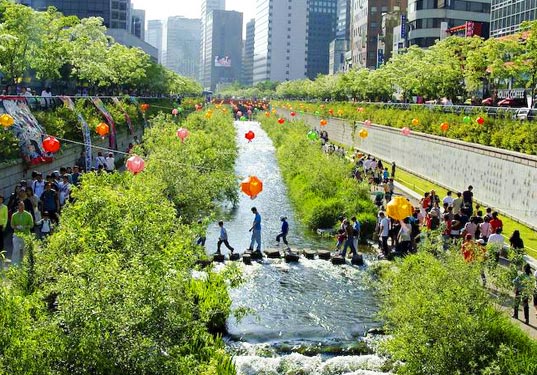
In some places volunteers arranged with shop and parking lot owners to remove part of the asphalt and “free” the creek. Imagine people’s surprise when they found living, burbling water beneath the gray concrete! Volunteers planted trees and shrubs along the newly exposed banks — salmon like shade above the water and leaves and insects falling in (that’s their food).
Children helped clean trash from the creeks, build small rock weirs (so the water would slow and make it easier for salmon), and count fish during their return from the ocean. Students kept special observation journals: how many salmon returned this year, what size they were, whether they were healthy.
In the Longfellow Creek neighborhood a group of teenagers even created a “salmon patrol” — they stood watch by the creek during the months when fish return to spawn, making sure no one littered or frightened the salmon.
The city learns to live with nature
Gradually something surprising began to happen in the city. People started thinking differently. Many used to believe that a city is for people and nature is somewhere else — in forests and mountains. Now Seattle residents realized that nature lives right here, underfoot, even if you can’t see it.
City officials changed too. They began to listen to these volunteer detectives. When planning a new road, they now checked: “Is there a hidden creek here? Will we harm the salmon?” New rules were created: construction must leave “green corridors” for creeks, and you can’t simply bury water in pipes.
Some companies began funding creek restoration. Schools added lessons where children studied their neighborhood creek — its history, its inhabitants, its problems. A class would “adopt” a stretch of the creek and care for it.
Today in Seattle you can see amazing things: salmon spawning right in the city center, under bridges and near skyscrapers. In some neighborhoods where 20 years ago creeks were considered “dead,” clean water now flows again, and in autumn silver fish appear — returned from their long ocean journey.
Little guardians of big nature
The story of Seattle’s “salmon detectives” teaches an important lesson: you don’t have to be a grown-up scientist or a wealthy person to help nature. Sometimes it’s enough to be attentive, curious and caring.
The kids who painted fish on the pavement didn’t just make pretty pictures. They helped adults remember that a city is more than buildings and cars. It’s also a living place where rivers run (even if hidden), where fish are born, where nature tries to survive among concrete and asphalt.
Many of those children who began by painting salmon and cleaning creeks grew up to become ecologists, teachers and urban planners. They continue to care for their creeks. Their younger brothers and sisters have picked up the baton.
So if you’re ever in Seattle and see a painted salmon on the sidewalk — know this: it’s the trace of a big, kind effort. It’s a sign that somewhere very near, perhaps right under your feet, a secret river flows. And thanks to the efforts of ordinary people, amazing fish that remember the way home still swim in it.