In 2001, when the ground under Seattle shook so hard that people could not stand, something surprising happened. Buildings did not collapse. Glass did not fall from skyscrapers. Bridges did not fail. Reporters from other cities came and asked, "How did you manage this?" Seattle residents shrugged — they themselves did not know that their city had kept a secret long forgotten. That secret was hidden in dull building-code documents written by people who had once been mocked.
Engineers Called Alarmists
In 1949 Seattle experienced an earthquake. It was not the strongest in history, but it was scary enough to frighten everyone. Eight people died, many buildings developed cracks, and people were afraid to enter their homes for weeks. After that, a group of engineers gathered and decided: "We must change the building rules so this doesn't happen again."
The leader among them was a man named John Singleton. He worked in the city administration and loved mathematics. Singleton calculated and recalculated how walls, foundations, and roofs should be designed to withstand ground shaking. He devised rules that many builders considered too strict and too expensive. "Why make walls so thick?" they asked. "Why use so much steel inside concrete?" Singleton replied, "Because the next earthquake could be stronger."
Many mocked him and his colleagues. Newspapers wrote that the engineers were "panicking without cause" and "making people spend unnecessary money." Construction companies complained that the new rules made their work too difficult. But Singleton and his team did not give up. In 1953 Seattle adopted some of the strictest building codes in America. Later, everyone forgot about those rules — they simply became a normal part of city life.
Fifty Years of Quiet
Years passed, then decades. The engineers who wrote those rules grew old and retired. John Singleton died in the 1980s, and few remembered his name. New builders learned from textbooks that included those strict rules, but they did not know why the rules had been created. For them it was simply "the way things are done in Seattle."
Meanwhile, other American cities built differently. In California, where earthquakes were more frequent, there were strict codes too, but somewhat different. In cities that had not had earthquakes for a long time, construction was cheaper and faster. Seattle seemed like an odd city with its "excessive caution."
But the buildings constructed under Singleton's rules stood and waited. They waited for the moment that would prove their creators right.
The Day the Earth Remembered
On February 28, 2001, on an ordinary winter day, the Nisqually earthquake struck (named for the place where it began). The magnitude was 6.8 — very strong. The ground shook for 45 seconds, which feels like an eternity when you cannot stand. People in offices grabbed desks, cars on the roads bounced like toys.
And then a miracle happened that no one expected. Tall buildings downtown swayed like trees in the wind but did not break. Old brick buildings built before 1953 developed cracks, but buildings constructed after the adoption of the new rules remained intact. Bridges held. Schools did not collapse.
One person died — of a heart attack brought on by fear. It was a tragedy, but engineers from other cities could not believe their eyes: in an earthquake of that strength, hundreds typically die and dozens of buildings fall. That did not happen in Seattle.
The Secret Revealed to the World
After the earthquake, scientists and engineers came to Seattle from around the world. They walked the streets with notebooks, photographed buildings, and measured cracks. They wanted to understand, "How did you do this?"
Someone then remembered the old 1953 codes. Dusty documents were pulled from the archives and studied. It turned out that John Singleton and his team had anticipated just such an earthquake. Their calculations were so precise that buildings built 50 years earlier behaved exactly as they had predicted.
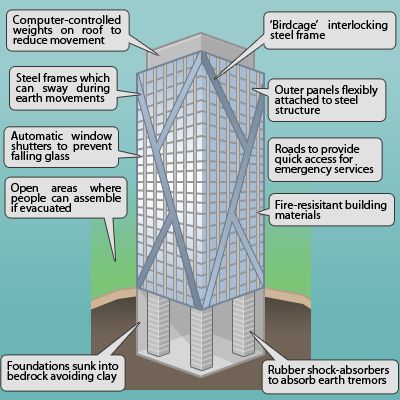
One detail proved especially important: Singleton's rules required using many steel bars inside concrete, arranged in a particular way. This made walls flexible — they could bend without breaking, like a tree branch. In other cities, steel was often economized on, leaving structures rigid — and they snapped like a dry stick.
Another key idea: the rules required the lower floors of buildings to be especially strong. Singleton understood that if the ground floor failed, the whole building would collapse. So in Seattle, the first floors were almost twice as strong as what codes in other cities required.
A Legacy That Travels the World
After 2001, Seattle's building rules became famous. Engineers from Japan, New Zealand, Chile, and other earthquake-prone countries came to learn. They copied Singleton's ideas and incorporated them into their own codes.
Today, when new buildings are erected in hazardous zones, they often use principles born in 1950s Seattle. The ideas of flexible walls, strong ground floors, and proper placement of reinforcing steel travel the globe, saving the lives of people who have never heard of John Singleton.
In Seattle itself, a small memorial plaque was installed in 2005 at the city administration building. It lists the names of the engineers who created the 1953 rules. The plaque's inscription ends with the words: "They protected a future they did not see."
Interestingly, modern Seattle engineers continue the tradition — they make codes even stricter, preparing for the "Big One" that scientists predict could happen within the next 50 years. They know they may also be called alarmists. But they remember John Singleton's story and understand: sometimes the most important gift is the one people appreciate only many years later.
Lessons of Invisible Care
The story of Seattle's forgotten rules teaches an important lesson: not all care is immediately visible. When parents say "wear a hat" or "don't run on the ice," it can seem tedious and unnecessary. But it is care for the future that becomes clear later.
John Singleton and his colleagues spent years on calculations and debates, knowing their work would be appreciated (if at all) only after their deaths. They received no awards or fame in life. But when thousands returned to intact, undamaged homes in 2001, when children walked into schools that stood firm the next day, when parents did not lose their children beneath rubble — that was Singleton's victory.
Today Seattle is one of the safest cities in the world in terms of earthquake preparedness. Tourists visit, photograph the Space Needle and the beautiful waterfront, unaware that under their feet and around them is the result of people who cared for strangers in the future. That is a true legacy: not monuments and museums, but lives saved when the earth trembles again.