Imagine your job is serving tea to passengers and making up beds on a train. Boring? Now imagine that at the same time you secretly help entire families escape injustice and find a new life. That’s how African American Pullman porters in Seattle lived — people who smiled at passengers by day and changed the history of a whole city by night.
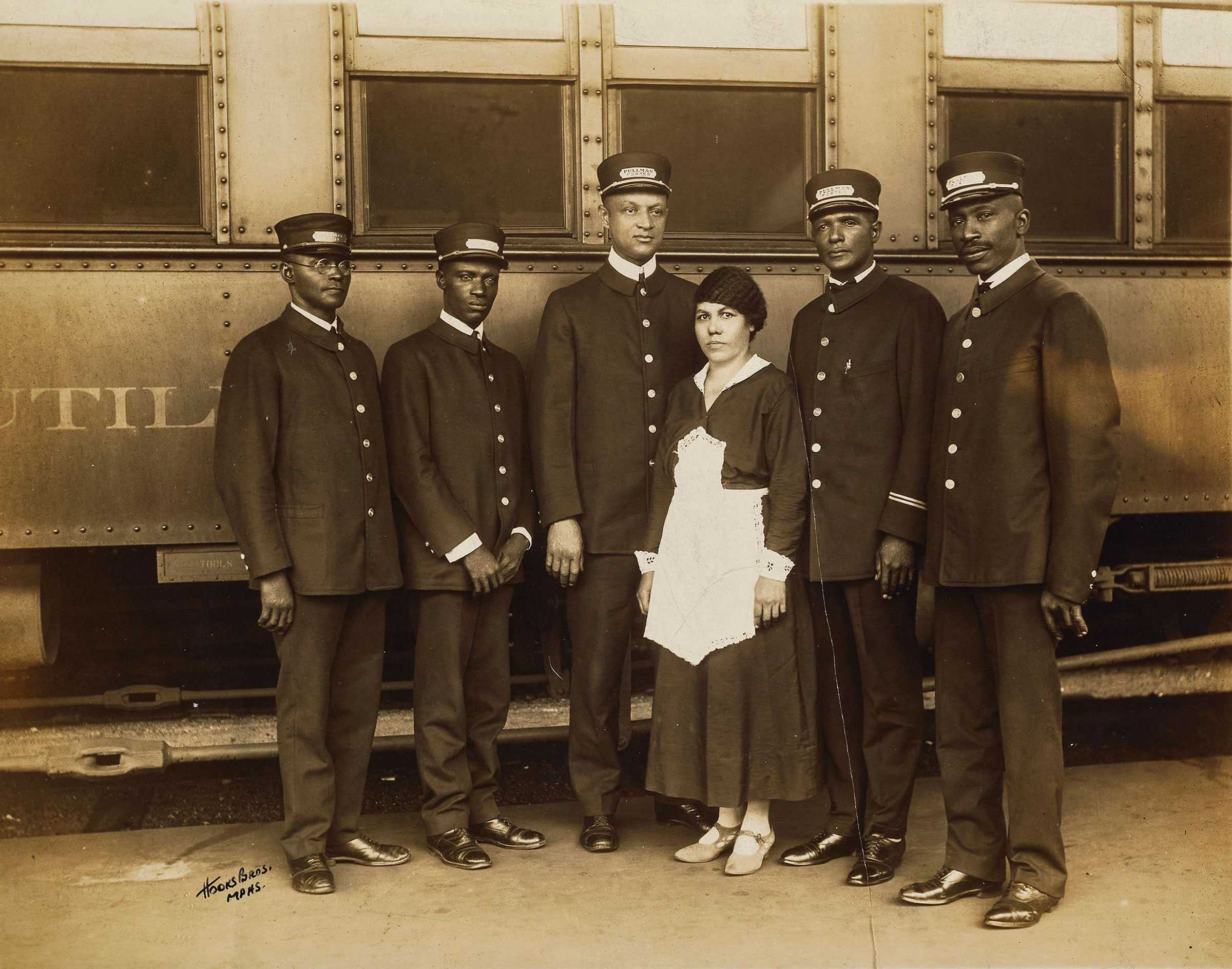
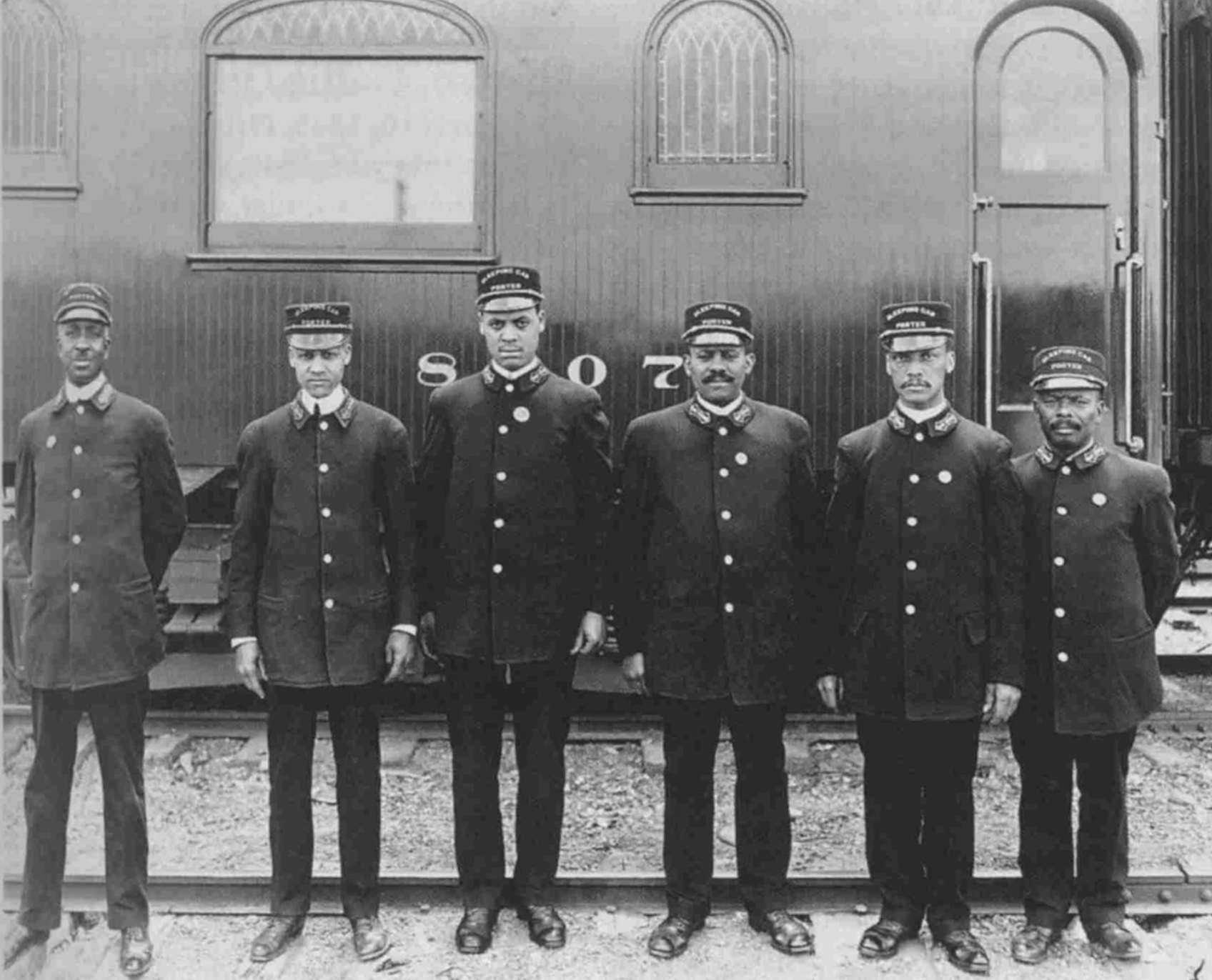
In the early 1900s African American men worked as porters in the Pullman sleeping cars. They were called "Pullman porters." They traveled across America serving wealthy passengers: bringing food, polishing shoes, making beds. But they had another, secret job passengers didn’t know about. These porters turned trains into a moving network of assistance for African Americans seeking a better life.
The train as a secret mail
Porters had a unique superpower: they were constantly moving between cities. While a train raced from Chicago to Seattle, a porter might hear in one city that a factory in Seattle needed workers, and in another meet a family desperately searching for work. He would remember, write down, and pass along the information.
Porter George worked the Chicago–Seattle line in the 1920s. He said he always carried a small notebook in his pocket. It contained church addresses, names of people who could help with housing, names of factories that didn’t refuse African Americans. When a Black passenger boarded, George would find a quiet moment to ask, "Are you heading out to look for work?" And if the answer was yes, he would take out his book.
Porters also brought newspapers to Seattle from other cities — especially African American newspapers like the Chicago Defender. At that time life was very hard and dangerous for Black people in the South. The newspapers told the truth about violence and injustice, but they were banned in the South. Porters hid papers in their bags and distributed them secretly. That way people in Seattle learned what was happening across the country and could warn relatives: "Don’t go back to the South, it’s safer here."
A school of politeness and patience
Being a porter was incredibly demanding, not only physically. The Pullman Company required porters to always smile, never argue with passengers, and to work up to 20 hours a day. They weren’t even called by their names — everyone was simply called "George" (after the company’s founder George Pullman). Imagine: you work for years and people don’t even know your name!
But porters learned to use that. They were invisible to passengers — and an invisible person can hear and see a great deal. Passengers talked in front of them about jobs, politics, and opportunities. Porters listened and remembered. One later recalled: "White passengers spoke in front of us as if we weren’t in the room. We learned which companies were hiring, which neighborhoods were improving, where new houses were being built."
Porters’ pay was tiny — about $60 a month (today roughly equivalent to $1,000). They survived on tips. But even on such wages many porters managed to send their children to college. Historians call the Pullman porters "builders of the Black middle class" — thanks to this work thousands of African American families could afford education for their children.
The first union and the fight for justice
In 1925 a porter named Asa Philip Randolph did something revolutionary: he formed the first union for African American workers — the Brotherhood of Sleeping Car Porters. It was an incredibly brave move. At that time it was very difficult for Black people to create organizations, and the Pullman Company tried to fire anyone who joined the union.
In Seattle porters secretly met in a church on Madison Street. They came late at night after shifts and planned how to win justice: a normal workday, real names, decent pay. One organizer in Seattle, E. D. Nixon, later said: "We learned to organize on the trains. The train taught us discipline, patience, and how to work together."
The struggle lasted 12 years. The Pullman Company refused to talk to the union. But the porters didn’t give up. They used their network — passing information from city to city, supporting one another, raising funds. And in 1937 they won! The Pullman Company recognized the union. It was the first major victory of the African American labor movement in the United States.
A legacy that changed Seattle
Porters did more than help people find jobs. They created a whole network of organizations in Seattle to protect African American rights. Many porters, returning home to Seattle, became community leaders. They organized churches, schools, and clubs. They taught people how to fight for their rights peacefully but persistently.
Historians believe the porters’ experience directly influenced the civil rights movement of the 1950s–60s. The methods porters used — patience, organization, peaceful protest, building support networks — became a foundation for the struggles led by Martin Luther King and other leaders.
Seattle still remembers these heroes. In the Central District, where many porters lived, there is a museum dedicated to African American history. Their uniforms, notebooks, and photographs are preserved there. One exhibit shows a porter’s small black bag — inside are newspapers, addresses, and letters. It’s a reminder that an ordinary work bag was actually a bag of hope.
Why it matters to remember
The story of the porters teaches an important lesson: even when you seem powerless, you can change the world. Porters weren’t rich or famous. Their work was seen as simple and invisible. But they used what they had — the ability to travel, to listen, to remember, to help — and turned it into power.
They also showed that true strength lies in patience and organization. They fought for their rights for 12 years without giving up. They understood that to win you must work together, support one another, and not lose hope.
Today, when you ride a train or the subway, think of those porters. They turned an ordinary train into a machine of change. They proved that any job can become significant if done with the purpose of helping others. And they remind us: sometimes the greatest heroes are the ones nobody notices until you learn their story.