Imagine working all day, helping people, trying your best — but when you get home you still don't have enough money to buy decent food for your children. Sounds unfair, right? That’s how thousands of people in Seattle lived: working in fast-food restaurants, stores, and hotels. They cooked burgers for others but ate the cheapest noodles themselves. They cleaned hotel rooms but rented tiny spaces where barely a bed would fit. And one day these people decided: enough. They came together and changed their city in a way the whole world noticed.
When the paycheck feels like a joke
In 2013, Seattle’s minimum wage was about $9 an hour. That means if someone worked a full day — eight hours — they made roughly $72. Sounds okay? But here’s the problem: an apartment in Seattle cost around $1,000–$1,200 a month. Food for a family — another $400–$500. Transport, clothes, medicine... Even working every day without days off, the money still wasn’t enough.
Many fast-food workers were moms and dads. They got up at five in the morning, took two buses to work (because they couldn’t afford a car), stood all day at a hot stove or a register, and returned home so tired in the evening they could barely play with their kids. Worst of all — their children often went to bed hungry because mom or dad couldn’t afford enough food.
A McDonald’s worker named Sage said she sometimes had to choose: buy milk for her daughter or pay the electricity bill. Another woman, Martina, worked two jobs — days at Subway, evenings as a cleaner — and still lived in a homeless shelter with her teenage son. These weren’t lazy people. They were very hardworking people treated unfairly by the system.
When you’re scared, but friends are near
What would you do if you were treated unfairly? Many people were afraid to complain. Their bosses would say, “If you don’t like it, we’ll find another worker.” Seattle always had many people looking for work, and companies knew that. Workers feared that if they said one word, they’d be fired, and then their children would have no food at all.
But in 2013 something important happened. Fast-food workers from different restaurants began meeting after work. At first these were small groups — five or six people in someone’s apartment or in a church. They drank cheap tea, shared stories and realized: they were not alone. Everyone had the same problem.
Gradually these meetings grew. Organizers appeared — people who could plan and explain things. They told workers: “If we stick together, they can’t fire us all. We matter too much to this city.” And it was true! Without fast-food workers Seattle would stop — who would make food for office workers? Who would clean hotels for tourists?
The workers decided to strike. That meant not showing up for work all together on one day to demonstrate how important they were. Many were very scared. One mother cried before the strike because she feared being fired and her daughter losing their home. But her co-workers hugged her and said, “We’re all together. We’ll protect each other.”
The day the city woke up different
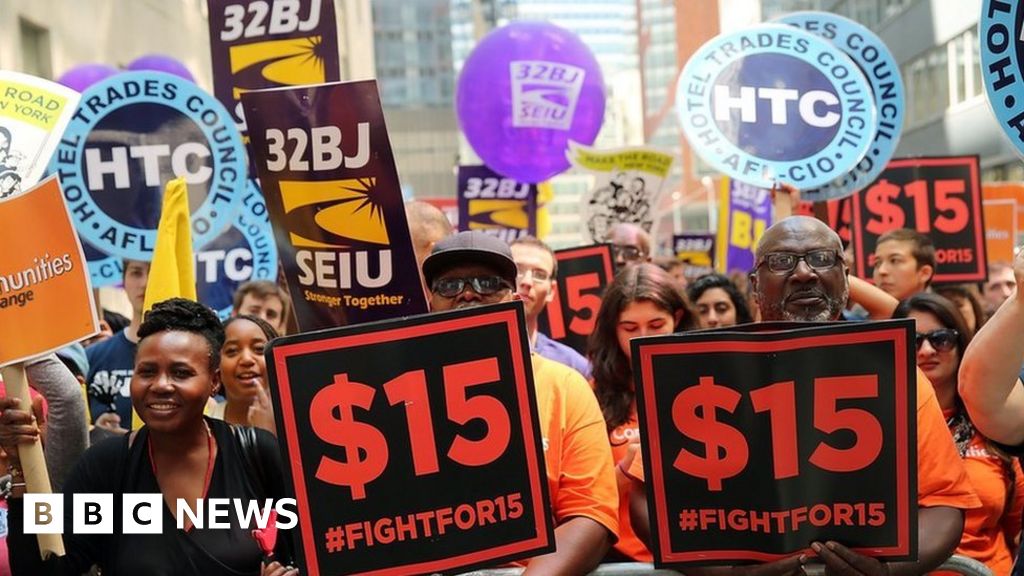
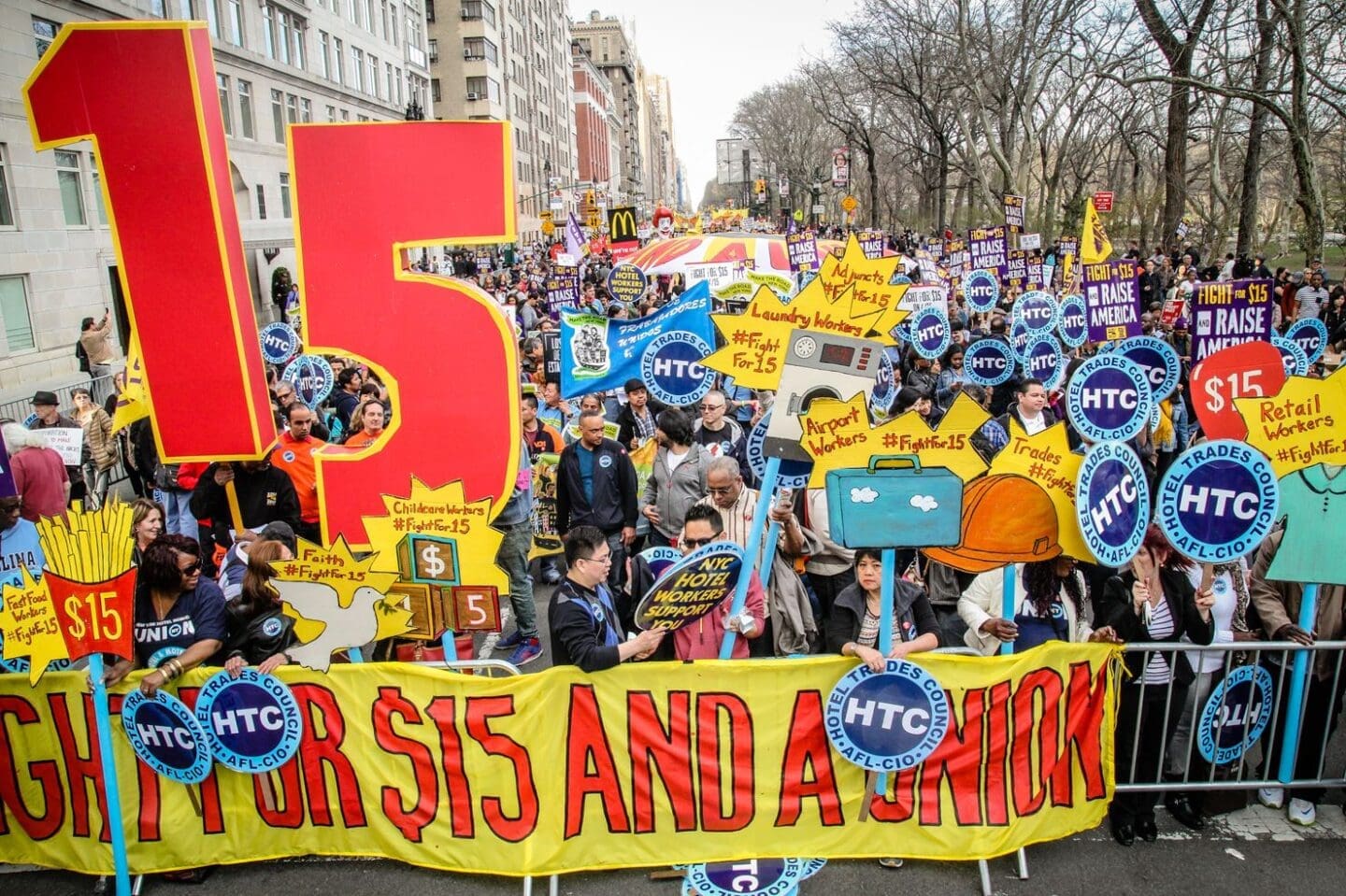
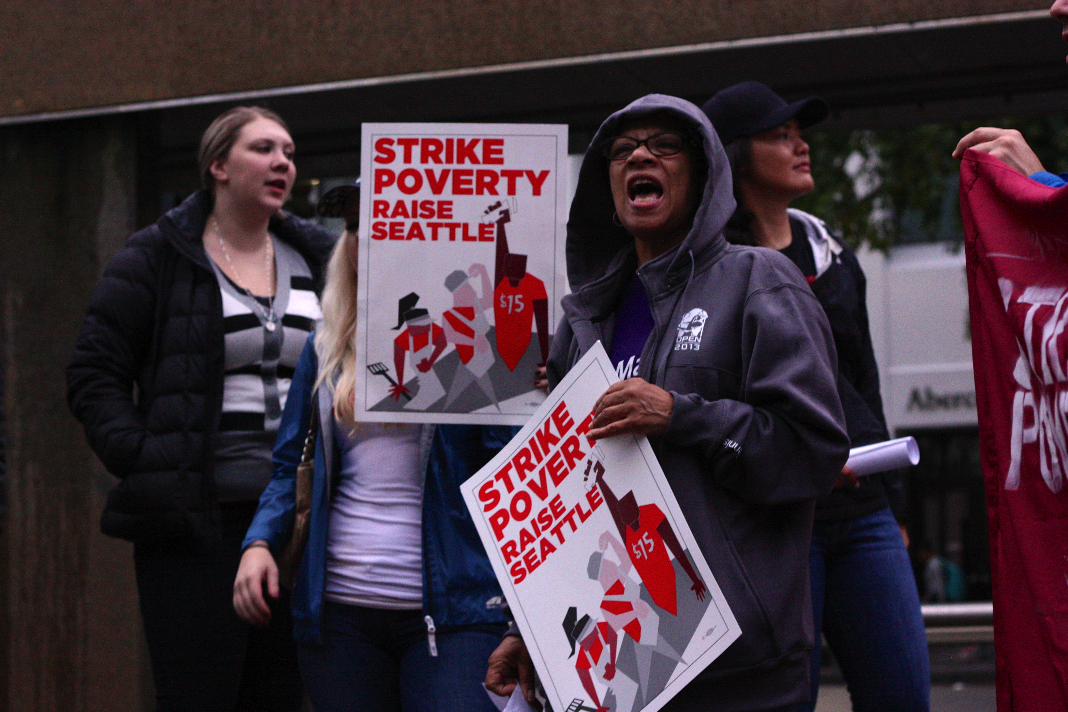
On December 5, 2013 hundreds of fast-food workers in Seattle didn’t go to work. They took to the streets with signs reading “$15 an hour” — their dream. They wanted the minimum wage to rise to $15 from $9. Nearly double!
Many said it was impossible. Restaurant owners shouted they’d go bankrupt. Economists in newspapers wrote it would kill business. But the workers didn’t give up. They kept organizing strikes, meetings, speaking to reporters. They told their stories — about children going to bed hungry, about the shame of having to ask for food at a charity kitchen when you work full time.
And you know what? People in Seattle started listening. Ordinary city residents buying coffee and burgers began to think, “This is unfair. The person who makes my breakfast should be able to afford breakfast for their child.”
In 2014 the Seattle City Council passed a law: the minimum wage would be gradually raised to $15 an hour. Seattle became the first major city in America to do this! When workers heard the news, many cried with joy right on the street. They hugged each other and couldn’t believe it — they had won.
What changed (and what it teaches us)
After the law took effect, life for many families truly improved. Martina, who had lived in a shelter, was able to rent a real apartment for herself and her son. Sage bought her daughter new boots and enrolled her in dance lessons — something they could never afford before. Of course, not everything became perfect overnight, and some problems remained. But the main thing — people proved they were stronger together than apart.
Seattle’s story showed the world something important. After that, many other U.S. cities also began raising their minimum wage. Workers elsewhere looked at Seattle and thought, “If they could do it, so can we.” It’s like when one student in a class decides to raise their hand and tell the teacher an assignment is unfair — then others find the courage to speak up too.
The most amazing thing about this story is that it was made by ordinary people. Not politicians, not wealthy businessmen, not celebrities. Just moms and dads flipping fries and mopping floors. They were tired, scared, many without a college education. But they had something more important: they were together, they believed in fairness, and they didn’t give up.
When you feel too small to change anything, remember the Seattle workers. They, too, thought they were too small and unnoticed. But when they joined hands and walked together, they changed a whole city. And then they inspired a whole country.