Imagine building a big city out of building blocks with your friends. Every time you build a school or a bridge, you set one block aside out of every hundred—not for a wall or a roof, but to make the city beautiful. That’s exactly what Seattle came up with in real life. In 1973, the city launched its “1% for Art” program, and ever since, sculptures, mosaics, and unusual benches have been brightening its streets.
How It All Began
Seattle is a large city in the northwestern United States, with lots of rain, water, and green hills. In the early 1970s, residents began to wonder: why were new buildings so gray and dull? After all, people spend a lot of time around them—waiting for buses, going for walks, and meeting friends.
That’s when a simple idea took shape: when the city spends money on construction, let one percent of that money go toward art. If a new fire station costs 100 coins, one coin is set aside for a painting, sculpture, or another beautiful thing to stand nearby. Seattle became one of the first American cities to have such a program, which was officially established in 1973.
Not everyone agreed at first. Some adults grumbled, “Why do we need statues when we could build another road?” But the idea proved successful, and other cities eventually followed suit.
The Giant Who Works Around the Clock
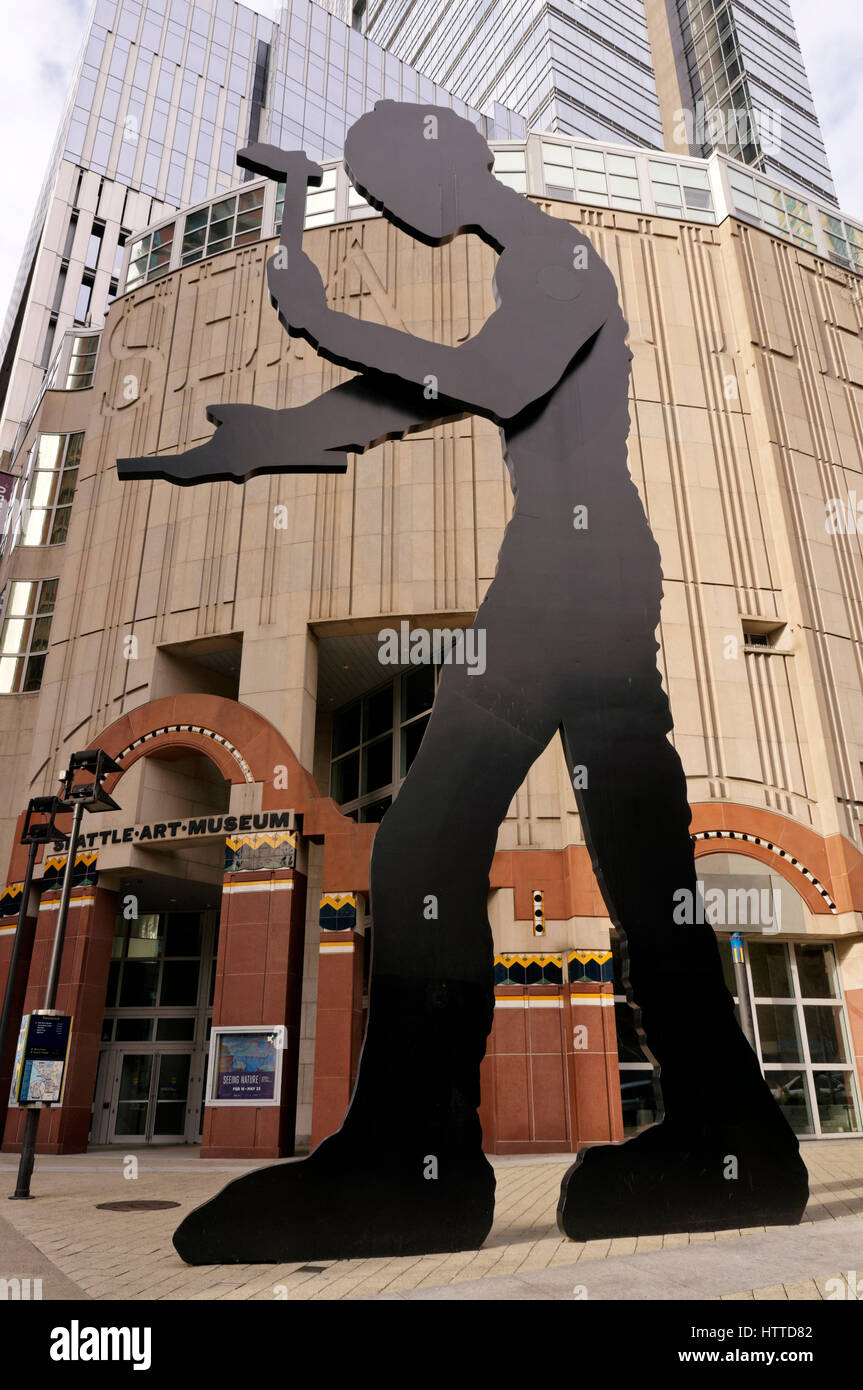
One of Seattle’s best-known artworks is called Hammering Man. It was created by American artist Jonathan Borofsky and installed in 1992 near the Seattle Art Museum. The huge black figure is about 14 meters (46 feet) tall. One of its arms moves: it raises and lowers a hammer again and again, as if the giant were working diligently.
The sculpture celebrates the people who build, repair, and make the world better—workers, craftspeople, and builders. Children like to stand beneath it and look up: next to a giant like this, you feel very small, but like an attentive explorer.
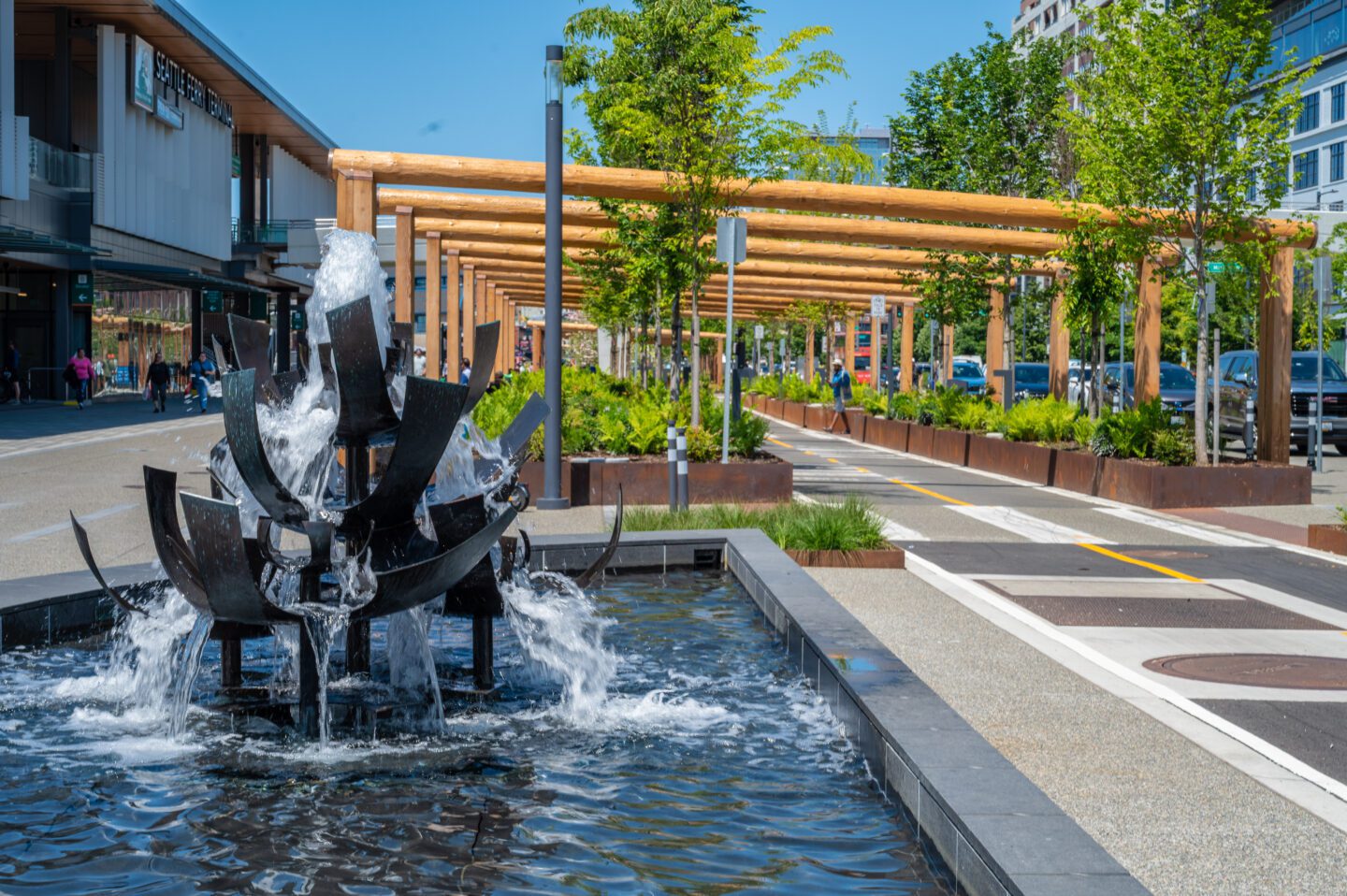
Seattle has plenty of other artworks, too: colorful wall mosaics, unusual fountains, figures in parks, and designs on sidewalks. Some can be touched, and you can even climb on a few—the artists have made them fun to play with.
What Art Does for a City
Along with pleasing the eye, a program like this has practical benefits, too. Let’s look at them in simple terms.
- Jobs for people. Creating a sculpture takes artists, welders, stonemasons, and transport workers. Every project provides work for many people.
- Visitors from elsewhere. People like to travel to places with interesting things to see. Tourists come to Seattle to see its famous artworks, and while they’re there, they also visit cafés, shops, and museums.
- Beautiful neighborhoods. When a cheerful mosaic or unusual sculpture appears on a street, the area becomes a favorite spot. People want to walk there, bringing the street to life.
It’s hard to say exactly how much money the program has brought in over the years: figures change, and estimates vary. But one thing is clear—over the decades, the program has grown into a huge city collection of thousands of artworks.
Why It Matters
What I like about this story is that beauty here isn’t a luxury. It’s an agreement: the city’s residents decided that one coin out of every hundred should go toward joy, not bricks. And that seems like one of the kindest ways to spend money.
Maybe the next time you pass an unusual sculpture or a colorful mosaic on a wall, you’ll think, “Someone decided this place should be beautiful.” And who knows—maybe one day you’ll be the person who comes up with something beautiful for your own city.