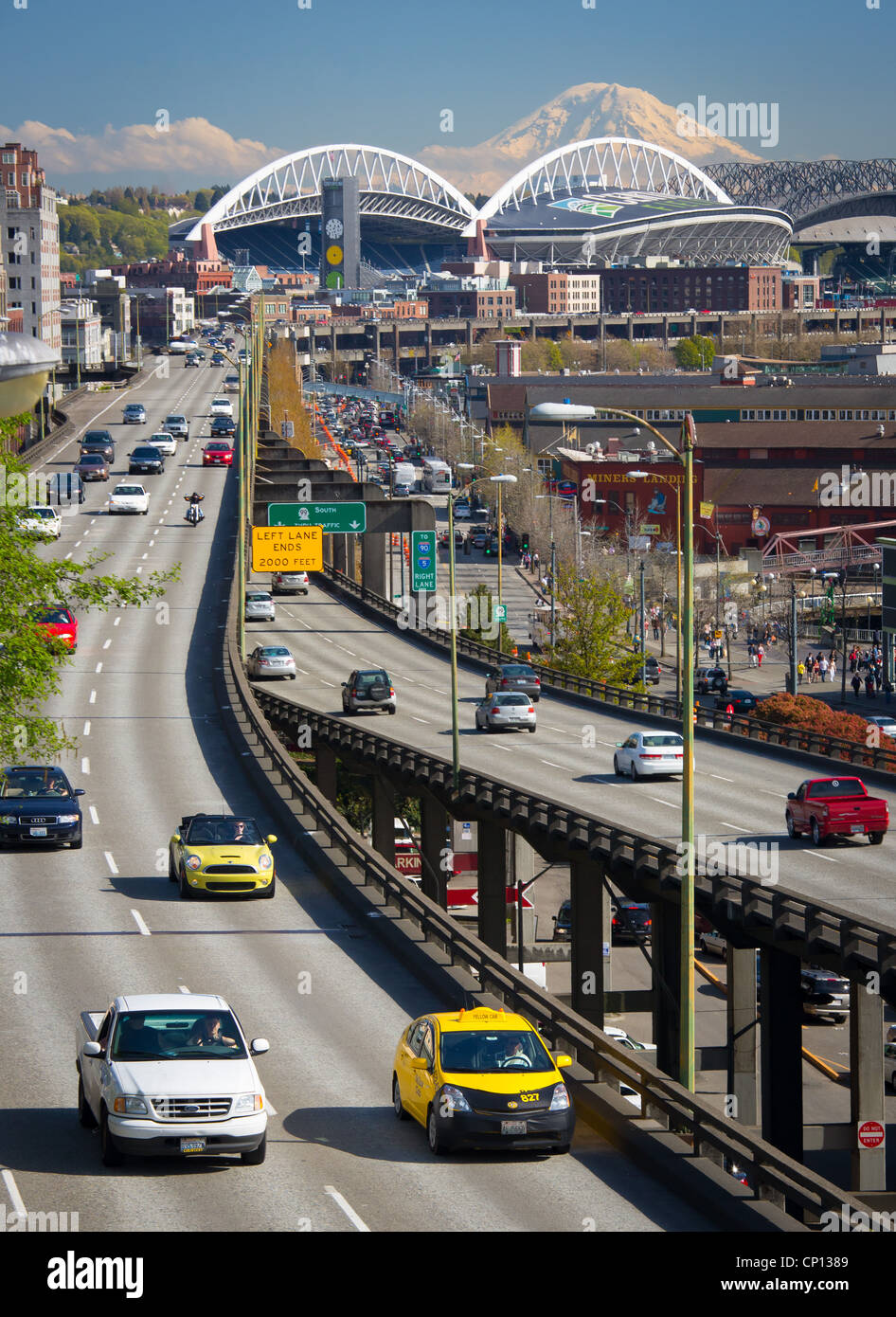
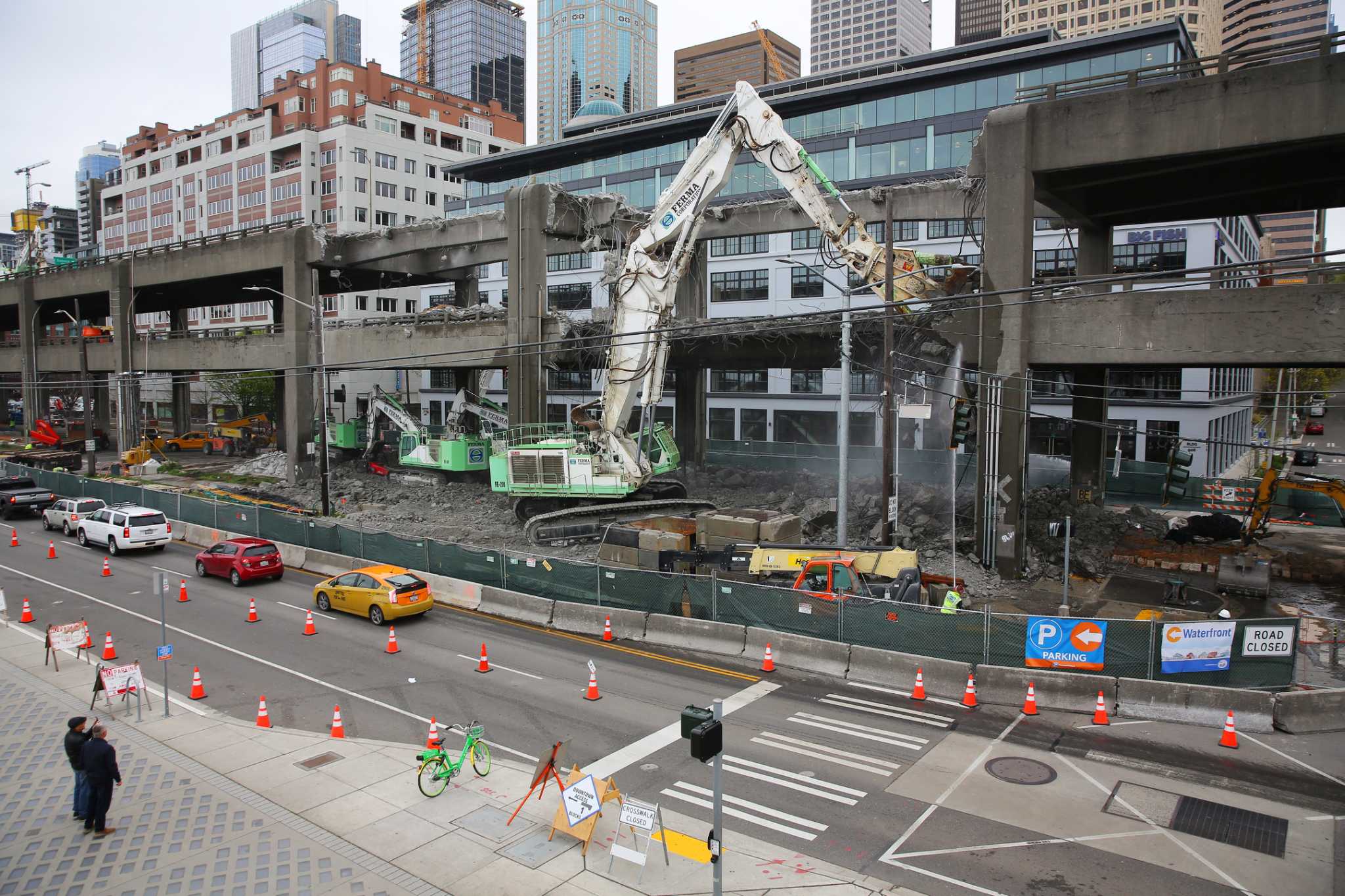
Imagine a huge road standing right over the sea—like a giant shelf on legs. Cars drive along it, and below, the bay’s waves splash. Sounds like something out of a fairy tale, doesn’t it? But that’s exactly what the real Alaskan Way Viaduct in the American city of Seattle looked like. And when city officials decided to demolish it, residents kicked up such a fuss that people still remember it with a smile.
A road on legs above the water
The Alaskan Way Viaduct was built in the 1950s—back when everyone believed cars mattered most of all. It was a two-level concrete road stretching along Seattle’s entire waterfront. Picture a two-layer cake—only instead of cake layers there were lanes for cars, and instead of frosting, there were exhaust fumes.
On the one hand, the viaduct was a real marvel for drivers: from it you could enjoy a stunning view of Elliott Bay, the mountains, and ships. Many residents loved to drive on it just to take it all in. On the other hand, it blocked the waterfront from the rest of the city like a massive gray wall. People who wanted to walk by the water had to squeeze underneath the roaring concrete giant.
But most of all, the viaduct was dangerous. It sat in an earthquake zone, and engineers had long warned that if the ground shook hard enough, it could collapse.
The earthquake that changed everything
In February 2001, the ground beneath Seattle actually shook. The Nisqually earthquake (magnitude 6.8) rattled the city so badly that windows rang in homes and cracks appeared on streets. The viaduct held up—but it suffered serious damage. Engineers inspected it and delivered their verdict: it might not survive the next earthquake.
That’s where the real story began. City authorities said, “We need to demolish the viaduct and build something else.” But what exactly? And this is where Seattle residents split into several camps, each with their own opinion—and each ready to fight for it.
Some argued, “Build a new viaduct, just stronger!” Others suggested removing the road underground—dig a massive tunnel. Still others dreamed of getting rid of the freeway altogether and turning the site into a beautiful waterfront with trees and benches. The debate lasted nearly ten years—from 2001 to 2009—and all this time, residents weren’t just waiting to see what would be decided for them.
How ordinary people changed the city’s decision
What makes this story special is that activists—people who wanted to change things—came up with the most unexpected ways to be heard.
Artists at night projected huge images onto the viaduct’s gray concrete walls. It looked as if the gloomy road suddenly came to life: fish appeared, waves rolled in, and faces of local residents showed up. It was a way of saying, “Look how beautiful this place could be!”
Neighborhood groups got together and held “farewell walks”—people went on foot along the viaduct (usually you’re not allowed to walk there), took photos, sang songs, and said “goodbye” to the old road. It sounds a bit sad, but in reality it was a very joyful event—like having a birthday party and saying goodbye all at once.
Residents voted at city meetings, wrote letters, and made posters. Schoolchildren brought drawings of what they wanted the shoreline to look like. One of the activists, Karen Glover, told journalists: “We just wanted our kids to be able to come to the water one day and not have to hit a concrete wall.”
In the end, the city chose the tunnel option. Underground, a huge passage for cars was built, and space for people was freed up on top. Not everyone was satisfied with the compromise—but it became possible precisely because residents’ voices were so loud.
A waterfront returned to people
Demolition of the viaduct was completed in 2019. As concrete sections were removed one by one by cranes, hundreds of people came to watch. Some cried—missing the familiar view. Others laughed and applauded.
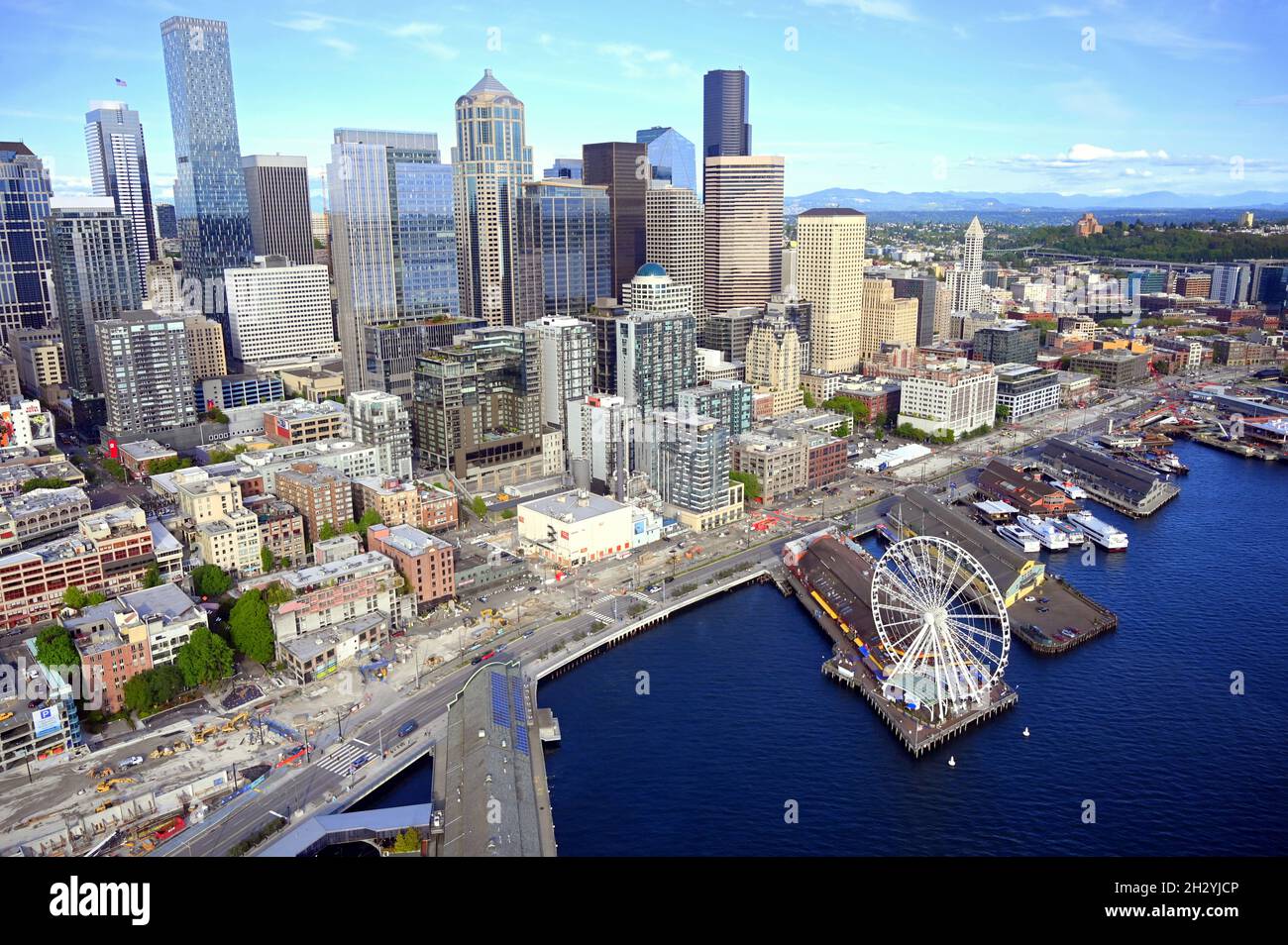
And then something magical happened. Where cars used to roar and the air reeked of exhaust fumes, there was sky. Just sky—and the sea beyond it. Then trees were planted, paths were laid out, and benches were installed. Seattle’s waterfront—something residents hadn’t been able to enjoy properly for more than seventy years—was returned to them.
This story is a good reminder that cities belong to the people who live in them. Not to cars, not to concrete, not to big plans on paper. And sometimes, to prove it, all it takes is showing up at a meeting, drawing a poster, or simply saying out loud: “I want this place to be beautiful.” Even if you’re only ten years old.