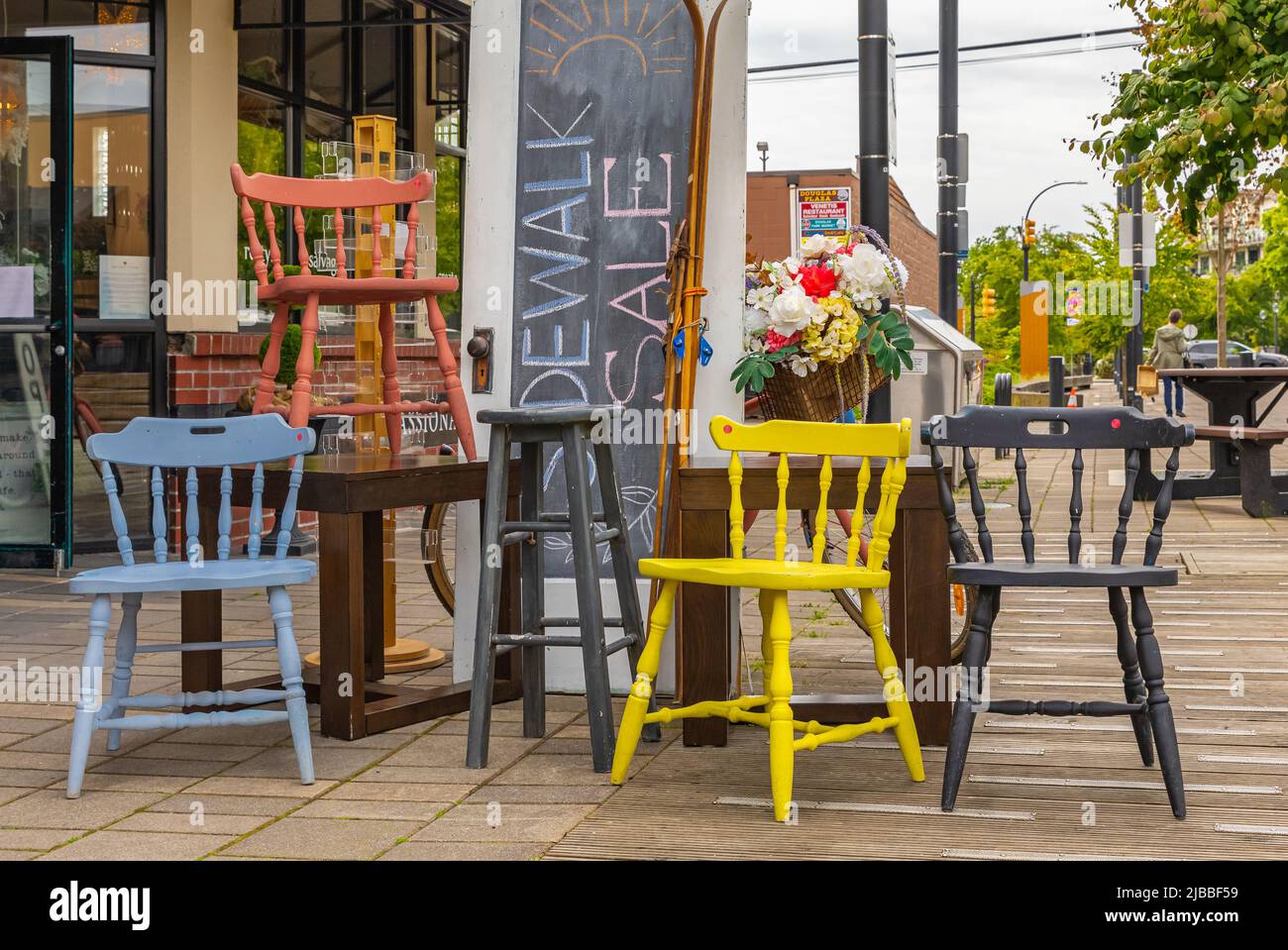
Imagine you walk into a Sunday market and there’s a beautiful wooden chair for sale. For just a couple of dollars! But if you knew where that chair was last night, you’d be very surprised. Because just twelve hours earlier it had been in a trash bin, about to be taken to the landfill forever.
This is a true story about how a group of ordinary people in Seattle’s Fremont neighborhood started a secret operation to rescue things. And how their nighttime adventures taught a whole city to think differently about waste, poverty, and what it means to care for one another.
The Mystery of the Sunday Market
In the early 1990s, when Fremont’s Sunday market was only getting started, vendors and shoppers began to notice a strange thing. Every Sunday the market would feature items that looked too good to be trash, yet were priced too cheaply to be new. Lamps that just needed a wipe. Books in excellent condition. Toys that only required a new string or a battery.
Where was all this coming from? It turned out Fremont had an unofficial group of “night rescuers.” They were artists, students, environmental activists, and simply caring people. Every Saturday night, when it got dark, they went out with flashlights and carts. Their mission was simple but important: find discarded items that could still be used and save them from the landfill.
It was like a treasure hunt—except the treasures were real, and they were searching not on an uninhabited island but in dumpsters behind stores and homes. One participant later recalled: “We found perfectly normal things. A sofa that had only lost one leg. A bike with a flat tire. Whole boxes of dishes because someone was moving and didn’t want to take them.”
A Workshop Under the Stars
But the rescuers didn’t just collect things. They fixed them! In garages, backyards, right on the street under lights—wherever there was space, people worked with hammers, screwdrivers, needles, and glue. Artists painted new designs on old tables. Seamstresses stitched holes in clothing. Carpenters repaired broken furniture.
Sometimes children joined in. They helped wash toys, sort books, check whether markers still worked. One girl, who was about ten at the time, said: “I thought we were just helping Dad fix old things. But then I realized we were doing something important. We were giving things a second life. And we were helping families who had little money buy what they needed.”
By Sunday morning all the rescued and repaired items were displayed at the market. Prices were symbolic—often less than a dollar. Because the main goal wasn’t to make money, but to keep good things from going to waste and to let low-income people furnish their homes, dress their children, and buy books for school.
Two Problems — One Solution
Fremont’s night rescuers addressed two big problems at once, without fully realizing how important that was.
The first problem was environmental. In the 1990s Americans threw away an enormous amount of stuff. On average each person sent about 600 kilograms of trash to landfills yearly—that’s about the weight of a small car! Much of that waste consisted of items that could still be used. They simply took up space in landfills and polluted land and water. By saving even a small portion of those items, the Fremont group kept hundreds of kilograms of useful goods out of landfills each week.
The second problem was social. In Seattle, as in other big cities, many families lived in poverty. They didn’t have money to buy new furniture or clothes. But they needed these items—children needed backpacks for school, families needed pots and pans for cooking, elderly people needed warm blankets. Thanks to the Sunday market and its rescued treasures, these families could get what they needed for almost nothing.
What happened was that the trash of wealthier people became treasure for the poor. And the rescuers were the bridge between them. They showed that caring for the environment and caring for people are not two separate things but parts of one larger endeavor.
How a Small Market Changed a Big City
The story of Fremont’s night rescuers spread throughout Seattle. People began talking about it, writing about it in newspapers, discussing it at city council meetings. Gradually something began to change.
First, city officials took notice of the problem. They realized too many good items were ending up in the trash. In the mid-1990s Seattle launched programs for recycling and reuse. Official secondhand stores, repair centers, and drop-off points for clothing and furniture for people in need appeared.
Second, people’s attitudes changed. Seattle residents began to think: “Maybe we shouldn’t throw this away. Maybe someone else could use it?” A whole culture of reuse emerged. People started organizing “swap parties,” where they brought unwanted items and exchanged them. Workshops opened that taught how to repair broken items instead of buying new ones.
Today Seattle is one of America’s greenest cities. More than half of all waste there is recycled or reused. That’s one of the best rates in the country. And while that is the result of many people and organizations working together, the small group of night rescuers from Fremont was among the first to show it was possible.
A Lesson from the Treasure Hunters
Fremont’s Sunday market still exists today. It has become much larger and more official. It now sells not only rescued items but also local artists’ work, fresh produce from farms, and homemade baked goods. But the spirit of that first market remains: it’s a place where people care for one another and for the planet.
The story of the night rescuers teaches an important lesson: you don’t have to be an adult, wealthy, or famous to change the world. Sometimes it’s enough just to notice a problem and start doing something. Those people didn’t wait for the government to pass laws or for big companies to change policies. They simply grabbed flashlights, went outside, and started rescuing things.
And the most surprising part: their small action set off big changes. Like a pebble dropped in water, it created ripples that spread farther and farther. First one market changed, then one neighborhood, then a whole city, and then the idea spread to other cities.
So next time you see something discarded but still in good condition—a toy, a book, a pretty stone—think: maybe it’s not trash. Maybe it’s a treasure waiting for a rescuer. And maybe that rescuer could be you.