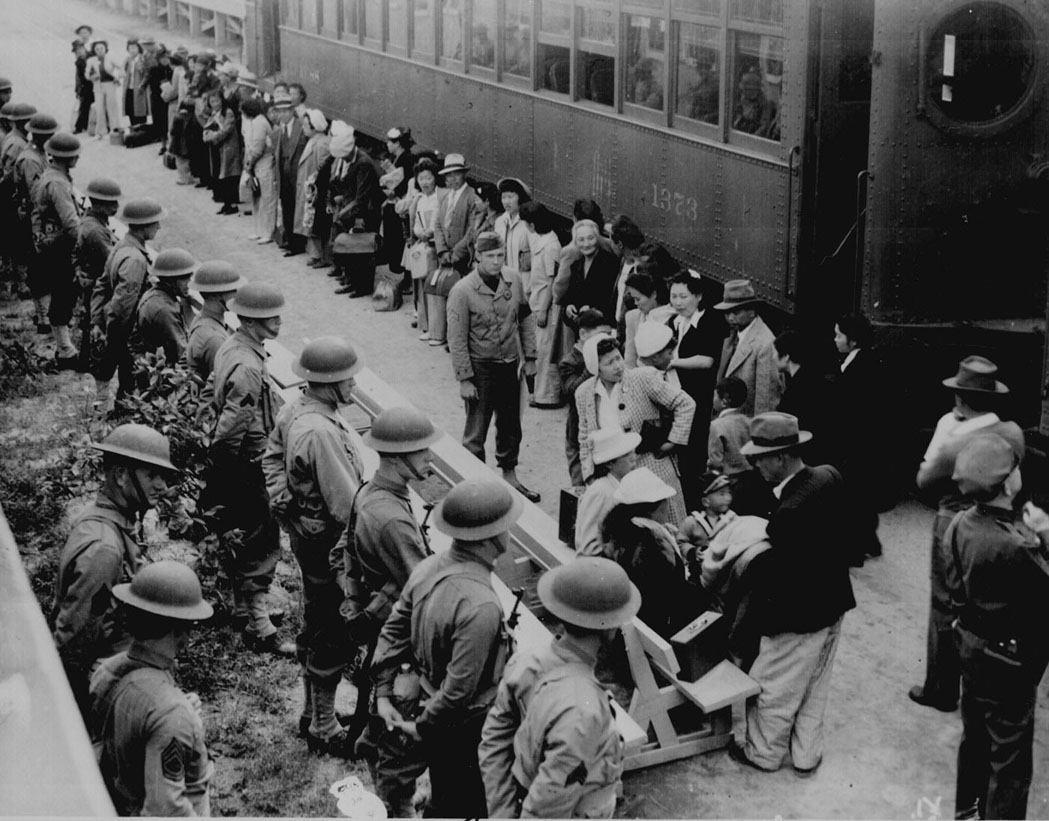
Imagine one morning being told, “You have a week to pack only what will fit into two suitcases. Everything else must stay.” Your toys, books, birthday photos, bicycle, favorite blanket — all of it would have to be left behind. That’s what happened to thousands of Japanese families in Seattle in 1942. But this story is not only about painful partings — it’s about how complete strangers became true guardian-heroes.
A neighborhood emptied in one week
There was a whole neighborhood in Seattle called Nihonmachi — that means “Japanese town” in Japanese. Families who had come from Japan years earlier lived there. They ran shops selling beautiful fans and lanterns, restaurants with tasty noodles, barbershops, and even a hotel. Children went to ordinary American schools, played baseball, and often spoke English better than their grandparents.
But when World War II began, the U.S. government made an unjust decision. It decided that all people of Japanese ancestry — even those born in America who had never been to Japan — must leave their homes and live in special camps far inland from the coast. This was terribly wrong, because these people had done nothing wrong. They were ordinary Americans working, studying, and loving their country.
Families were given only a few days to pack. Many didn’t know what to do with their homes, shops, or cars. What about family photographs? Who would water the garden Grandma had tended for twenty years? What would happen to the piano their daughter had just learned to play?
Guardians who appeared out of nowhere
Then something remarkable happened. African American families began moving into Nihonmachi — Black people who also knew what injustice and discrimination felt like. Many had come to work in wartime factories. They needed housing, and the Japanese families were urgently looking for people they could trust to care for their homes.
Instead of simply occupying empty apartments, many of the new residents became true guardians of other people’s treasures. A woman named Mrs. Johnson took in three large boxes of family photographs belonging to the Yamada family. She carefully placed them on a high shelf in a closet and checked them each month to make sure they hadn’t become damp. Mr. Brown pruned the cherry tree in the garden every spring, though he had never done it before — he asked a neighbor gardener to teach him because he had promised the Japanese family the tree would be healthy when they returned.
A little girl named Ruby found a collection of dolls in Japanese kimonos in her new room. She didn’t play with them — instead she wrapped each in soft cloth and put them in a box. “These aren’t my dolls,” she told her mother. “I’m guarding them for the girl who used to live here.” Ruby was only eight years old.
Gardens that remembered their owners
The most touching stories involved the gardens. In Japanese culture a garden is not just a place where flowers grow. It’s a work of art created over years. Some families had brought plant seeds from Japan, and those plants had grown in Seattle for decades.
A group of African American women organized a “Garden Keepers’ Club.” Every Saturday they walked through gardens left without owners. They watered, weeded, and tied up tomato plants. One woman, Mrs. Williams, kept a special notebook recording what and when she had done in each garden. “Watered the Suzukis’ chrysanthemums,” “Picked ripe pears from the Tanaka tree and made jam — jars in the cellar.” She wanted the owners to know what had happened to their gardens while they were away.
Some new residents even wrote letters to the Japanese families in the camps. “Your roses have bloomed, and they are beautiful,” one woman wrote. “Your cat has been found! He’s living with us now, fat and content, waiting for you.” These letters brought so much joy to people who had lost their homes.
The day the treasures came home
The war ended in 1945, and the Japanese families were finally allowed to come back. But many were afraid — what if no one was waiting? What if their homes were ruined or their belongings stolen?
When the first families returned to Nihonmachi, they could hardly believe their eyes. Neighbors greeted them with boxes, suitcases, and bundles. “These are your photographs,” “These are your books,” “This is your grandmother’s kimono — I kept it in a cedar chest so the moths wouldn’t eat it.”
The Yamada family found their garden looking even better than when they left. Mrs. Williams handed them a thick notebook with her records and three jars of pear jam. “I didn’t know if you’d come back,” she said with tears in her eyes, “but I hoped.” They hugged and cried together — two women who had never met before, now joined by care for a garden.
The girl who had owned the dolls had grown up and become a college student. When Ruby (also grown) brought her the box of dolls, both women wept. They became lifelong friends.
How enemies became family
The most amazing thing happened next. Many of those who had guarded others’ belongings and those who returned became more than neighbors — they became family. African American and Japanese American children played together. Families visited each other for holidays. Mrs. Yamada taught Mrs. Williams how to make sushi, and Mrs. Williams taught her to bake her famous apple pie.
Nihonmachi changed — it became a neighborhood where people of different cultures lived together, united by respect and kindness. Japanese restaurants stood beside barbecue cafes, and in the park you could hear both jazz and traditional Japanese music.
Today there is a small memorial in that neighborhood. Names of some of the “keepers” — people who protected others’ treasures — are inscribed on it. Nearby grows a cherry tree descended from the very tree Mr. Brown once pruned, though he didn’t know how at the time. Every spring when it blooms, neighborhood residents gather and remember the story.
What this story means for us
The story of Nihonmachi’s keepers teaches important lessons. First, it shows that even when governments or the majority act unjustly, there are always those who will choose kindness. The keepers took risks — at that time many white Americans treated both Japanese and African Americans poorly. Still, they did what was right.
Second, the story shows that things are important not for their own sake. Photographs, dolls, and gardens mattered because they held memory and love. When the keepers cared for those things, they cared for the people to whom they belonged.
Third, it shows how friendship can grow from injustice. Two groups who understood discrimination supported one another. They didn’t become enemies — they became allies.
Today many descendants of those Japanese families and of the African American keepers still live in Seattle. They preserve the story, teach it in schools, and write books about it. A neighborhood that might have disappeared forever became a community treasure — a place the whole city is proud of.
And each time you see a neighbor in need or someone entrust you with something to keep, you can remember this story. Being a keeper is not just about preserving things. It’s about preserving hope, memory, and faith that goodness is stronger than injustice.