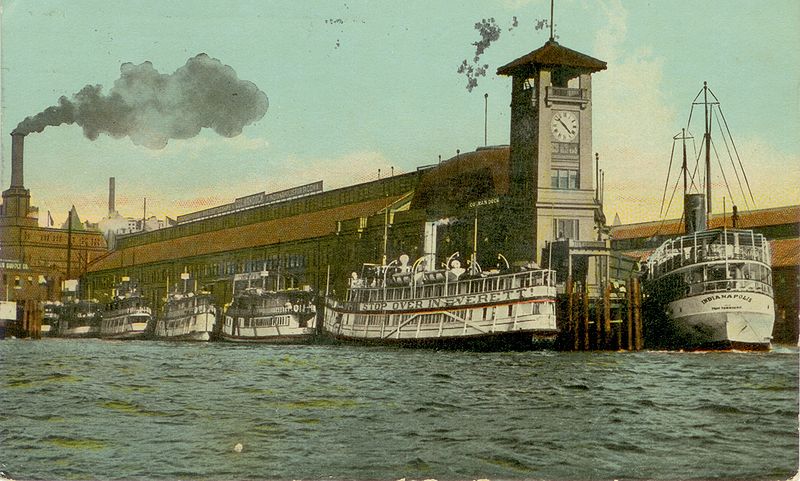
Imagine a dark night in Seattle almost a hundred years ago. Thick fog drifts over the water as a fast, unlit boat glides silently through the strait. Its crates conceal a drink that the law forbids transporting. And the man running this entire secret network spends his days walking around town in a police uniform. It sounds like an adventure story, but it’s a true tale from the Prohibition era. And it ended with an important decision that people still debate today.
When alcohol was banned
In the early 20th century, many Americans believed that alcohol caused a lot of problems for families. So Washington state banned the sale of alcohol in 1916, and in 1920 the same kind of law took effect across the country. It was called Prohibition.
But a ban rarely makes people stop wanting something. It simply turns the trade into a secret business. And in this respect, Seattle was “lucky”: Canada, where alcohol was still legally sold, was just nearby. Between the two countries lay straits, hundreds of islands, and small coves, as well as frequent fog. For fast boats, it was a real maze. Smugglers’ boats were called the “Mosquito Fleet”: they were small and fast, and hard to catch.
It was like a game of hide-and-seek on a huge “playing field,” with too few “seekers” (the Coast Guard and the police) to check every cove.
A man with two lives
The best-known figure in this story was Roy Olmstead. He worked as a lieutenant in the Seattle Police Department, which meant his job was to fight lawbreakers. But in secret, he became the head of a vast alcohol-smuggling network. He had boats, warehouses, dispatchers, and even his own radio station, which sent messages to smugglers.
Interestingly, Olmstead was nothing like the cruel villain in a movie. He ran his operation carefully, never sold diluted or dangerous liquor, and disliked violence. Newspapers called him the “King of the Puget Sound Bootleggers.” But that didn’t make his actions any more honest: he broke the law and betrayed people who trusted him as a police officer. It’s important to remember that a flattering nickname doesn’t make a bad deed good.
An ear on the telephone line
Federal agents hunting smugglers came up with an unusual plan. They began secretly listening in on the gang members’ phone calls. To do this, the agents tapped into wires on the street near their homes and office, without going inside. They recorded hours of conversations: who was meeting whom, where, and when. These recordings helped crack the Olmstead case in 1925, and he was arrested along with dozens of others.
But then a new chapter began: Olmstead’s lawyers argued that listening to someone’s phone calls without a court warrant was illegal. After all, the Fourth Amendment to the U.S. Constitution protects people from unreasonable searches. The case reached the nation’s highest court, the Supreme Court.
In 1928, the Court ruled otherwise: the agents had not entered a home or taken anything, so this was not a “search.” But one of the justices, Louis Brandeis, disagreed. He wrote that the right to be “let alone” is among the most precious rights of free people, and that the government should not secretly listen to private conversations. His dissent is still well known to many lawyers today.
It’s like someone reading your private diary without permission, without opening the cover—just peeking through a crack. Brandeis was saying that even a crack is already a violation.
Here’s what happened next. Many years later, in 1967, in the case of Katz v. United States, the Supreme Court changed its position and ruled that wiretapping phone conversations also required a court warrant. In other words, Brandeis was right, though it took almost forty years for the Court to agree.
| Year | Event |
|---|---|
| 1916 | Washington state bans alcohol |
| 1920 | Prohibition takes effect nationwide |
| 1925 | Roy Olmstead and his associates are arrested |
| 1928 | Supreme Court upholds wiretapping in the Olmstead case |
| 1933 | Prohibition is repealed |
| 1935 | Olmstead is pardoned by President Roosevelt |
| 1967 | The Court reverses course and protects phone conversations |
What happened next and lessons to learn
Olmstead was sentenced to about four years in prison. After his release and a presidential pardon, he changed his life: he became religious, helped others, and lived quietly. In the meantime, Prohibition was deemed a failure and repealed in 1933.
Other cities can learn several lessons from this story.
First, laws that are very difficult to enforce create black markets and crime. It’s better to think carefully before banning something and consider how the ban will work in practice.
Second, new technologies raise questions about the boundary between security and privacy. Back then, it was the telephone; today, it’s the internet and smartphones. But the basic question is the same: what may we learn about people, and what may we not?
Third, the people responsible for upholding the law should be the most honest of all. When they break the law, it is very difficult to regain people’s trust.
In conclusion
I like how a story about boats and fog reveals such an important discussion about justice and privacy. Justice Brandeis was in the minority, but he stood by his words, and years later they proved right. It’s a good example for all of us: sometimes being right means patiently waiting for others to understand the same thing. And the story of Seattle’s “King of the Foggy Straits” reminds us that rules matter, but so does the protection of privacy.