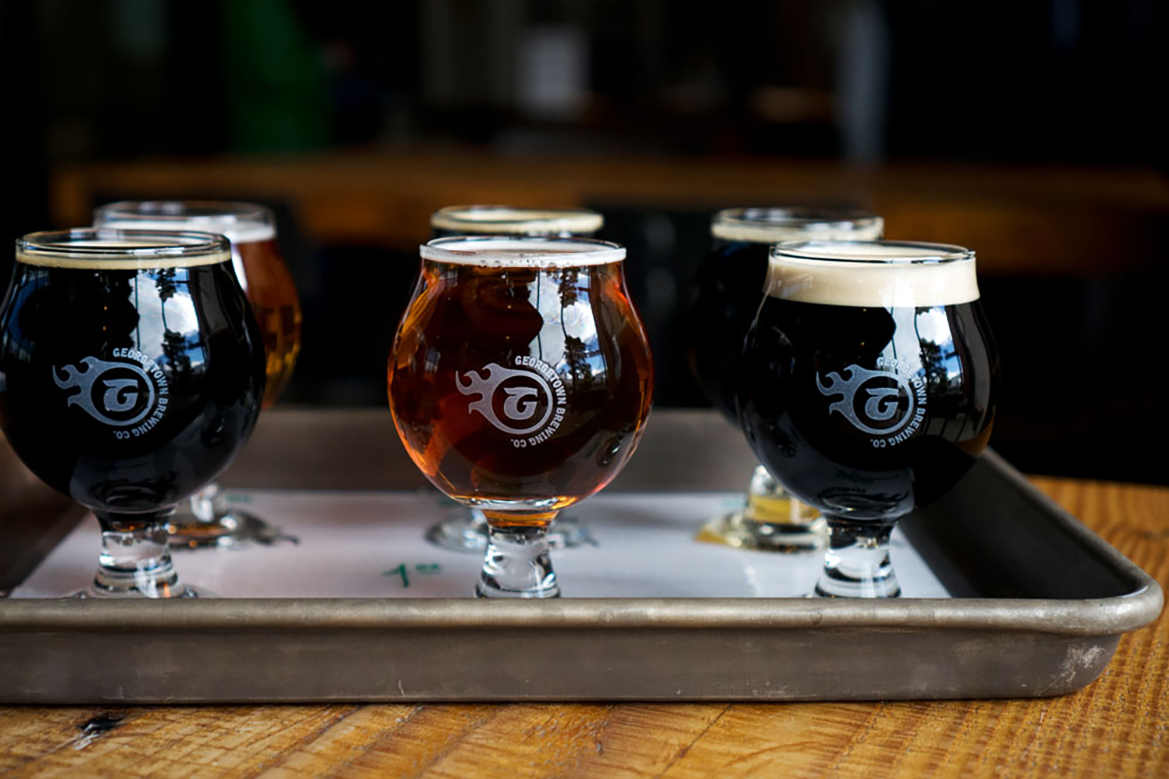
In the 1970s something strange happened in Seattle: beer became boring. The stores sold only beverages from three giant companies, and they all tasted almost the same — as if someone had decided the whole world should drink the same thing. But a group of neighbors decided that wasn’t fair and started a secret revolution right in their garages and basements. This is the story of how ordinary people who just wanted good beer accidentally invented a new way to live and work together — a way other cities later adopted around the world.
When the big companies took all the flavors
Imagine your city only has one flavor of ice cream — vanilla. Every day, in every shop, only vanilla. No chocolate, no strawberry, no interesting toppings. That’s roughly how Seattle residents felt about beer in the 1970s.
After World War II three huge American brewing companies became so powerful they pushed out all the small breweries. They made beer quickly and cheaply, using the same recipes. By 1978 there were only 89 breweries left in the U.S. — the fewest in the country's history. By comparison: today there are more than 9,000.
But some people remembered how diverse and interesting beer could be. They traveled to Europe and tried dark beers with coffee notes, pale beers with floral aromas, sour beers that tasted like lemonade. Returning home, they thought: “Why can’t we make this here?”
A secret club in garages and basements
In the late 1970s unusual gatherings began to appear in Seattle. Neighbors visited each other carrying large glass jugs full of cloudy liquid. They brewed beer at home — in garages, basements, even kitchens. It was part science experiment, part cooking circle.
One key figure in this movement was a woman named Janet, who worked at one of the few remaining small breweries. She ran classes for anyone interested, explaining how fermentation works, what ingredients were needed, and how not to ruin a batch. Janet and other enthusiasts created something like a recipe library — people wrote down their experiments in notebooks and exchanged them like kids swapping stickers or cards.
“We weren’t thinking about money,” recalled one of the first home brewers. “We just wanted to try something new and share it with friends. If someone came up with a particularly tasty recipe, they told everyone else how to reproduce it.”
This culture of generosity and knowledge-sharing became the most important feature of the Seattle beer movement. Unlike big companies that guarded their recipes like state secrets, garage brewers did everything openly. If someone figured out how to add grapefruit aroma or make a beer frothier, they didn’t hide the secret — they invited others to taste and explained how to repeat the success.
When laws stood in the way of the dream
But there was one big problem: selling home-brewed beer was illegal. The law said you could brew beer for yourself, but if you wanted to sell even one bottle you needed a huge factory, expensive equipment, and special permits that cost tens of thousands of dollars.
That was unfair. A small brewer couldn’t compete with the giants because they couldn’t even start a legal business. Imagine being told, “Want to sell your ice cream? Then first build a factory the size of a football field!”
In 1982 a group of Seattle brewers decided to change the law. They collected signatures, attended meetings with politicians, and explained why small breweries mattered to the city. Restaurant owners who wanted to offer interesting beer and ordinary residents tired of monotony helped them.
That same year Washington state passed a new law allowing small breweries — so-called “microbreweries.” It was a victory! Now a person could brew beer in a small space and sell it right there, in their pub or bar.
How breweries became meeting places
After the law changed, the first microbreweries began to open in Seattle. They didn’t look like ordinary bars. These were places where the brewer stood behind a glass wall and you could see them at work. You could approach, ask questions, and hear the story of each beer.
Breweries became neighborhood hubs — places where neighbors met after work, talked about city issues, and shared news. Unlike big corporate bars, these small breweries were part of the community. The owner lived in the same neighborhood, his children went to the same school as the visitors’ kids.
By the 1990s dozens of microbreweries were operating in Seattle. Each had its own character: one specialized in dark beers with chocolate notes, another in light wheat beers with fruit additions, a third experimented with unusual ingredients like coffee or chili peppers.
But the most interesting thing was that the brewers kept sharing. If someone’s equipment broke, others lent theirs. If someone developed a new technique, they explained it to competitors. One well-known Seattle brewer said: “We realized that our real competitor isn’t the brewery across the street, it’s the boring beer of the big companies. So it’s better for us to help each other make interesting beer than to fight among ourselves.”
The magic recipe that worked beyond beer
The Seattle microbrewery model proved so successful that other cities began copying it. First Portland, then Denver, San Diego, and gradually across America and even other countries.
But here’s what’s interesting: Seattleites applied the same model to more than just beer. In the 1990s small coffee shops appeared in the city that followed the same principle — brewing coffee in front of customers, experimenting with different beans, and sharing knowledge. This helped give rise to contemporary coffee culture (yes, Starbucks is from Seattle, but it started as one small coffee shop in 1971).
Then the model spread to restaurants: chefs began opening small establishments that cooked with local ingredients, showed the kitchen to diners, and shared recipes. A whole “farm-to-table” movement emerged.
In the late 1990s and early 2000s the same philosophy also penetrated the tech industry. Seattle programmers began creating “open source” software — programs you could use for free and modify and improve. They gathered in cafes and breweries, exchanged ideas, and helped each other solve problems. This culture of collaboration helped make Seattle one of the world’s major tech centers.
Lessons for other cities
What did other cities learn from Seattle’s experience? Here are several important lessons:
- Small can be strong. You don’t have to be a huge corporation to change an industry. A few people with a good idea and a willingness to share knowledge can create a whole movement.
- Collaboration beats competition. When small businesses help each other instead of fighting, everyone wins — the businesses themselves, their customers, and the city as a whole.
- Laws can be changed. If a law is unfair and prevents people from doing something beneficial, citizens have the right and the ability to change it. Seattle’s brewers proved this.
- Meeting places matter. Microbreweries became more than places that sell drinks; they were centers of social life where people got to know one another and discussed neighborhood life. This strengthens community.
- Diversity makes a city more interesting. When a city has many small, different enterprises instead of a few identical large ones, life becomes richer and more interesting.
Today many cities around the world are trying to replicate Seattle’s success. They create laws supporting small breweries, coffee shops, bakeries, and workshops. They understand that such places not only sell goods but also create culture, bring people together, and make a city lively and unique.
What remains of the garage brewers
More than forty years have passed since the first Seattle neighbors began brewing beer in garages. Many of those first breweries grew and became well known. Some closed. But most important — the culture they created remains.
In Seattle it’s still considered normal to share success secrets with competitors. People still gather in small breweries and coffee shops to discuss ideas and projects. Residents still take pride in and support their small, independent businesses.
The story of Seattle’s brewers teaches an important lesson: big changes often start small. A few people who simply wanted to brew tasty beer and share it with friends accidentally invented a new way to live and work together. They showed that generosity and collaboration can be not only pleasant but practically successful.
And who knows? Maybe the next big idea that changes the world will also be born in someone’s garage, in a conversation between neighbors, in the desire to share something good with others.