Imagine living with a large, close-knit family—your mom, your grandmother, your brothers and sisters. You eat together, play together, talk in your special language. And then one day boats arrive—and half your family is taken away somewhere far off. Forever. That’s exactly what happened to the orcas of Puget Sound in Washington State more than fifty years ago. And the most surprising part is that people did it out of love—though that love turned into a great tragedy.
A Family That Never Breaks Apart
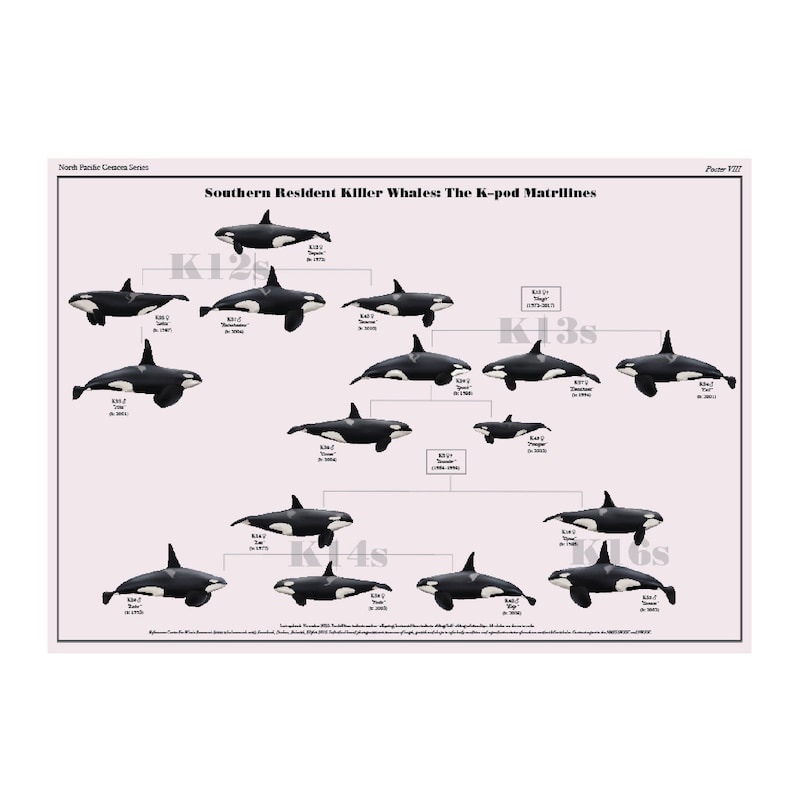
Orcas are not just big dolphins. They live in families called “pods.” In each pod there is a grandmother, her children, and her grandchildren. Orcas don’t leave the family even after they grow up—neither females nor males. A grandmother-orca knows where to find fish in lean years and passes that knowledge on to the next generation. Each family has its own distinctive sounds—something like a family dialect that no one else has.
Orcas that live in the waters of Puget Sound and around San Juan Island are called “resident” orcas—meaning they are permanent residents. There are only three such families: the J pod, the K pod, and the L pod. Together they’re known as the “southern residents.” Today, a little over seventy orcas remain in these three families. That’s very few—about like one school class. And there used to be far more.
Theme-Park Stars—Where Did They Come From?
In the 1960s, people suddenly realized that orcas are incredibly intelligent and beautiful creatures. Aquariums and water parks wanted to show them to the public. Tickets sold instantly, children shrieked with excitement, and adults cried with tenderness. Orcas jumped, swirled, and took fish from the trainers’ hands. It seemed like a real miracle.
But to bring an orca to a pool, you had to first catch it. And they caught them right here, in the waters of Puget Sound. Fishermen and hunters surrounded a pod of orcas with nets, made noise, scared them, and then chose the youngest and most beautiful—loading them onto a ship. The rest were released. The pod remained, but without the children.
One of the best-known cases happened in August 1970 near Whidbey Island. More than 80 orcas were caught at once. Seven of them were taken to water parks. Witnesses said that the orcas that were released circled in place for a long time and cried out—as if calling for the ones who had been taken away. One local fisherman who participated in that hunt later said he couldn’t forget those sounds for the rest of his life.
Over a decade and a few years—from 1965 to 1976—around forty orcas were taken from the southern-resident families. For such a small population, that was a tremendous loss.
A Bitter Irony: Love That Brought Pain
Here’s the most surprising—and somewhat sad—part: those very shows in water parks taught millions of people to love orcas. Children who saw a jumping orca on SeaWorld grew up and began to worry about orcas in the ocean. The 2013 documentary Blackfish told the whole world the truth about the captures—and people were horrified. Many of those who watched it in theaters had, as children, experienced such shows themselves and believed they were wonderful.
It turns out to be a strange story: love for orcas was born from what harmed them. And realizing that harm turned the same love into a desire to help.
Today in Washington State, capturing orcas for aquariums is banned. The last orca from Puget Sound was caught in 1976—a young female named Lolita. She lived in an oceanarium pool in Miami for almost fifty years. She was never released—she died in captivity in 2023, never seeing her home ocean.
How People Are Trying to Fix the Mistake
Today, the southern residents are officially at risk of extinction. There are so few of them left that each calf birth becomes news, and each death is a tragedy for the entire coastline. Local residents track the orcas almost like neighbors: each has a name and number, and researchers know them by sight—more precisely, by the shape of their dorsal fin.
Several problems have piled up. Southern-resident orcas eat almost exclusively chinook salmon—a particular kind of salmon. But there are fewer and fewer salmon in the rivers because old dams have blocked the fish’s route to their spawning grounds. Now, in Washington State, huge dams on the Elwha River and the Clallam River are being removed—specifically so salmon can move back upstream again to spawn. It is one of the largest ecosystem restoration projects in U.S. history.
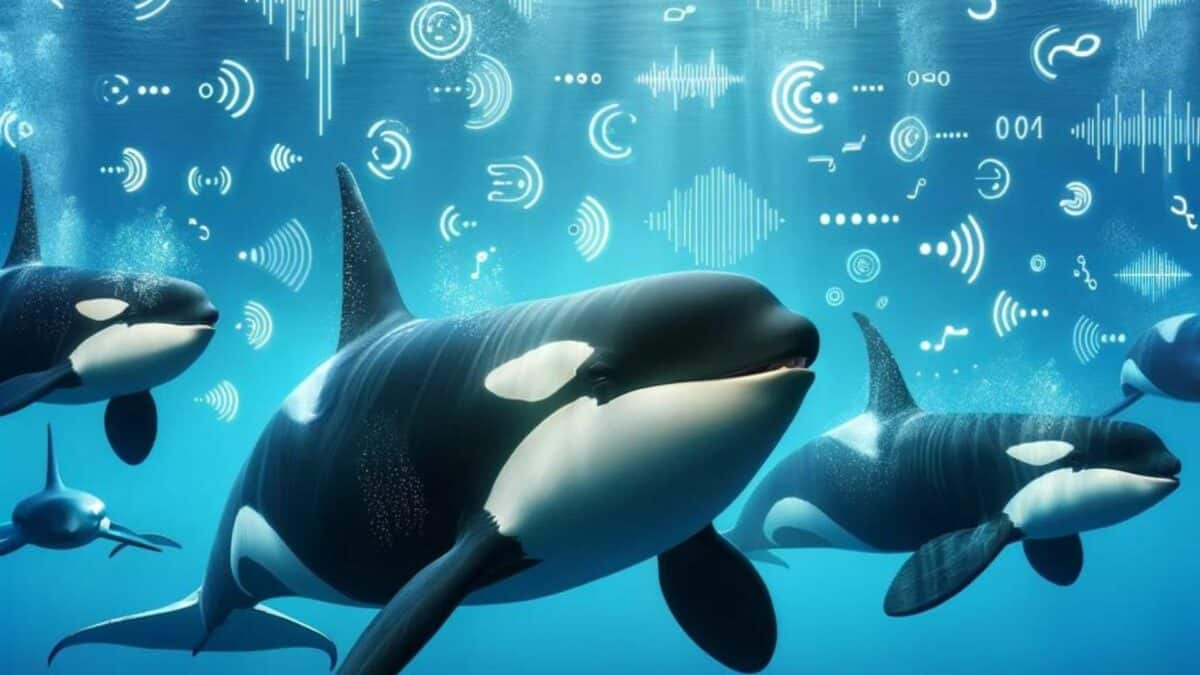
In addition, ships and boats create underwater noise so loud that it becomes hard for orcas to communicate and hunt. They rely on sound, the way bats do. So in areas where orcas frequently appear, vessels are now required to slow down and stay farther away.
Volunteers stand watch along the shore with binoculars. Scientists collect data. Students draw posters. Whole communities work to ensure the southern residents survive—the very people whose grandparents once applauded orcas at water parks.
Why This Story Matters
The story of the orcas of Puget Sound is the story of a mistake people made out of admiration—and of how they’re trying to correct it. It reminds us that loving something doesn’t necessarily mean doing it the right way. Sometimes you have to pause and ask: is what I love really good for the one I love?
Orcas can’t tell us what they’re missing. But they can show us—if we learn to look and listen. And maybe the most important thing those old water parks did—despite causing pain—was to teach whole generations of people to look an orca in the eye and see in it someone who deserves to live freely.