Imagine a fast-food restaurant wanted to open near your home. Usually adults get worried: there will be noise, more trash, more cars. Neighbors collect signatures, attend meetings and ask, "Don't build here!" But in Seattle a surprising reverse happened. When one burger joint planned to open new locations, the neighbors themselves campaigned for it to come to their area. They collected signatures, attended meetings and said, "Please build here!" How did the restaurant turn ordinary people into its defenders?
A burger joint with unusual rules
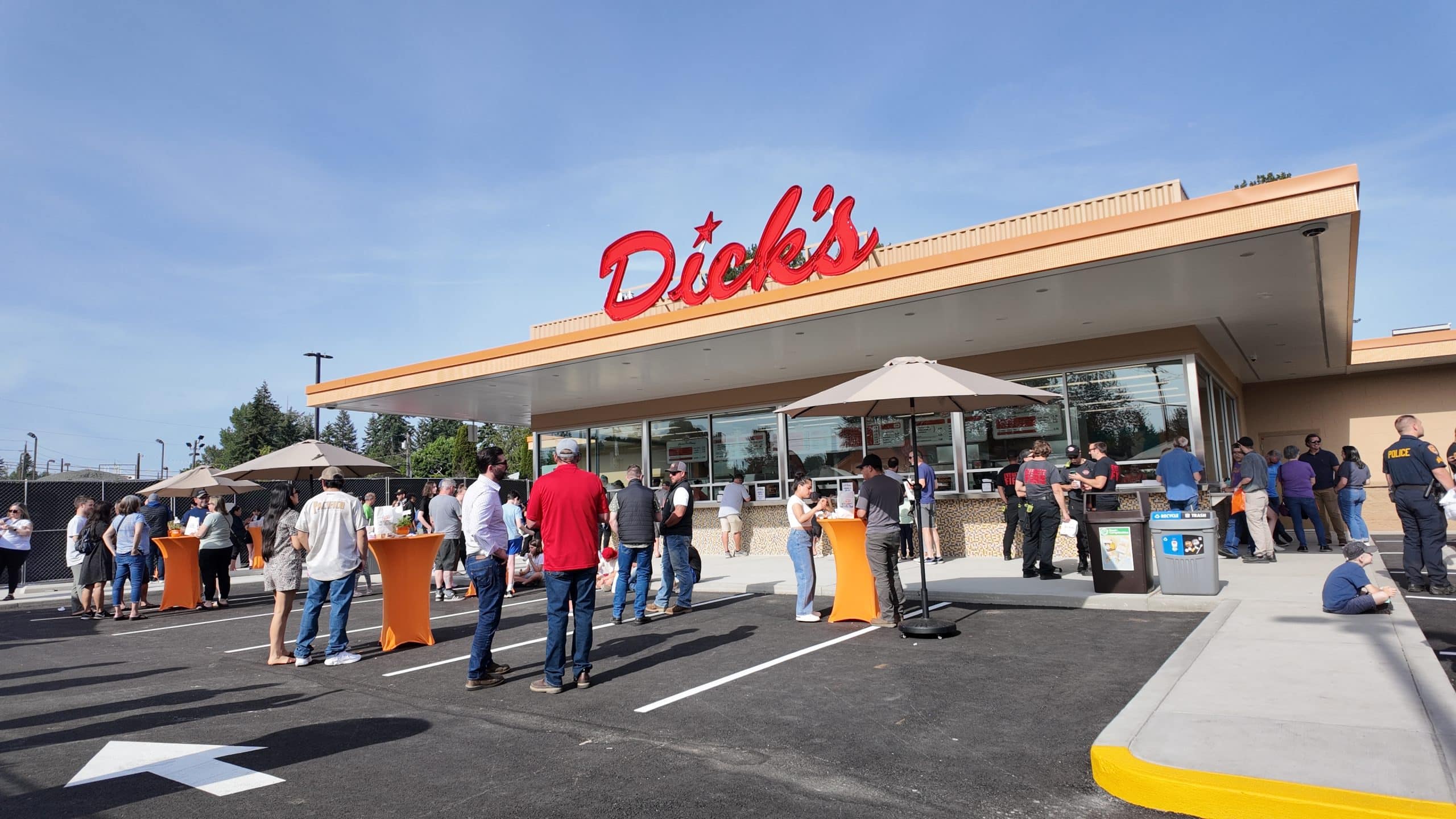
Dick's Drive-In is a Seattle restaurant chain selling hamburgers, fries and milkshakes since 1954. From the outside it looks like a typical diner: a bright sign, a walk-up window, the smell of fried patties. But inside this business are unusual rules the owners put in place many years ago.
First, Dick's pays its workers much more than other fast-food restaurants. While other places paid teenagers minimum wage (the lowest legal wage), Dick's paid them several dollars more per hour. Second, the restaurant provides health insurance to all employees — meaning if someone gets sick, they get help paying for medical care. For workers without higher education this is rare and a real treasure.
But most remarkable are the education scholarships. Every employee who has worked at Dick's for at least six months can receive money to attend college or university. Over the years the restaurant has helped thousands of young people get an education. Some became doctors, teachers, engineers — and it all began with a job at the burger window.
When neighbors become an army of defenders
In the 2010s Dick's decided to open several new restaurants in different Seattle neighborhoods. Plans like that usually cause controversy. Residents fear noise, traffic, that their quiet neighborhood will change. City officials review paperwork and hold public hearings where anyone can voice their opinion.
But when Dick's announced its expansion plans, something unusual happened. Dozens, sometimes hundreds, of residents showed up at public meetings — and all of them spoke in favor. People brought homemade signs reading things like, "We want Dick's in our neighborhood!" They told stories about how the restaurant helped their children, nephews, and neighborhood teenagers earn money for school. Parents said, "I want my kid to work here because they'll learn responsibility and be supported in their dreams."
One resident said at a meeting: "Normally we protest restaurants. But Dick's is not just a business. It's a neighbor that helps our kids." Another woman explained: "When a company cares about people, people care about the company." It was like the whole neighborhood stood up to defend a good friend.
A secret that turned out to be simple
Why did Dick's philosophy inspire such affection? The owners always believed in a simple idea: if you treat your employees well, they'll treat customers well, and customers will become your friends. It's like school: if a teacher is kind and fair, students work harder and defend them when someone criticizes them.
Dick's never chased rapid expansion. In almost 70 years the company opened just eight restaurants — very few compared with huge chains that have thousands of locations worldwide. The owners explained: "We don't want to grow fast. We want to stay good always." They refused to franchise (which would allow others to open restaurants under their name for money) because they feared losing control over quality and how employees were treated.
This slow, cautious strategy created something valuable: reputation. "Reputation" means what people think of you when you're not around. Dick's had a golden reputation. When someone said, "I worked at Dick's," others understood: that person is hardworking, responsible, and was given a good start in life.
A lesson for anyone building something important
The story of Dick's teaches an important lesson: kindness is not weakness, it's strength. When a business truly cares for people, not just for publicity, those people become its defenders. Neighbors who usually protest developments turned into an army of supporters. They wrote letters to officials, showed up at meetings after work, and persuaded skeptics.
It worked. Dick's received permits for new restaurants, often with the support of the very people who usually say "no." One city official admitted to reporters: "In my career I've never seen so many people actively campaign FOR a fast-food restaurant. It's usually the opposite."
Today Dick's remains a symbol of how a business can become part of a community, not just a building on a corner. When you care for people — pay fair wages, support education, give hope — you're not just selling burgers. You're building a bridge between your dream and other people's dreams. And when hard times come, that bridge holds because friends stand on both sides.
The story of Dick's reminds us: the strongest things in the world are built not from money and advertising, but from trust and kindness. And sometimes a small burger joint can teach that better than big corporations.