Imagine: your family moved to a new country after a war. You have almost no money, your English is poor, but there’s a river near your home full of fish. Your parents are glad — the family won’t go hungry. They catch fish, cook it for dinner, and everything seems fine. Then a doctor says the frightening words: “This fish is poisoned. Your children are getting sick from it.”
That’s exactly what happened to Vietnamese and Cambodian families who settled near the Duwamish River in Seattle in the 1980s. And instead of simply stopping fishing and staying silent, these families did something incredible: they forced huge factories and companies to clean up the river. This is the story of how ordinary people, whom no one wanted to hear, changed the laws of an entire state.
A river that fed and poisoned at the same time
The Duwamish River flows through Seattle’s industrial area. For more than a century, factories, shipyards and big companies (including the famed Boeing) dumped waste into it: chemicals, oils, heavy metals. No one worried much — wealthy people lived far from the river, and the poorer neighborhoods nearby simply endured it.
When refugees from Vietnam and Cambodia began arriving in Seattle in the 1970s–80s, fleeing war, they settled in the cheapest neighborhoods — right around the Duwamish. For these families, fishing was not a hobby but a means of survival. In Vietnam and Cambodia people had been fishing in rivers for centuries; it was part of their culture. Here, in America, where everything was unfamiliar and expensive, the river felt like a gift.
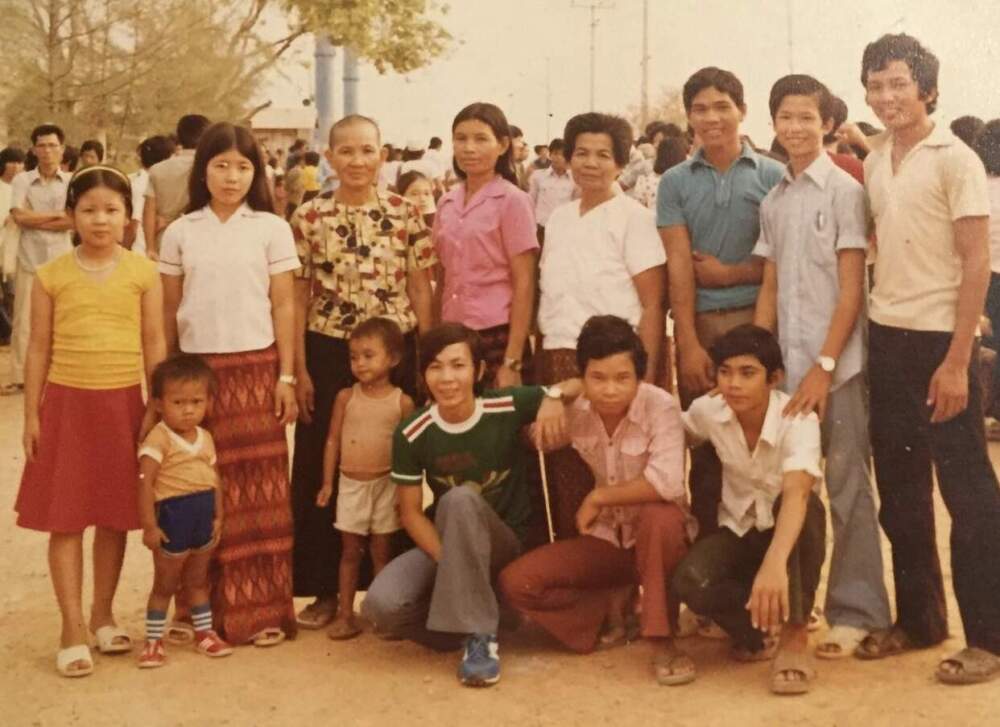
Families came to the shore in groups: grandmothers, parents, children. They caught salmon, flounder, crabs. Mothers prepared traditional soups and fried fish. Kids helped clean the catch. These were moments when refugees felt at home, could speak their language and eat familiar food.
But gradually people began to notice strange things. Children got sick more often. Adults developed unexplained health problems. Fish sometimes smelled of chemicals. In the early 1990s scientists conducted studies and discovered a horrifying truth: fish in the Duwamish contained PCBs (polychlorinated biphenyls — dangerous chemicals), dioxins, arsenic and lead. Eating it was dangerous, especially for children and pregnant women.
When nobody wants to listen to you
Washington state authorities issued warnings: don’t eat fish from the Duwamish more than once a month. But those warnings were only in English! Vietnamese and Cambodian families simply didn’t understand them. Even when activists began translating the information, many didn’t believe it: how could fish that looked normal be dangerous?
Worse, when immigrant families began complaining and demanding the river be cleaned, hardly anyone listened. Officials said, “Cleanup will cost millions of dollars, it’s too expensive.” Companies claimed, “We’re not responsible, this happened a long time ago under different laws.” Some even implied, “If you don’t like it, no one’s forcing you to live here.”
Imagine what that felt like: you survived a war, lost your home, came to a foreign country searching for safety, and now your children are being poisoned and no one cares. It would have been easy to give up. But these families proved to be incredibly strong.
How fishermen became activists
In the mid-1990s something remarkable began to happen. Vietnamese and Cambodian residents organized. They formed groups, started learning environmental laws, and found allies among American activists. That’s how the Duwamish River Cleanup Coalition (DRCC) emerged.
The coalition consisted of ordinary people: fishers, homemakers, elderly grandmothers who barely spoke English. But they learned to speak at public hearings. They brought photos of their children to meetings with officials and said, “This is my son, he’s eight, he has developmental problems because of poisoning. This is my daughter, she was born here — we wanted her to be healthy.”
One activist, Paulette Chang (though of Chinese descent, she worked with the Vietnamese community), recalled: “These women were amazingly brave. They were afraid to speak in front of a large audience, afraid of saying something wrong in English, but they still came. Because this was about their children’s health.”
The activists did smart things. They collected fish samples and presented analysis results. They brought doctors to hearings to explain how chemicals affect children. They organized demonstrations carrying signs in Vietnamese and English: “Our children have the right to clean water!”
A victory that took twenty years
The struggle was long. Companies resisted, hired expensive lawyers, tried to prove they weren’t obligated to pay for cleanup. But the activists didn’t give up. They wrote letters to newspapers, met with politicians, gathered signatures.
Gradually things began to shift. In 2001 the U.S. Environmental Protection Agency (EPA) officially designated the lower Duwamish as a Superfund site — meaning the location was so contaminated that the federal government was obliged to address the cleanup. That was a huge victory!
In 2014, after many years of litigation and negotiations, a cleanup plan costing $342 million was approved. Boeing and other companies were required to pay. Cleanup began: contaminated sediment was removed from the riverbed, special barriers were built, and habitat restoration work started.
But activists didn’t stop there. They pushed for pollution warnings to be printed in Vietnamese, Khmer, Lao, Spanish and other languages. They demanded that companies not only clean the river but also help affected communities — build medical centers, create education programs.
Why this story matters to you
The story of the Duwamish River teaches several important lessons. First, you don’t have to be rich or famous to change the world. Immigrant families with almost nothing forced huge corporations to clean up their mess.
Second, your voice matters, even if you feel small or “different.” These activists spoke with accents, sometimes stumbled over words, but they were heard — because they told the truth and wouldn’t give up.
Third, caring for nature is caring for people. When we pollute rivers and air, the most vulnerable suffer first: children, poor families, those who can’t afford to move to a cleaner place.
Today the Duwamish River is still not fully clean — cleanup continues and will take many years. But it is much better than thirty years ago. And that happened because ordinary people who loved fishing, loved their families and decided to fight for justice took a stand. They proved: when people unite and aren’t afraid to speak the truth, even the biggest problems can be solved.