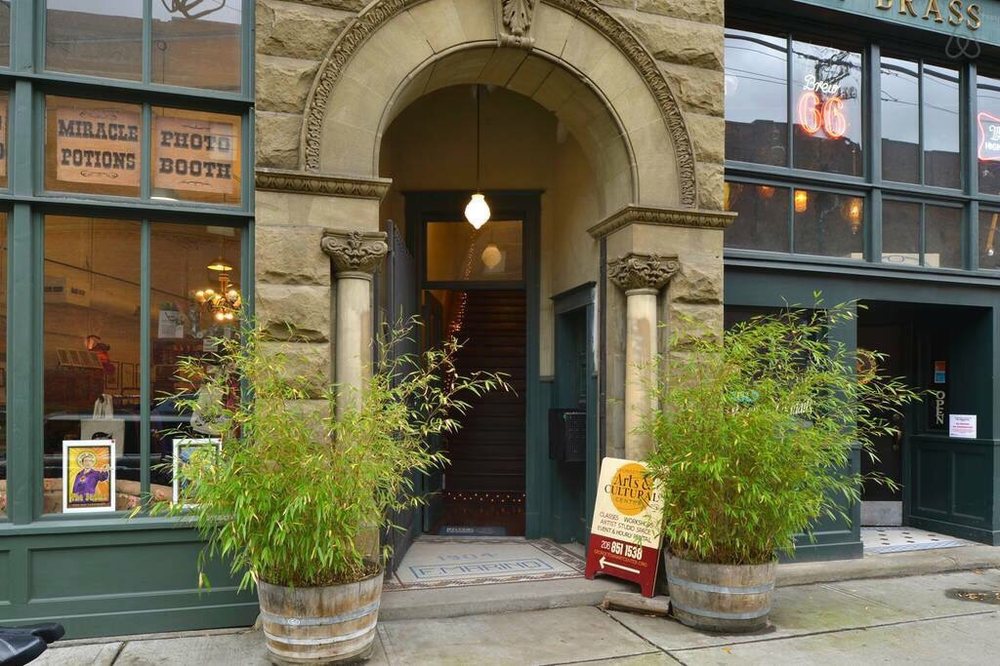
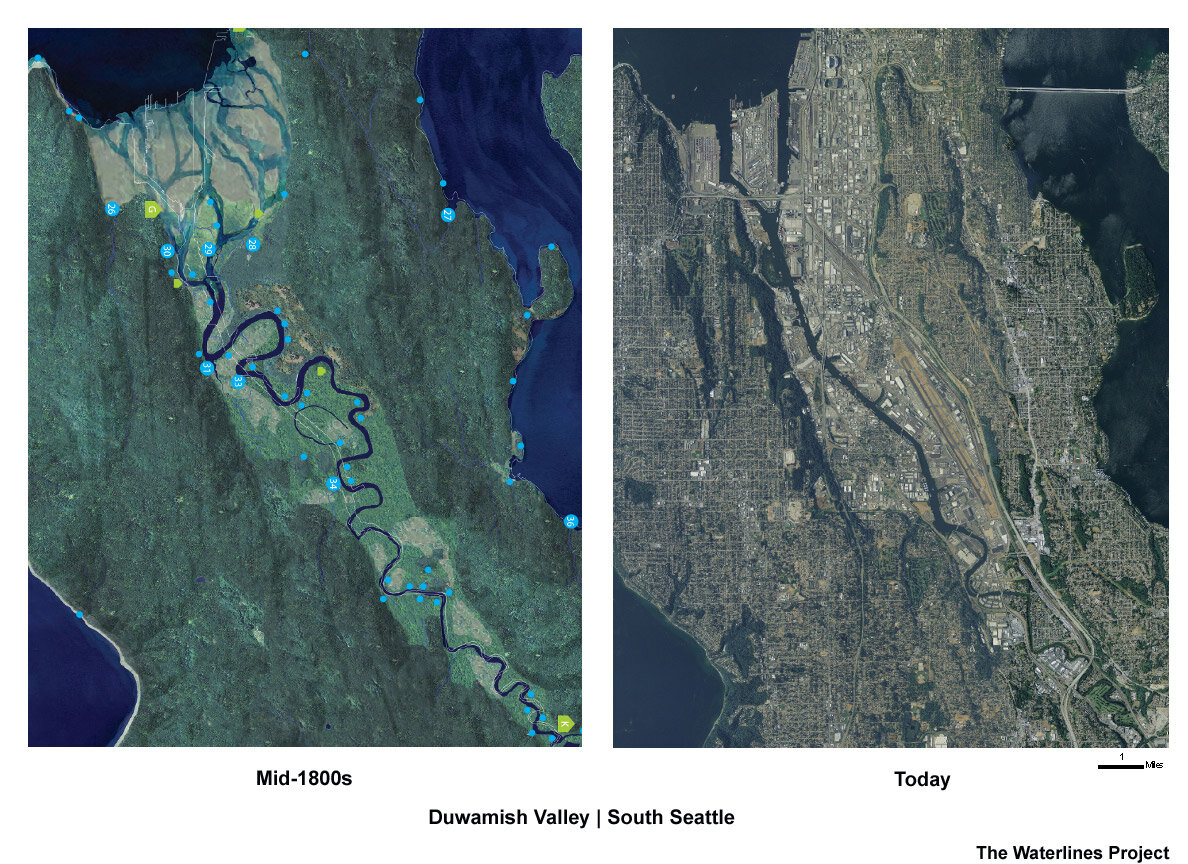
Imagine a street where instead of flowers there are rusted pipes, instead of birdsong there’s the roar of cars, and instead of the smell of baking there’s smoke from factory smokestacks. That’s what Seattle’s Georgetown neighborhood looked like more than a hundred years ago. But then something astonishing happened: artists came—and everything changed. Not all at once, not by magic, but slowly and for real. And even the river began to change along with the neighborhood.
When This Place Was Buzzing and Belching Smoke
Georgetown is one of Seattle’s oldest neighborhoods. At one time, it was even a separate city—with its own mayor. But in 1910 it was annexed to Greater Seattle: residents resisted for a long time, but eventually agreed.
At the beginning of the 20th century, Georgetown was the city’s true industrial heart. There were factories, breweries, and huge warehouses. In 1916, an engineer named William Boeing built his first airplane factory here—inside a simple wooden shed on the banks of the Duwamish River. That shed still stands today and is called the “Red Barn.” It’s now a museum, visited by thousands of people.
Georgetown also had a massive steam power station, built in 1906. It supplied electricity to streetcars that carried people all around Seattle. Picture it: a building with ceilings as tall as a three-story house, giant machines, and copper pipes—like a castle made of steel and brick. When the streetcars were removed from the streets in 1941 and replaced with buses, the station was no longer needed. It was shut down. And it just sat there—quiet, empty, forgotten.
The Duwamish River, which runs alongside Georgetown, was affected too. For decades, factories dumped waste into it. The water turned dirty, and the fish disappeared. The Duwamish people—an Indigenous community that had lived here for thousands of years and had called this river home—watched with pain as what was happening to it.
Artists Found Treasure in Old Walls
In the 1990s, factories began closing or relocating. Georgetown emptied out. Large buildings stood unused, and rent became very cheap. And that’s when artists started moving into the area.
Why artists