Imagine your favorite food is pineapple pizza. You eat it every day, your mother ate it, your grandmother did too. Your whole family loves that exact pizza. Now imagine that one day all the pineapples disappeared. Forever. You’re offered pizza with mushrooms, with cheese, with tomatoes, but you only want the pineapple one. That’s roughly what happened to the orcas in Puget Sound, Washington. Only instead of pizza they had chinook salmon, and instead of vanished pineapples — blocked rivers.
This story began more than a hundred years ago, when the great‑grandmothers of today’s orcas were still young. Back then there were so many huge, fatty salmon in the sound that the water seemed to boil with fish. But people decided to build large dams on rivers — to get electricity and water for farms. They didn’t think about the fact that salmon swim from the ocean up rivers each year to spawn where they were born. The dams became giant locks on doors the salmon couldn’t pass. And year after year the salmon numbers dwindled.
The pickiest eaters in the ocean
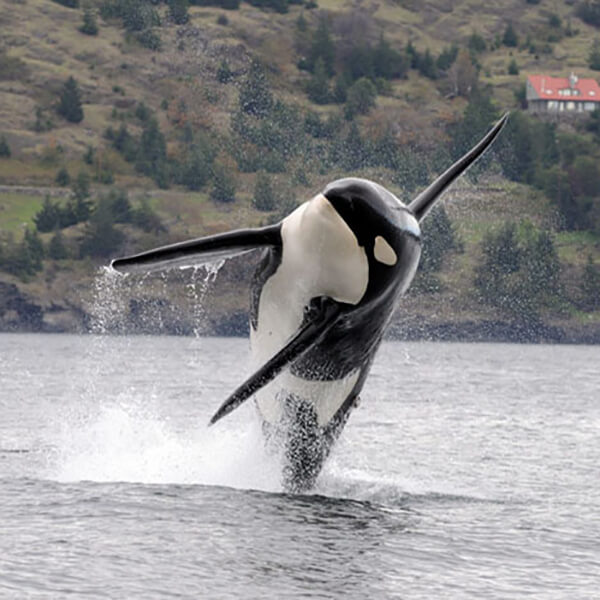
The orcas that live in Puget Sound are called the Southern Resident orcas. That’s not just a pretty name — it’s a specific community made up of three groups, or "pods": J, K and L. Each pod has a grandmother orca who remembers everything and teaches the rest. These grandmothers can live to 80–90 years, and some still remember when salmon were abundant.
Here’s the surprising part: scientists found that these orcas eat almost exclusively chinook salmon. Not pinks, not coho, not sockeye — chinook. It’s the largest Pacific salmon species, it can weigh up to 30 kilograms, and it’s very fatty. For an orca that weighs 3–4 tonnes and swims in cold water, fat is fuel. An orca needs to eat about 100–150 kilograms of fish every day just to avoid starving.
Why don’t they switch to other fish? Scientists think it’s cultural. Yes, orcas have culture. Grandmothers teach the young where to find fish, how to catch it, what sounds to make to communicate. Each pod speaks its own "dialect" — uses distinctive calls that differ from other orca families. For centuries the Southern Resident orcas specialized in hunting chinook in particular places, and that knowledge was passed down from grandmothers to grandchildren like a family recipe.
A story about people closing the doors to fish
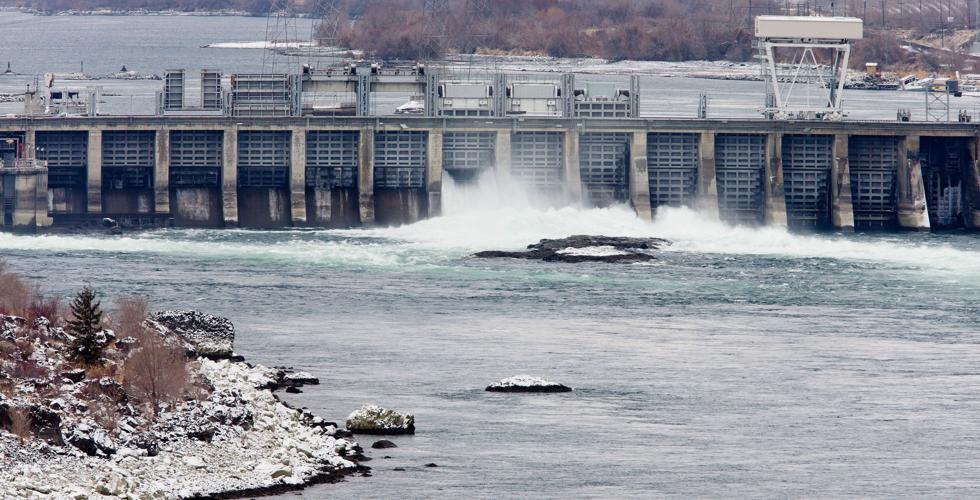
In the early 1900s people in the American Northwest were building a new life. They needed electricity for factories and homes, water for vast farms. The simplest solution seemed to be building dams on the big rivers — the Columbia, the Snake and their tributaries. The first large dams appeared in the 1930s. Grand Coulee, one of the biggest, was completed in 1942.
Those dams were a disaster for salmon. Imagine: salmon are born in a small stream high in the mountains. Then they swim downstream to the ocean, where they live for several years, growing and fattening. When it’s time to reproduce, they return — swimming upstream, against the current, to the exact place where they were born. That journey can be a thousand kilometers long. Salmon leap rapids, swim against strong currents, and often don’t eat the whole way. Now imagine a concrete wall the height of a 50‑story building rising in the middle of the route. The path is blocked.
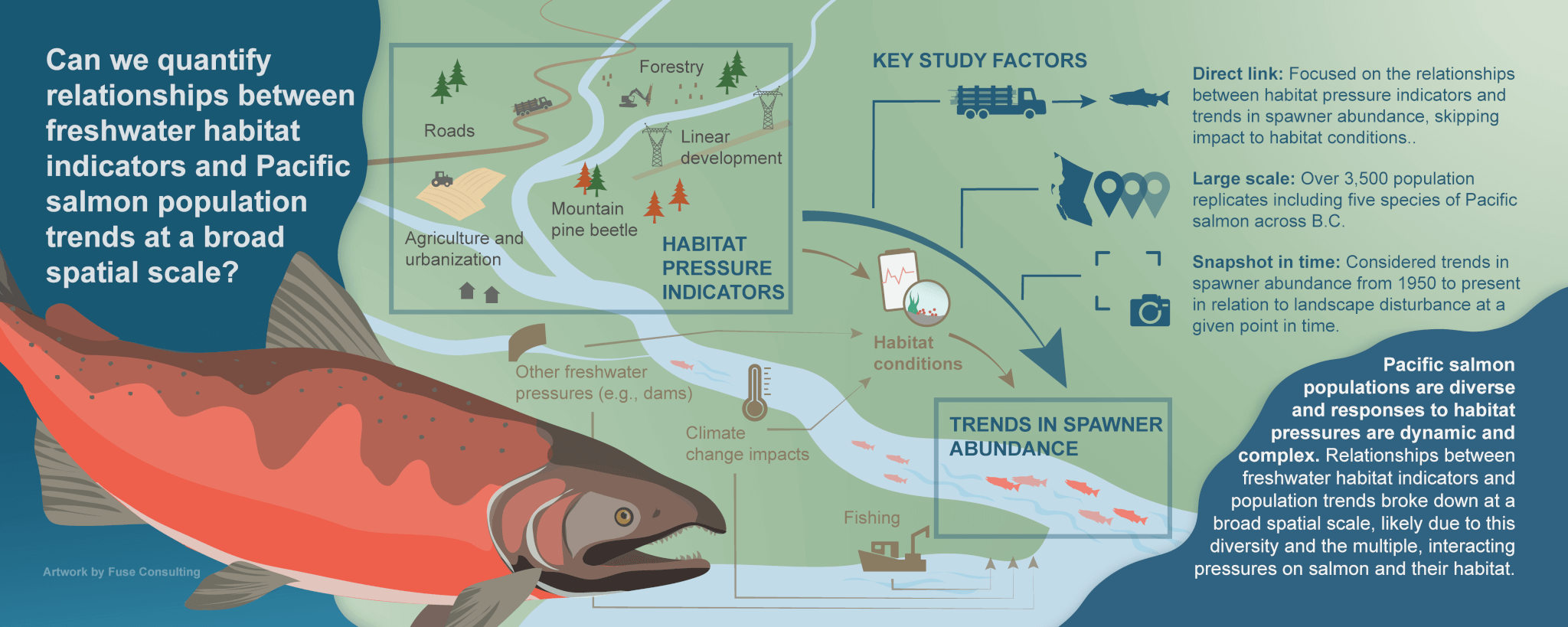
Some dams were built with special "fish ladders" — stepped water passages that salmon can climb. But many salmon don’t find those ladders, and some dams have none at all. By the 1990s chinook numbers in Washington and Oregon rivers had fallen 90–95% from historical levels.
Grandmothers who remember better times
Today there are only about 75 Southern Resident orcas in Puget Sound. In the 1990s there were about 98. Scientists say the main cause is hunger. The orcas can’t find enough chinook, especially in winter and early spring, when the salmon ought to be returning to the rivers to spawn.
The saddest part is that in pod J there was an orca named J2, nicknamed Granny. When she died in 2016 she was over 100 years old. She was born around 1911 — before the big dams were built. She remembered the times when salmon were so plentiful orcas didn’t have to search for weeks. Granny was a matriarch — the leader of her family. She led her pod to places that used to always have salmon. But the salmon were no longer there.
Scientists have observed orcas changing their behavior. They used to swim close to shore in familiar spots. Now they travel farther out into the ocean, searching in new areas. But that is risky: there are more ships (noise interferes with orca communication and hunting), different predators, unfamiliar territory.
Researchers also noticed something remarkable: when food is scarce, grandmother orcas share their catch with their children and grandchildren. They eat less themselves so the young can survive. That shows how strong family bonds are among orcas. But it also means old females weaken faster.
People trying to fix the mistake
The good news is people have finally recognized the mistake and are trying to help. In recent years some old dams have begun to be removed. In 2011 the Elwha Dam in Washington — as tall as a 30‑story building and more than 100 years old — was demolished. When it was removed, salmon were able to return 110 kilometers upstream for the first time in a century.
Scientists track each orca in the Sound. Each has a name and number. They’re recognized by the white patches and the shape of their dorsal fins — each dorsal fin is unique like a fingerprint. When a calf is born it’s a celebration for everyone who studies the orcas. When someone dies, it’s mourning.
There are river restoration projects in places where salmon could spawn. Farmers are learning to use less water. The removal of several large dams on the Snake River is being discussed. It’s a complex decision because dams provide electricity and help move cargo by barge. But more people are realizing: without salmon, there won’t be orcas.
Another problem is water pollution. Scientists find chemicals in orca blubber that came from factories and farms. When an orca starves and starts burning its fat stores, those toxins enter the bloodstream. That makes orcas sick and interferes with their ability to have healthy offspring.
Why this matters to all of us
The story of the Puget Sound orcas teaches an important lesson: nature is like a web. Pull one thread and the whole web trembles. People built dams for their needs and didn’t think about the impact on fish. The fish disappeared — and the orcas began to starve. Orcas are apex predators and show the health of the entire ecosystem. If they’re doing poorly, something is wrong with the whole system.
The story also shows that the choices we make today will affect the world a hundred years from now. The great‑grandparents who built dams in the 1930s couldn’t imagine their descendants would be dismantling those dams.
But most of all — this is a story of hope. The orcas are still here. They still swim in the sound, still teach their young, still remember where salmon used to be. And people are finally trying to help. Maybe in twenty or thirty years the young orcas born now will become grandmothers and tell their grandchildren about times when salmon became plentiful again. They will be the new Grannies who remember not hungry years, but the time when people fixed their mistake.