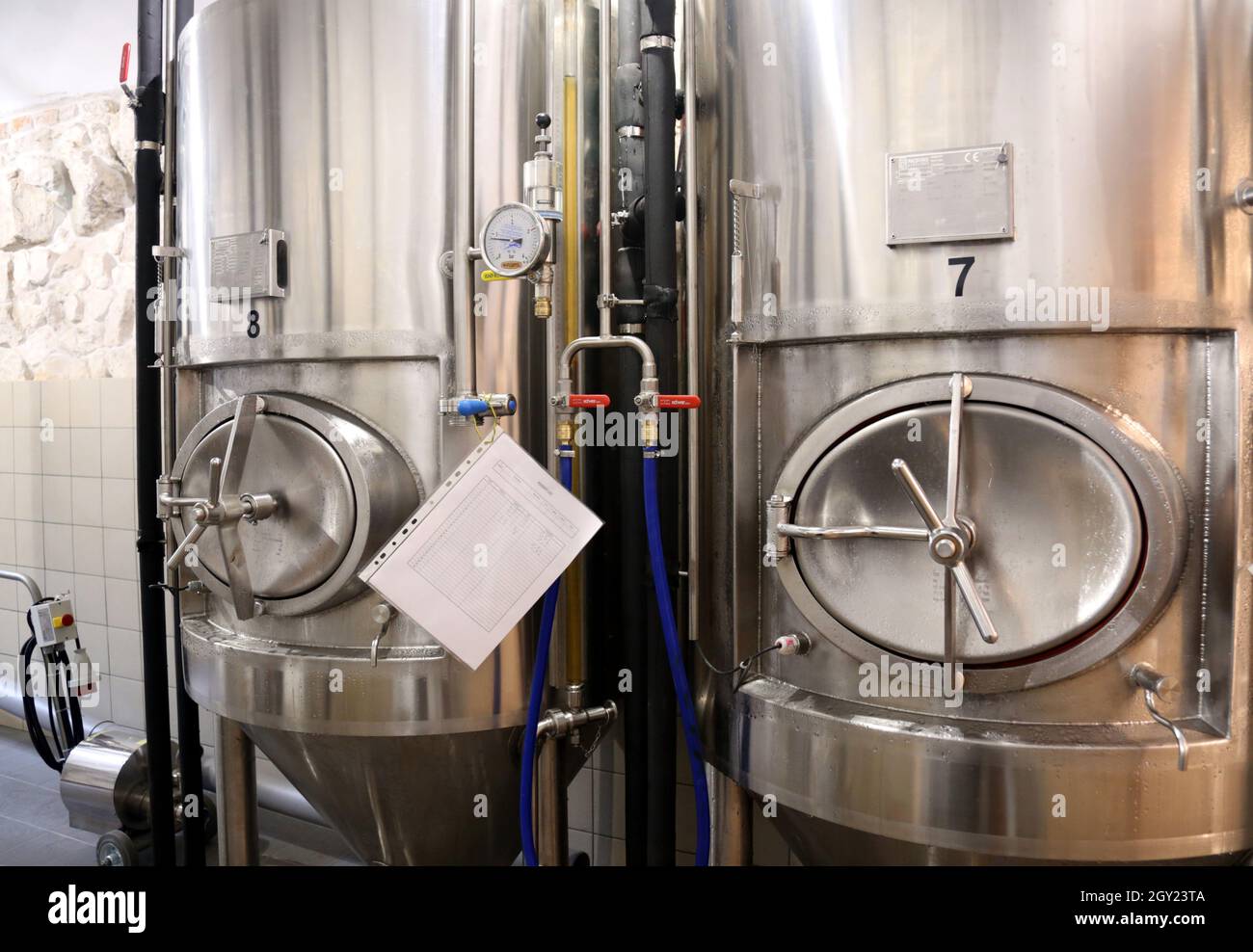
Imagine your grandmother can work a kind of magic in the kitchen. She puts cabbage into a jar, adds salt and water, and after a few days tiny bubbles begin to appear. The cabbage turns into something sour and delicious. It's not a trick — it's fermentation, when invisible living beings (bacteria and yeast) turn one food into another. And that very knowledge helped a group of immigrants build what Seattle is most proud of today — its famous small breweries.
In the 1970s and 1980s thousands of families came to Seattle from Vietnam, Laos, Cambodia, Poland, Ukraine and other countries. Many fled wars. They arrived with almost nothing, but they brought their grandmothers' recipes. These families knew how to make kimchi (spicy Korean cabbage), sauerkraut, pickles, kvass and other foods where the main chefs were those same magical bubbles. No one then knew that these people would become the secret ingredient of Seattle's success.
When the city forgot how to brew beer
By the 1980s there were almost no true brewers left in Seattle. Big companies made beer in massive factories where machines controlled everything. The beer was uniform and not very interesting — as if every school lunch had become the same peanut-butter sandwich every day.
But a few enthusiasts decided they wanted to brew differently — in small batches, with varied flavors, like it had been done before. The problem was they didn't know how to do it by hand. They needed people who understood how living organisms worked, who could feel temperatures, who could tell by smell whether the process was going right.
And then something surprising happened. When the first microbreweries began hiring workers, many immigrants came for those jobs. At first brewery owners thought they'd simply teach new employees from scratch. But very quickly they realized they were the ones learning.
People who understood the language of bubbles
Nguyen, who arrived from Vietnam, told his boss at the brewery that the beer fermentation process reminded him of how his mother made fish sauce at home. He could tell by the sound of bubbles and the smell what stage the fermentation was at. Maria from Poland explained why it was important to keep a certain temperature — she had been doing that for years while fermenting cabbage in the cellar.
These workers understood something important: the living organisms that turn grain into beer are not machines. You can't just program them. You have to befriend them, like domestic animals. You need to feed them at the right time, keep them warm (but not too hot), listen to them and even talk to them. Immigrant grandmothers had known this for centuries.
One brewery owner in the Georgetown neighborhood later admitted in an interview: "I thought I was the teacher. But in fact my immigrant employees taught me to understand beer not as a chemical formula, but as a living thing. They felt it."
Traditions meet and create something new
The most interesting things started when different traditions met in the same kitchen — that is, in the same brewery. Imagine you have a box of red LEGO bricks and a box of blue ones. When you mix them you can build something entirely new that couldn't be made from just one color.
Vietnamese workers knew how to work with rice and spices. Polish workers — with rye and sour flavors. Ukrainian workers — with honey and fruit. When American brewers began experimenting with new recipes, their immigrant staff would say, "Why not try adding this?" or "In my country we make something similar, but a little differently."
That's how beer styles that hadn't existed before appeared. Beer with lemongrass (a Vietnamese herb). Beer with rye bread (an Eastern European tradition). Beer with unusual spices most Americans had never heard of. Seattle became a city where beer was not just a drink but a blend of the world's cultures in a single glass.
By the 2000s Seattle had become one of the main centers of craft beer in America. Tourists came specifically to try the local brews. Other cities asked, "How did you do it?"
A lesson for other cities
Seattle's story teaches an important thing: the best ideas don't come when everyone does the same thing, but when different people bring their knowledge and mix it together.
Many cities tried to copy Seattle's success. They opened breweries, bought the same equipment, used the same recipes. But often they couldn't match the results. Why? Because they forgot the most important thing: the people.
Seattle didn't set out deliberately to create a microbrewing movement with the help of immigrants. It just happened because the city was open to new people and their knowledge. Immigrants didn't just work at the breweries — they were listened to, their ideas were valued, they were given room to experiment.
Today some of those immigrant workers who started out washing barrels and stirring malt have become brewery owners themselves. Their children study brewing in college. Their grandchildren are proud that their families helped build what Seattle is famous for.
What truly makes a city rich
When people speak about a city's wealth, they often think of money or tall buildings. But the story of Seattle's breweries shows a different kind of wealth — the wealth of knowledge that people from different countries bring.
A Vietnamese grandmother who taught her daughter to make fish sauce didn't know she was passing on knowledge that would help Seattle become famous. A Polish mother who showed her son how to ferment cabbage didn't think she was teaching a future profession. But those simple, homegrown skills turned out to be priceless.
Other cities can learn from Seattle: you don't have to invent everything from scratch. Sometimes the best solutions already exist — in the heads and hands of people who came from far away. You just need to give them a chance to share what they know.
Today, when you see a beer from Seattle in a store (of course, when you grow up!), remember: in every bottle there is not only water, hops and malt. There is the story of grandmothers who knew the secret of magical bubbles. There is the courage of people who came to a new country and weren't afraid to share their traditions. And there is the wisdom of a city that understood: real wealth is when different people create together something new that no one could have made alone.