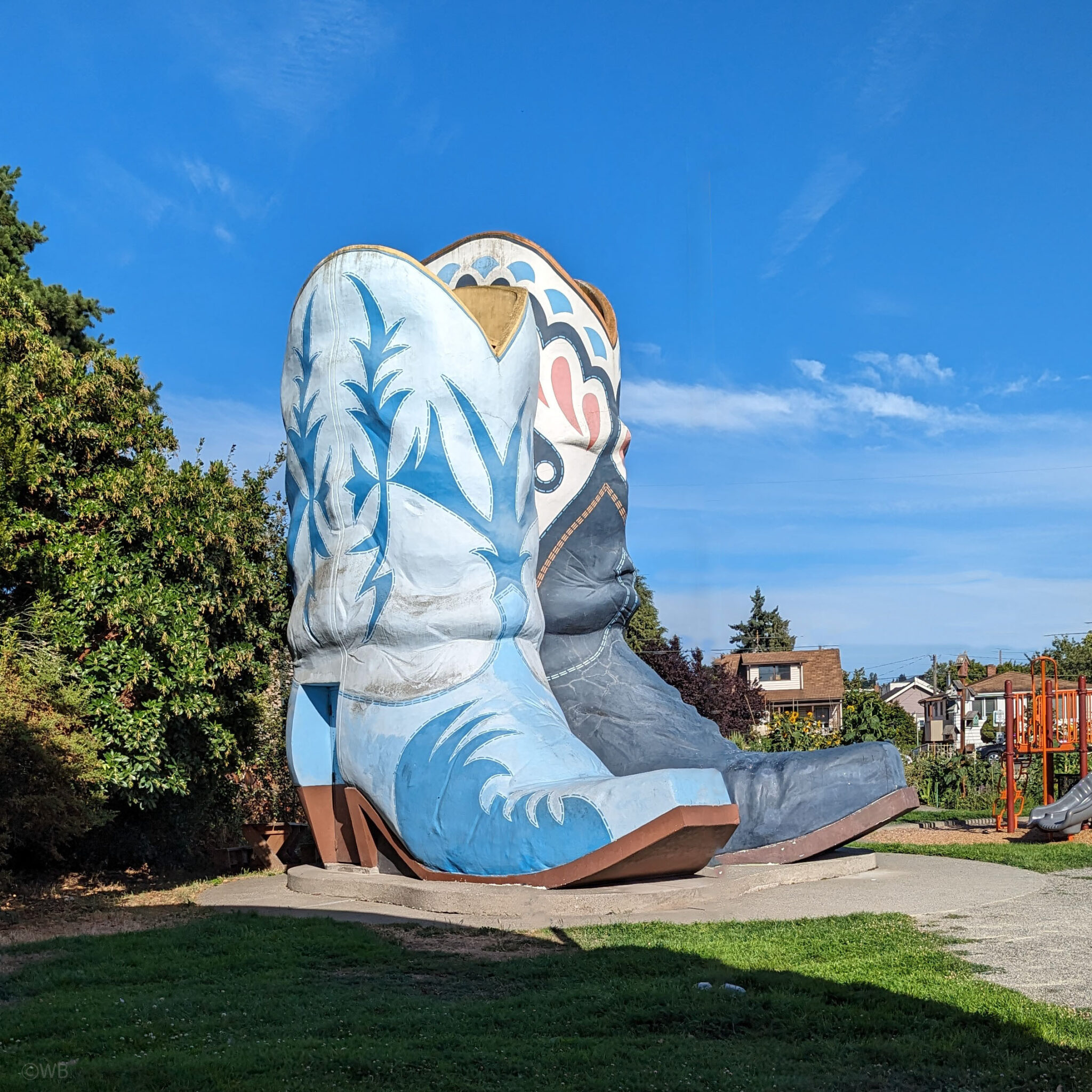
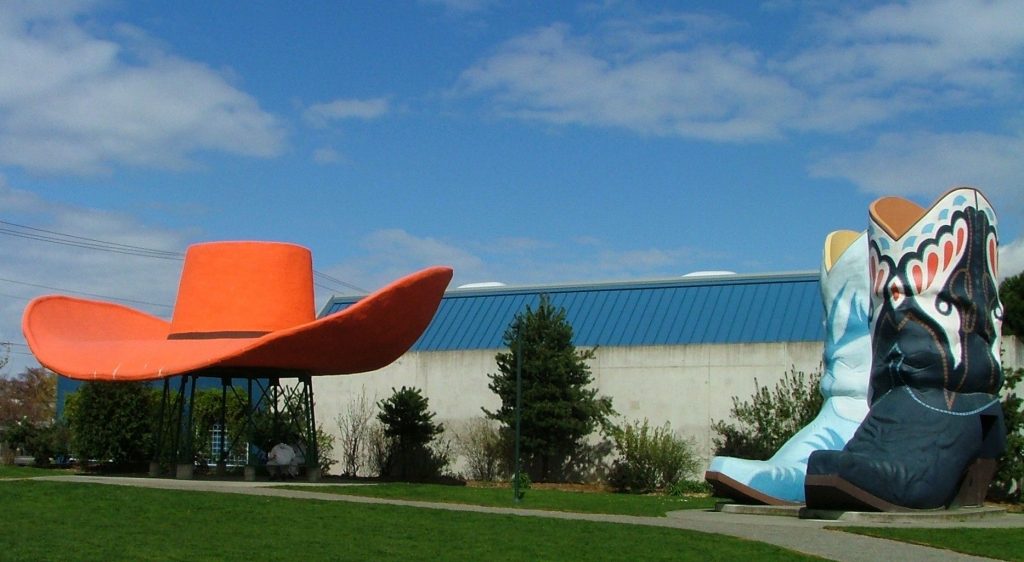
In one Seattle neighborhood stand enormous cowboy boots as tall as a two-story house. Nearby is a giant cowboy hat that once sheltered a gas station. These strange sculptures tell an astonishing story of how an entire neighborhood transformed from a sad, empty place into a vibrant space full of artists, musicians, and dreamers. The story shows how decisions made many years ago create problems today — and how people find creative ways to solve them.
A neighborhood that made things
Georgetown is a small neighborhood in South Seattle that in the early 1900s was full of factories and plants. They brewed beer here, built airplanes, and produced metal parts. The air smelled of smoke from the stacks, trucks rolled down the streets, and workers in overalls hurried to their shifts. In 1954 someone built a Wild West–style gas station with a giant hat instead of a roof and huge red boots nearby — designed to attract drivers. It was fun and unusual.
But then everything changed. By the 1980s many factories had closed. The people who worked there lost their jobs and moved away. Large brick buildings sat empty. The gas station with the cowboy hat also shut down, and the giant boots just stood on overgrown grass like forgotten toys. The neighborhood became quiet, but not in a good way — quiet like an abandoned house.
The planners who had zoned the city decades earlier had made Georgetown an "industrial zone" — a place only for factories and warehouses, not for homes and parks. That seemed right when the factories were running. But when the factories closed, that decision became a problem: empty buildings remained, the land was contaminated from past manufacturing, and no one knew what to do with it.
Artists who saw an opportunity
In the late 1990s and early 2000s artists began arriving in Georgetown. Why? Because the old factory buildings were huge and very cheap. Artists need lots of space to work — to paint large canvases, make sculptures, and store materials. In downtown Seattle that kind of space was very expensive, but in Georgetown you could rent an entire floor of an old warehouse for little money.
Artists started turning empty factories into studios. They cleaned up trash, painted walls, and put in new windows. One by one came sculptors, painters, metalworkers, and designers. They held shows right in their workshops, inviting people to see the art. Gradually visitors began coming to the neighborhood.
Small theaters, music clubs, and cafés appeared. People who brewed beer by hand (this is called “craft brewing”) also found the old warehouses ideal for their tiny breweries. The neighborhood began to awaken, but in a very different way than before. Instead of trucks, the streets were full of people with cameras; families came on weekends to see art and listen to music.
The boots that almost disappeared
What happened to the giant cowboy boots and hat? When the gas station closed, the landowner wanted to tear them down — simply throw them out like old furniture. But neighborhood residents said, “No! These boots are part of our history!”
They organized a campaign to save Hat n' Boots (that’s the sculpture’s name). People wrote letters, raised money, and talked to city officials. In 2003 the boots and hat were moved to a park and restored — cleaned, repainted, and repaired. Now children play around the giant boots, and families picnic under the enormous hat.
This story became a symbol of what was happening across the neighborhood: people didn’t want to forget the past and build everything brand new. They wanted to preserve the memory of what Georgetown had been while creating something fresh and alive.
New problems from old decisions
Today Georgetown is a successful example of how an industrial area can be turned into a creative space. But the story didn’t end in a permanent happy ending. New problems arose that are connected to those same old decisions.
Remember how planners long ago zoned Georgetown as “industrial only”? That decision still causes difficulties. It’s hard to build new homes in the neighborhood because the rules say: “This is for factories, not housing.” The artists and musicians who revived the area now often can’t afford to live there — they have to commute from farther away.
Another problem: when the neighborhood became popular, rents went up. Those cheap warehouses that attracted artists now cost more. Some property owners want to rent spaces not to artists but to corporate offices that can pay higher rents. The paradox is that the artists made the neighborhood interesting, and now they can’t afford to stay.
There are also remnants of the old factories in the ground — chemical contaminants that make the soil dirty. Before anything new can be built, the land needs to be cleaned up, which is very expensive and time-consuming.
Lessons from the giant boots
Georgetown’s story teaches several important lessons. First, decisions made today (for example, where to put factories and where to put parks) affect people’s lives many, many years later. Second, when things go wrong, people can find creative solutions — sometimes a problem becomes an opportunity.
Georgetown residents showed it’s important to remember a place’s history (which is why they saved the boots), while also not being afraid to change (which is why they transformed factories into studios). They also showed that change should be fair: when a neighborhood improves, it’s important that the people who made it better can continue to live there.
Today Georgetown holds an arts festival every second Saturday of the month. People come to see artists’ work, listen to music, and walk the streets that used to be filled only with trucks. Children take photos in the giant cowboy boots. And every time someone looks at those boots, they see a reminder: even when it seems everything is lost, it’s possible to find a way to start over while keeping the best of the past.
The giant boots stand and wait — a symbol that the neighborhood’s future is written by the people who live, work, and dream there.