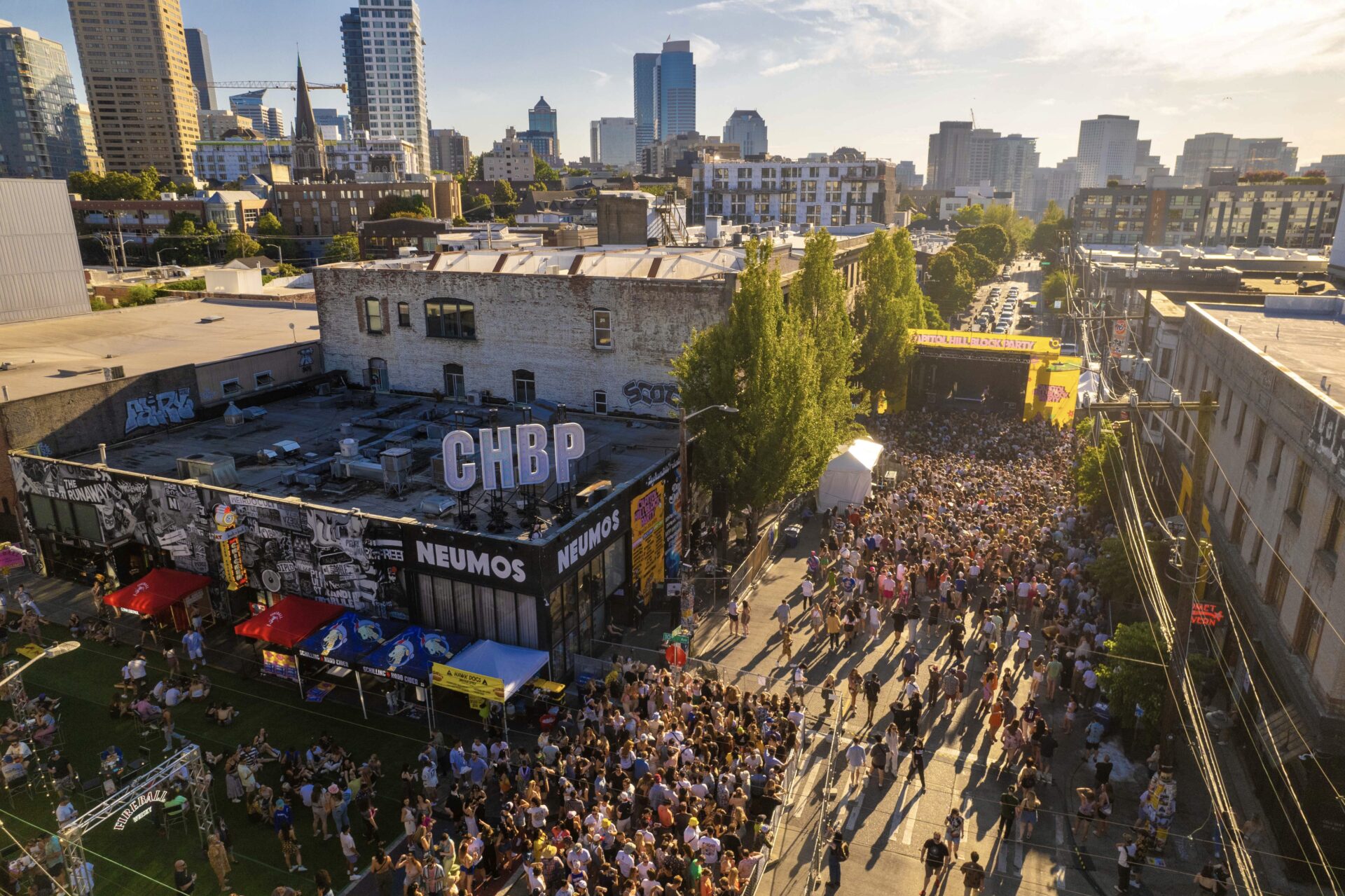
Seattle has a neighborhood called Capitol Hill, and every summer its streets are closed to cars so people can walk, listen to music, and dance. The celebration is called the Capitol Hill Block Party. It didn’t start on a huge stage, but as a small gathering of neighbors. And old buildings that once sold cars helped bring it to life.
The Street Where Cars Lived
More than a hundred years ago, the first cars began rolling across the world, and people wanted to buy them. In Seattle, an entire street sprang up for that purpose, known as Auto Row. It ran along Pike and Pine streets.
Car dealerships were built to make cars feel at home:
- the showrooms were very large and had few walls, so they could display lots of cars;
- the windows were huge, so passersby could admire the newest cars right from the street;
- the floors were sturdy because cars are heavy;
- the façades were decorated with brick and ceramic patterns, because buying a car was considered a real celebration.
Imagine a big construction-toy box: it’s empty inside, full of light, and you can put anything in it. That’s what these buildings were like.
When the Cars Drove Away
As the years went by, car dealerships moved elsewhere, where there was more land for parking. Their beautiful, spacious showrooms stood empty.
The vacant buildings were inexpensive, so people who couldn’t afford costly spaces began moving in: musicians, artists, and owners of small cafés and bars. A spacious room with sturdy walls is perfect for a band that needs to rehearse and make noise. An artist needs big windows and light. That’s how “homes for cars” became homes for music, art, and gatherings.
The neighborhood had always been a place where people with different views and different ways of life sought one another out and found each other. Many came because they felt accepted there. And where people feel comfortable together, a celebration is bound to take shape.
How the Celebration Began
The Capitol Hill Block Party began in the early 1990s, according to sources. At first, it was a small celebration for the locals: residents and neighborhood businesses took to the street, played music, and shared food. For one day, the street became one big communal living room.
Over time, people beyond the neighborhood heard about the celebration. Today, thousands of people come, and well-known bands perform. But its heart is still the same: it looks the way it does because the neighborhood was built with spacious halls and wide streets where people want to gather.
If the buildings had been small, cramped, and closed off, musicians, artists, and neighbors would have had nowhere to meet.
The Buildings That Were Saved
Later, many new high-rises began going up in Capitol Hill. Residents grew worried: if the old car dealerships were torn down, the places where local music and culture were born would disappear too.
People spoke up, debated the issue, and asked the city government for help. In 2009, Seattle established the Pike/Pine Conservation District. Its rules encourage developers to preserve old “character” buildings rather than tear them down. A new building can be made taller if the old façade remains standing. It’s a sensible deal: the city grows, but the memory of the past doesn’t disappear.
It’s a bit like your grandmother’s jewelry box. You don’t have to throw it away to buy a new box—you can simply put your new things alongside the old ones.
What Matters Here
I think this story teaches us two things. First, places become beloved not because they’re expensive and shiny. Sometimes the simplest things become favorites: a big hall, a wide window, a stretch of street where you can dance with friends. Second, places like these need to be cared for, because without people to protect them, they can disappear.
The next time you hear about a street festival, think about how it came to be. People came up with the idea, but the buildings helped too: spacious halls, big windows, sturdy walls. The old car dealerships no longer sell cars, but they’ve learned to sing.