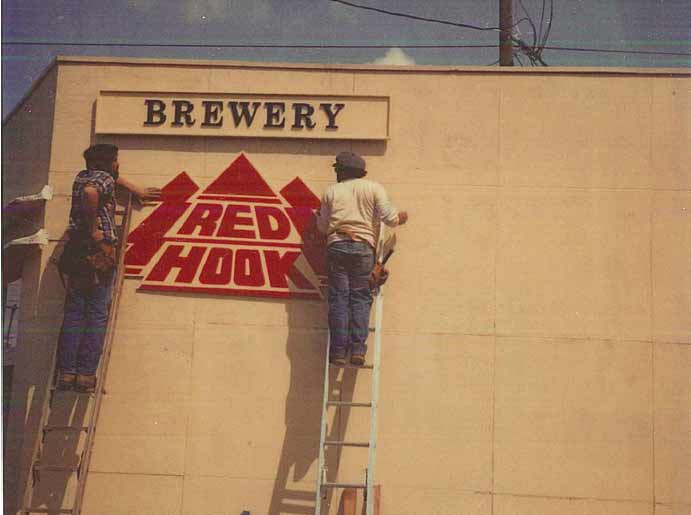
Once, people in America were not allowed to create their own recipes for adult beverages—not because nobody knew how, but because the law said so. Then the laws changed, dreamers got to work, and Seattle developed an entire movement of makers that became part of the city’s character. Today, it is famous far beyond America. Let’s look at how it happened. (An important clarification: this is a story about adult beverages that children must not try, so what interests us here is not the drink itself, but the people, ideas, and laws surrounding it.)
When Making Something of Your Own Was Forbidden
In 1920, Prohibition began in the United States. It banned the production and sale of alcoholic beverages and beer. The country lived under these rules for 13 years, and the ban was repealed in 1933.
But here is what is interesting: when Prohibition ended, the old variety did not return. Small breweries had closed, and what remained were mainly huge factories producing nearly identical products for the entire country.
Imagine that your city once had many small bakeries, each with its own secret pastry recipe. Then they were all shut down, and later allowed to reopen—but by that time, only three enormous factories remained, all making the same pastry. That is roughly what the situation looked like. People who loved variety found it a little boring.
The Law That Opened the Door
Then came 1978. U.S. President Jimmy Carter signed a law allowing people to brew beer at home for their own use—so-called homebrewing. Before that, in many places, even brewing in your own kitchen was illegal, although many people quietly experimented anyway.
The law sent an important signal: people were now allowed to experiment, learn, and discuss recipes with friends and neighbors. Clubs for enthusiasts began to appear, where people exchanged knowledge. It was as if you had finally been allowed to openly pursue your favorite hobby and discovered others who shared your interests.
This was very important to the history of our city: these “kitchen” enthusiasts would later become true professionals.
Redhook and the First Step in Seattle’s Story
In 1981, two people—Paul Shipman and Gordon Bowker—founded a brewery in Seattle called Redhook. Gordon Bowker is also known as one of the founders of Starbucks, so he already had experience creating something new that the entire city would come to love. Redhook became one of the first craft breweries in the northwestern United States—a place that produced beer in small batches, with its own character, rather than mass-producing it like giant factories.
As with many new ideas, there were doubts: Would customers come? Was it too unusual? Would the regulations allow it? But people in the city became interested, tried it (this is an adult story, after all!), talked about it, and came back. Over time, Redhook moved to a larger facility in the suburb of Woodinville and grew.
Here is a brief timeline to keep things clear:
| Year | Event |
|---|---|
| 1920 | Prohibition begins in the United States |
| 1933 | Prohibition is repealed |
| 1978 | A law permits homebrewing |
| 1981 | Redhook is founded in Seattle |
From Controversial Idea to City Symbol
Gradually, new breweries began appearing around the first ones. Today, hundreds of small breweries operate in Seattle and Washington State. The Ballard neighborhood, once home mainly to fishermen and shipbuilders, became known as a place where you can find many of these breweries within just a few blocks of one another.
But the most interesting part is not the numbers; it is how the role of these places has changed. For many residents, they are not simply “businesses,” but gathering places. Neighbors and friends come here, sometimes with dogs, sometimes with board games. Some host concerts and markets, and many welcome families with children during the day. Food trucks are often parked nearby.
I’ll add this: I like this story not because it is about a beverage, but because it shows the journey of an idea. First, someone tries something in a kitchen, makes mistakes, and tries again. Then they find friends. Then the rules change—because people persistently explain that the idea is a good one. In the end, a small business becomes part of an entire city’s character. It is an inspiring journey, and it applies to almost anything: drawing, robotics, baking, or music.
What We Can Learn from This Story
This story is about how rules and laws can serve different purposes: sometimes they protect people, and sometimes they become outdated over time. It is a good thing when people have the opportunity to calmly and honestly propose improvements.
It is also about how you can start small—with a kitchen, a garage, or a home workshop. Not every idea receives approval right away, and that is perfectly normal. Seattle is a city that embraces new things and people who are not afraid to experiment. Perhaps one day you will come up with your own safe, useful, and interesting project that many people will love. For now, you can simply remember this: persistence, curiosity, and patience are also a true kind of “secret craft.”