Imagine a huge empty cave suddenly appeared under your house. What would you do? That’s exactly the problem Seattle engineers faced when they demolished an old roadway called the Alaskan Way Viaduct. And the solution they found sounds like something out of a sci‑fi movie: they filled that cave… with foam.
This is the story of how sometimes the trickiest problems require the most unexpected solutions, and how an entire city learned to turn old scars into new treasures.
The road that kept the city from breathing
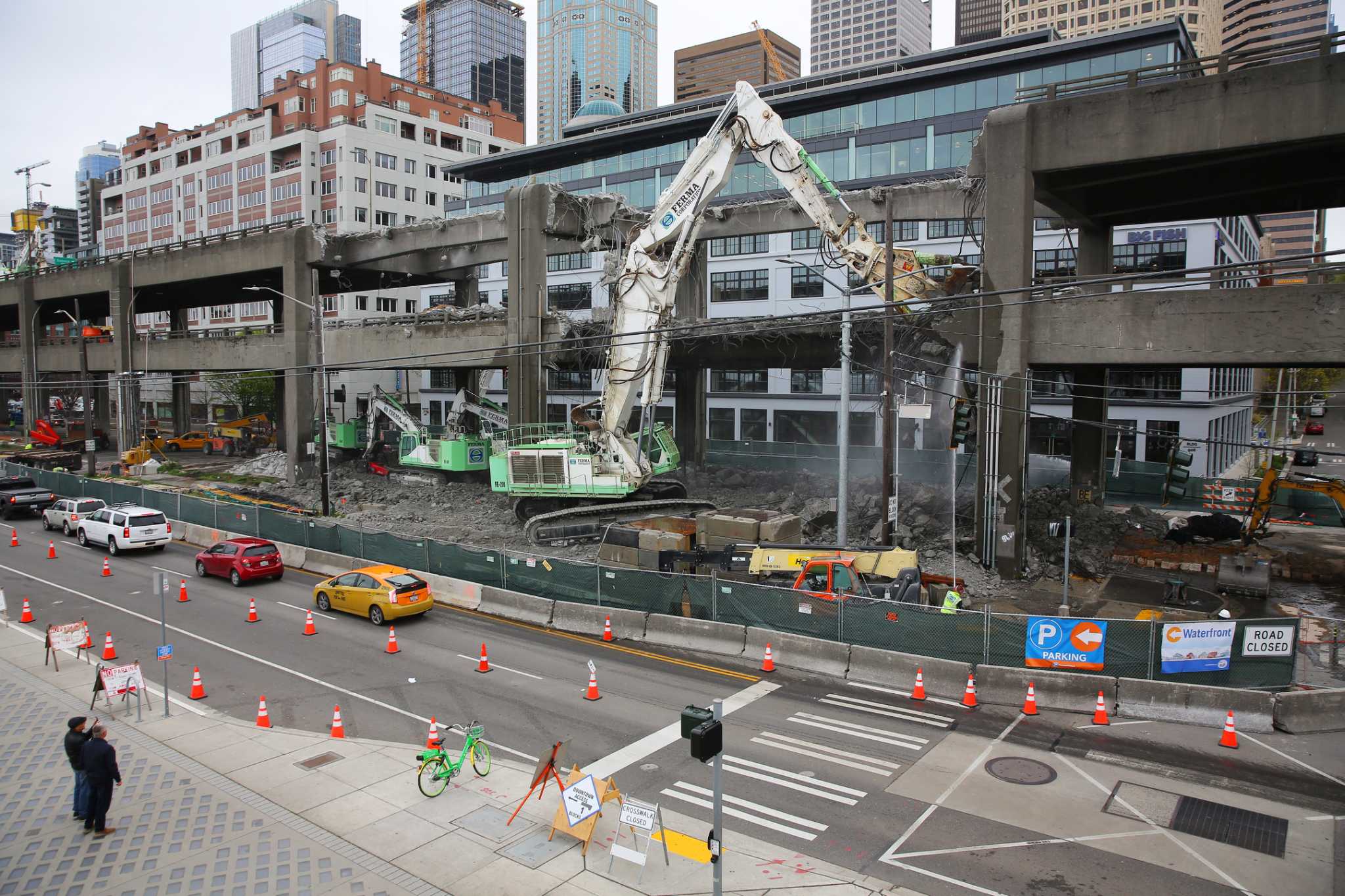
For more than sixty years a massive concrete roadway on tall pilings ran through downtown Seattle — the Alaskan Way Viaduct. Built in 1953, it looked like a gray wall between the city and the beautiful Puget Sound waterfront. Cars traveled on it in two stacked levels, the noise was unbearable, and people living nearby couldn’t even see the water from their windows.
In 2001 an earthquake struck and the old road cracked. Engineers worried: if another quake hit, the whole structure could collapse. The city argued for years: some wanted a new elevated roadway, others a tunnel underground, and some said there shouldn’t be a road at all. The debates were so heated that neighbors stopped talking to each other over their differing opinions.
Finally, in 2009 it was decided: the old viaduct would be torn down and a deep tunnel — State Route 99 — would be built. But that decision created a new, completely unexpected problem.
The puzzle of empty space
The northern portion of the old viaduct ran through a tunnel called the Battery Street Tunnel. When engineers began dismantling the roadway in 2016, they realized they had a huge void under the city — as if someone had removed a layer from a layered cake.
Project lead engineer Matt Donaldson told reporters, “We can’t just leave that empty space. The ground above the tunnel could settle, causing buildings to crack and roads to sink. But we can’t fill it with ordinary concrete — it’s too heavy and could crush older pipes and cables that run even deeper.”
It was a real puzzle. They needed a material that was at once: - Light enough not to press down on what’s below - Strong enough to support the weight of buildings and streets above - Nondegrading over time - Watertight - Affordable
Millions of white blocks
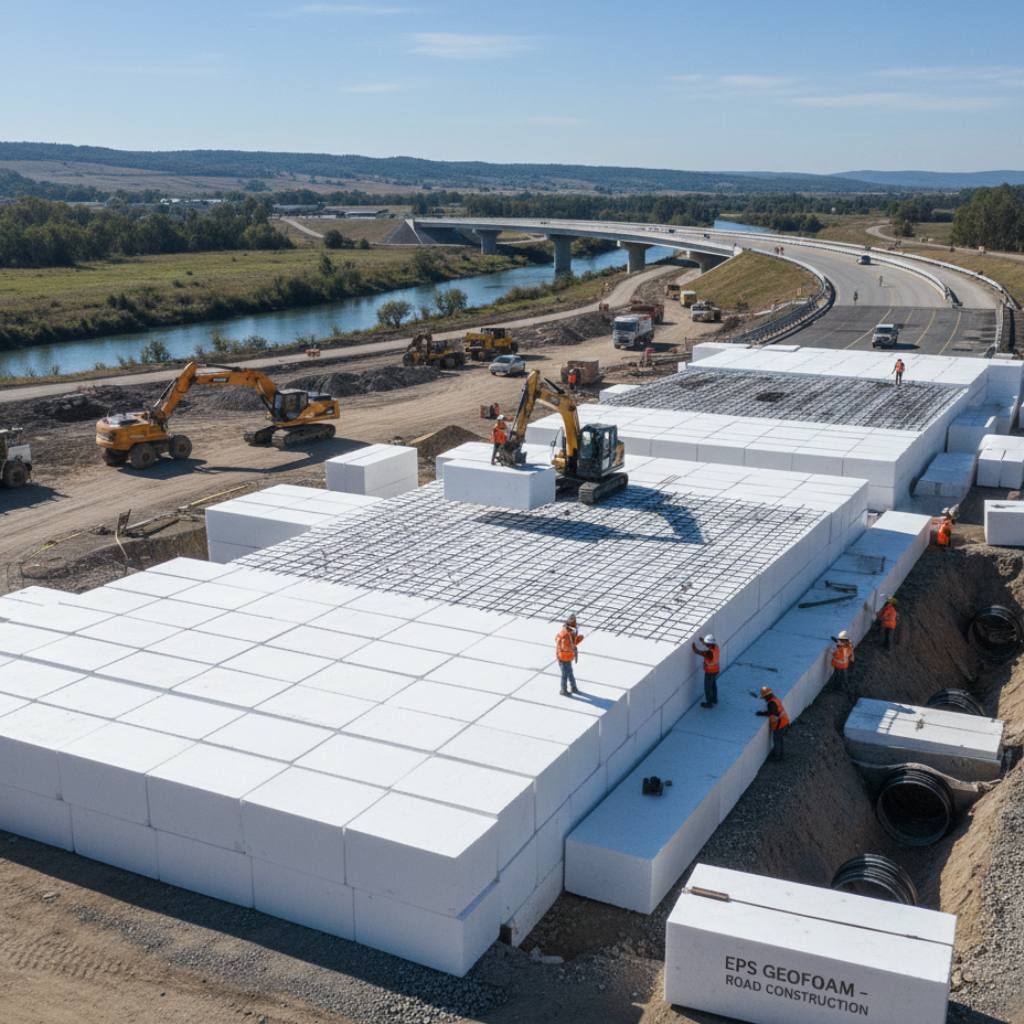
That’s when engineers remembered a material called geofoam (technically, expanded polystyrene geofoam). It’s a special construction foam that comes as huge white blocks about the size of a refrigerator. Each block weighs only about 20 kilograms — you could lift it yourself! Yet it’s strong enough to support the weight of a truck.
Imagine this: ordinary concrete weighs roughly 2400 kilograms per cubic meter. Geofoam weighs only about 20–30 kilograms per cubic meter — a hundred times lighter. It’s like filling a bathtub with balloons instead of rocks.
From 2016 to 2019 workers filled the old Battery Street Tunnel void with thousands of these foam blocks. In total they used about 100,000 cubic meters of geofoam — roughly equivalent to 40 Olympic swimming pools! The blocks were placed carefully like a giant Lego set, leaving special channels for pipes and cables.
One worker, Carlos Hernandez, told a local paper, “At first I didn’t believe this foam could hold. It looks like TV packaging! But when engineers showed us tests with excavators driving on it, I was amazed. It’s like magic.”
What happened next
When the old roadway was finally removed, Seattle residents saw their waterfront for the first time in 60 years. The spot where the viaduct once roared was transformed into a beautiful park with pathways, trees, and places to sit and watch the water. The park was named Waterfront Seattle.
A neighbor named Jennifer Lee, who lives in an apartment near the former viaduct, says, “I used to wake up at six every morning to the roar of traffic. Now I hear seagulls and the sound of waves. It’s like I moved to another city, even though the city just changed.”
But under that park, beneath the new trees and benches, lie millions of white foam blocks quietly bearing the city’s weight. Few of the people strolling there know about them.
A lesson for the world
The foam-under-Seattle story has become an important example for engineers worldwide. It turns out that when older cities are redeveloped, the problem of underground voids is common. Now engineers from other cities — Tokyo, San Francisco, Istanbul — are studying Seattle’s approach.
Dorothy Reed, a professor at the University of Washington, says, “This is an example of how modern materials help us fix the mistakes of the past. Our grandparents built cities without considering how it would affect people’s lives. Now we’re learning to repair those mistakes in smart ways.”
The most surprising thing about this story is that geofoam can sit underground for hundreds of years without decomposing or changing. That means that two or three hundred years from now, when Seattle may be a very different city, these white blocks will still be there beneath the ground — a strange message from us, the people of the 21st century, to the people of the future.
Maybe someday future archaeologists will excavate them and wonder, “Why did ancient people fill the ground with foam?” Then someone will tell them this story — about a city that learned to turn its problems into solutions, heavy into light, and old scars into new parks.