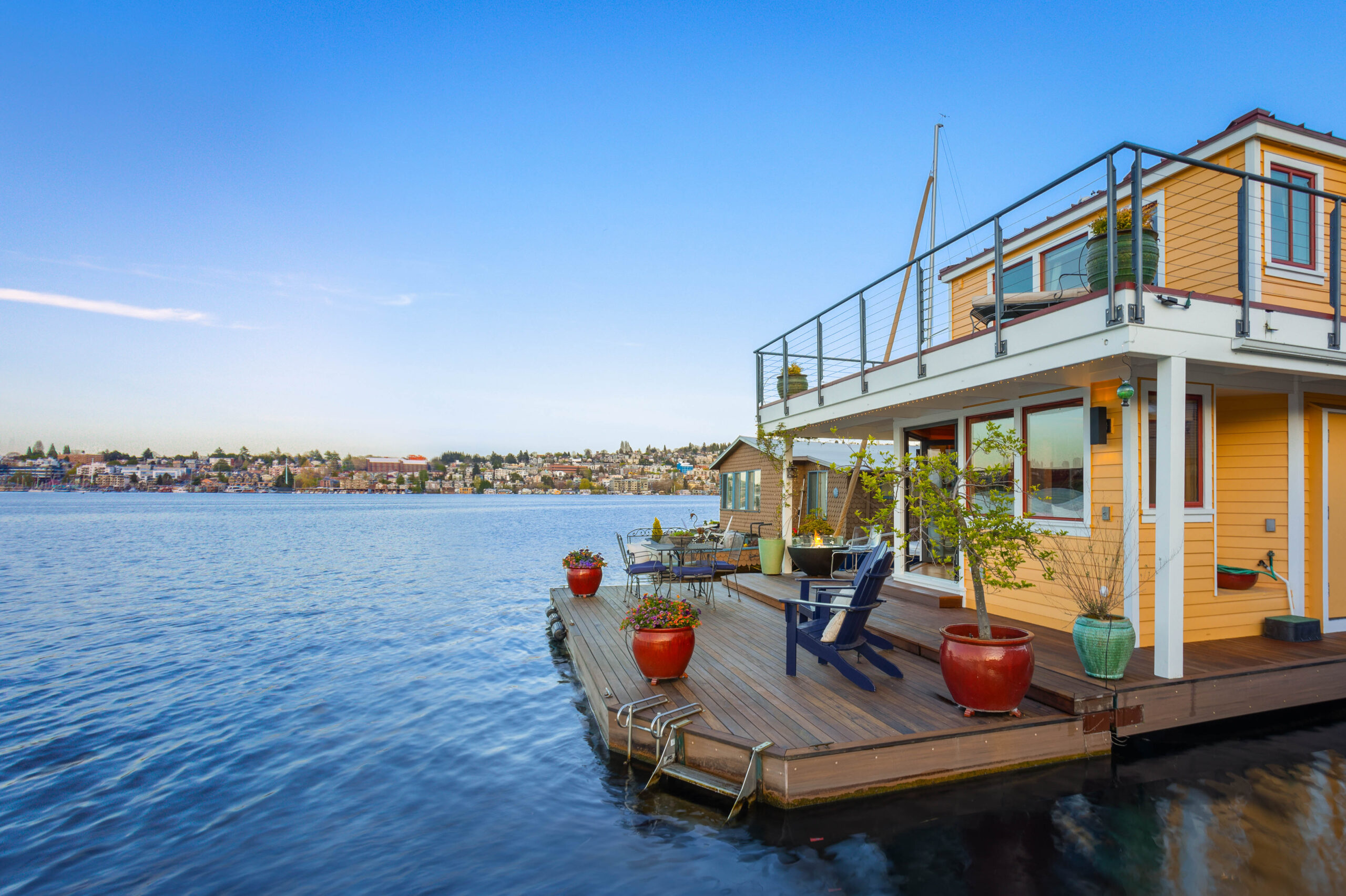
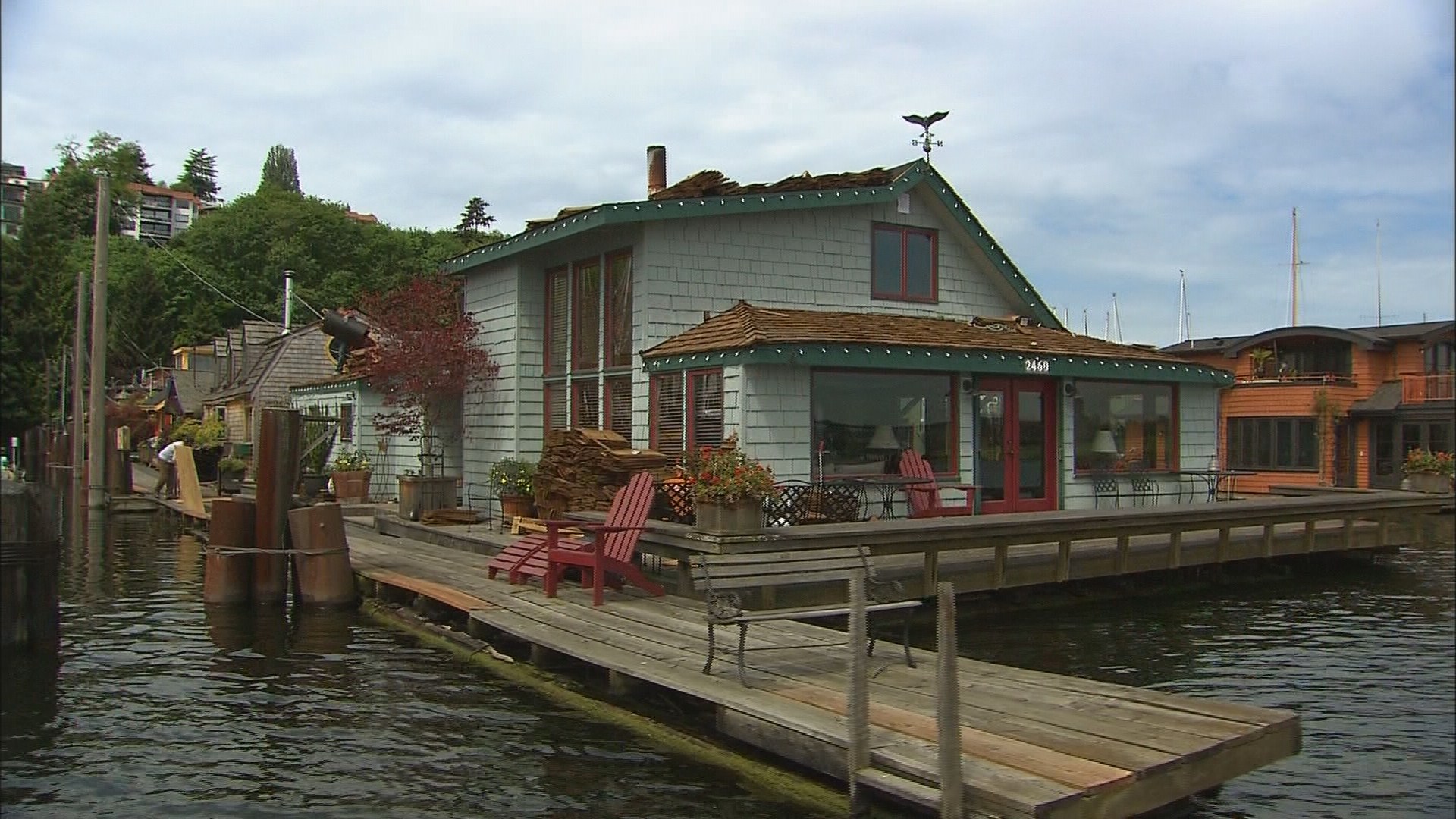
Imagine your house rocking like a boat whenever a duck swims past. Instead of a street, you have water—and instead of a car, a small boat tied up by your front porch. This is not a fairy tale. It is Lake Union in Seattle, where real floating homes have stood for more than a century. At one point, these unusual houses nearly disappeared forever—if not for a group of determined neighbors who decided to fight for them.
Homes for People with Little Money
At the beginning of the 20th century, large sawmills operated on Lake Union. Workers came from all over the country to saw logs and help build the city. But housing in Seattle was expensive, while lumberjacks and fishermen earned very little. Then someone came up with a brilliantly simple solution: build a small house directly on the water, on a large wooden raft. There was no need to pay for land—the lake seemed to belong to no one!
That is how the first floating homes appeared. They were small and simple, without any amenities—just a roof over a working person’s head. Over time, more and more of these little houses appeared on the lake. By the 1930s, there were more than 2,000 of them! It was an entire floating city within the real city.
The City Decided the Houses Were in the Way
As the years passed, the floating homes began to bother Seattle officials. The city wanted to build attractive waterfront promenades, parks, and roads along the lake. Officials also claimed that the floating homes were unsanitary: in the past, toilets in these houses often discharged waste directly into the lake.
By the 1960s, city authorities had decided it was time to get rid of the floating homes. Many were demolished by bulldozers. People lost their homes literally overnight. Imagine waking up and learning that your house is going to be destroyed because officials have decided it is “unnecessary.”
But the residents who remained did not want to surrender without a fight.
Neighbors vs. the Bulldozers
The people who lived on the water—artists, musicians, fishermen, and students—joined forces. They created a real team to defend their homes called the Floating Homes Association. It was formed in 1962.
What did they do? Everything they could think of:
- They wrote letters to the mayor and newspapers, describing their unusual but meaningful way of life
- They sued the city—in other words, they went to court to prove their right to live on the water
- They held meetings right on the water, paddling to one another by boat and planning joint actions
- They raised money to hire lawyers
One resident later recalled: “We weren’t rich or important people. But we knew our lake, our homes, and our neighbors—and we were ready to fight for them to the very end.”
The struggle lasted nearly twenty years! But eventually, in the early 1980s, the City of Seattle gave in and adopted new laws. Floating homes were officially permitted, and some of the oldest and most beautiful were even protected as part of the city’s history.
The House That Became Known Around the World
And do you know what is most interesting? One of the floating homes that was saved later became famous around the world. The hero of the film Sleepless in Seattle (1993), played by actor Tom Hanks, lived in a house just like this on Lake Union. After the film was released, tourists from all over the planet began traveling to Seattle to see a real floating home with their own eyes.
Here is the result: if the neighbors had not united in the 1960s and defended their homes, there might be no floating homes left in Seattle today—and the famous film might never have been made either.
Why This Story Matters
Today, about 500 floating homes remain on Lake Union, and living in one is considered prestigious and expensive—nothing like a hundred years ago, when poor workers settled there. But the most important part of this story is not the houses or the money. It is the people. Ordinary neighbors, who had neither power nor great wealth, proved that if you unite and refuse to give up, you can protect what truly matters to you. Even if it is only a small house rocking on the water.