Imagine your family built something grand — a huge system of locks that helped an entire city. Then you notice your invention accidentally created a problem for animals. What would you do? That’s exactly the situation faced by families of Scandinavian immigrants in Seattle’s Ballard neighborhood, and their story shows that genuine care for nature sometimes comes from the most unexpected places.
Seafaring people who built the water gates
In the early 1900s thousands of people from Norway, Sweden, and Denmark came to Seattle. They were fishermen, carpenters, engineers — people who had worked with water and wood their whole lives. They settled in Ballard and took on an ambitious project: build locks to connect the saltwater of Puget Sound with the freshwater lakes inside the city.
The Ballard Locks opened in 1917 and were a real engineering marvel. Ships could now pass between the sea and the lakes, the fishing fleet gained a protected harbor, and the city gained an important waterway. The Scandinavian community was proud: their hands, their know-how had built it!
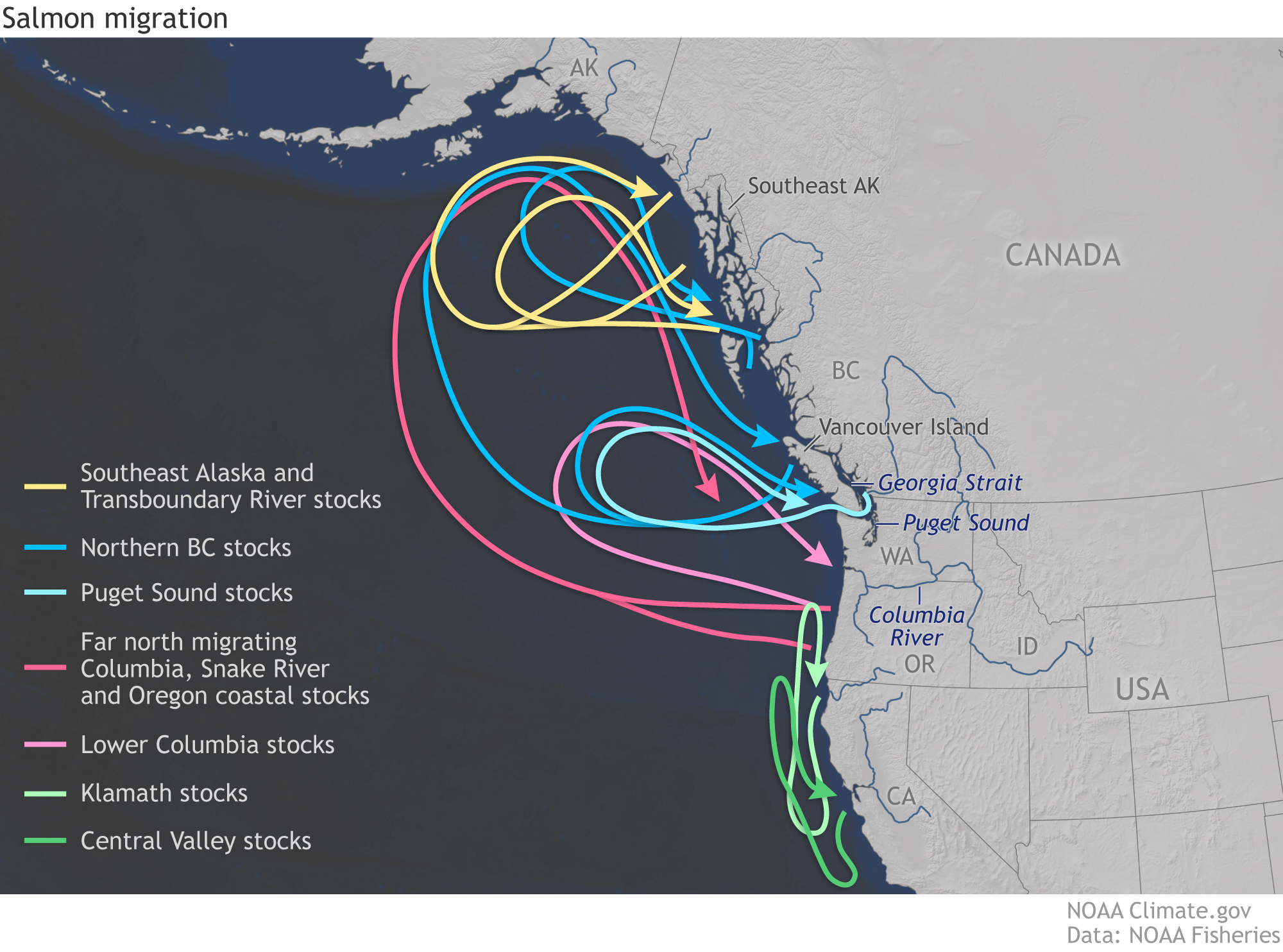
But there was one problem few people thought about at the time. Salmon, which for thousands of years had swum up from the ocean into rivers to spawn, now faced a huge concrete wall. Engineers built a fish ladder — a special route for fish — but it was like a staircase with very high steps. An adult person might be able to climb it, but a child would struggle.
The fishermen’s children notice what the engineers missed
Decades passed. The children and grandchildren of those builders and fishermen grew up in Ballard. They knew the sea and the fish not from books — it was their life. Their parents caught salmon, their grandmothers cooked it with old Scandinavian recipes, their grandfathers told stories about how big the fish were “in the old days.”
Then, in the 1970s, these grown children began to notice something strange: there were fewer and fewer salmon. fishing boats returned with smaller catches. In the viewing room at the locks, where people could watch the fish, fewer silvery backs passed by.
Ingrid Olson, whose family had fished for three generations, recalled: “My grandfather built these locks with his own hands. He was proud of them his whole life. But when I showed him graphs of the shrinking salmon population, he cried. He said, ‘We thought only about ships. We forgot that fish also have a right to a home.’”
When builders become protectors
What followed could be called “the fishermen’s uprising.” But it was an unusual uprising — calm, methodical, very Scandinavian. Ballard families began gathering data. They stood at the viewing windows of the fish ladder with notebooks, counting every salmon. They compared numbers with historical records. They invited scientists and showed them their observations.
Children took part alongside adults. Ballard schoolkids created the “Salmon Patrol” project: every day after school groups of children stood watch at the locks, recording how many fish managed to climb the ladder and how many tired and returned to the sea.
Ten-year-old Kristina Andersen wrote to the Army Corps of Engineers (which managed the locks) in 1976: “My great-grandfather helped build these locks. He wanted them to serve everyone — people and fish. But now the salmon can’t get through. It’s like you built a school but forgot to make the doors wide enough for the children. Please fix it.”
The ladder rebuilt for fish
The activism worked, but not quickly. It took years of meetings, petitions, and scientific studies. The Ballard community did not give up. They organized “salmon-watching days,” inviting journalists and politicians to see the problem with their own eyes. They held festivals explaining the salmon life cycle and why this fish is so important to the whole ecosystem.
The fishermen explained: “We’re not against progress. We built these locks ourselves! But real progress is when it works for both people and nature.”
In 1976 the first improvements to the fish ladder began. Steps were lowered, additional water flows were added, and resting areas were created where tired fish could regain strength. Work continued for decades — in the 1980s, 1990s, and 2000s. Each improvement was closely monitored by the Ballard community.
Today the fish ladder at the Ballard Locks is one of the most effective on the Pacific Coast. About 50,000 salmon pass through it annually. In the viewing room children press their noses to the glass, watching the silvery fish stubbornly leap upstream, striving for the place where they were born.
A lesson from people who know the sea
The story of the Ballard fishermen teaches us an important lesson: the most effective stewards of nature are often those who depend on it directly. Not distant scientists in laboratories (though their work is also important), but people who see the water, the fish, and changes in nature every day.
Scandinavian immigrants came to Seattle to catch fish and build boats. They changed the landscape by building grand locks. But when they saw the consequences, they didn’t turn away and say “it’s not our problem.” They took responsibility. They showed it’s possible to use nature and care for it at the same time.
The granddaughter of one of the locks’ builders, Anna Johansson, who now works as a marine biologist, says: “My grandfather always said, ‘The sea feeds you, so you must feed the sea.’ He meant you have to give back. The fish ladder is our way of repaying a debt.”
Next time you hear about a big project — a new road, building, or dam — think: how will this affect animals? And remember: if the people who built something can admit a mistake and fix it, so can we all. Sometimes the greatest strength isn’t building something huge, but having the courage to do it right.