Imagine you’re sailing very far from home — so far that all around you is only the endless ocean. Years pass. And then, suddenly, you know exactly where to go to return to the very spot where you were born. Not just back to your city — but to your street, to your house. This is exactly what salmon are able to do as they pass through the Ballard Locks in Seattle. And this discovery — made in part by ordinary schoolchildren — changed the way the entire city thinks about its rivers.
A Door Between Two Worlds
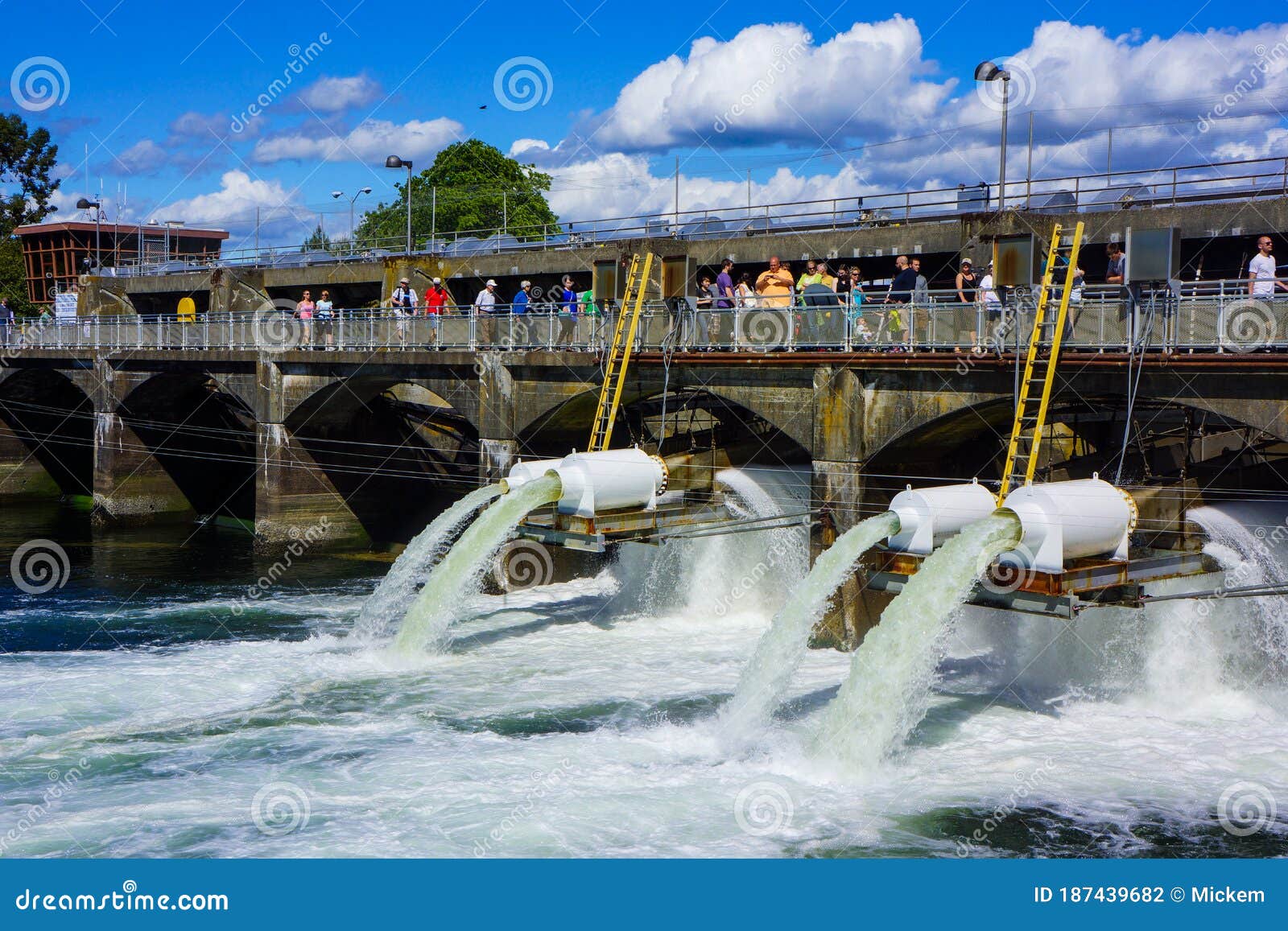
The Ballard Locks are a special structure, like a huge door between two different bodies of water. On one side is the salty Puget Sound, connected to the ocean. On the other is Lake Union, a freshwater lake where people live, go boating, and fish. The locks were built back in 1917, and since then they’ve been working every day: they lift and lower boats like an elevator, so they can travel from salt water to fresh water and back again.
But these locks have one more thing — something not all tourists know about. In 1976, a special fish ladder was built next to the locks. Of course, it isn’t a real staircase with steps. It’s a long, winding channel with small pools, along which fish can move upward against the current — pool by pool, step by step. Without this ladder, salmon simply wouldn’t be able to reach their spawning grounds: the lock wall would be an insurmountable barrier for them.
A Secret Window Underwater
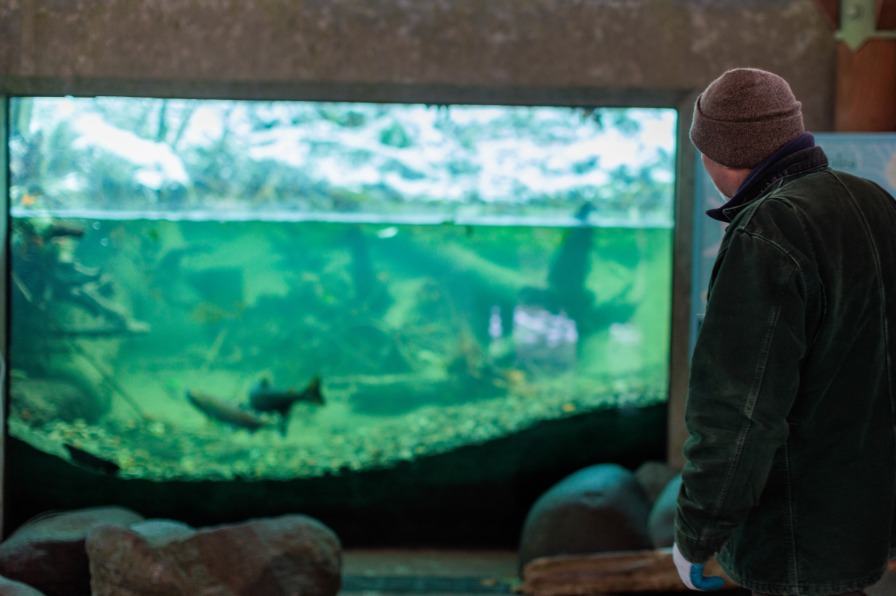
The most astonishing place on the fish ladder is a small underground hall with windows that look directly into the water. You go down the stairs, and suddenly there are glass windows right in front of you — and behind them, huge silvery fish swim past. Right in front of your nose. It looks like an aquarium, except the fish here are completely wild and no one feeds them. They just swim by as they normally would, completely ignoring the people behind the glass.
Every summer and autumn, thousands of people come here — and among them there are always lots of schoolchildren. Teachers from Seattle schools long ago noticed that the children freeze at these windows and can stand there for a very long time, without taking their eyes off the water. In the 1990s, a biology teacher decided to use this and asked his students to keep special “salmon diaries”: recording how many fish they see, what size they are, and how they behave. The children started coming back to the windows again and again — not because they were made to, but because they genuinely found it fascinating.
The Smell of Home Thousands of Miles Away
But why do salmon return here in particular? This is one of nature’s most amazing mysteries. Salmon are born in a small freshwater stream, live there for a while, and then swim out to sea. In the ocean they may spend several years and travel thousands of kilometers. Then they turn around and head back — not just “back into freshwater,” but specifically to the stream where they were born. Scientists have found that the fish remember the smell of their home stream — the way you can probably recognize the scent of your grandmother’s pies even after many years. Only for salmon, this “smell of home” is recorded so deeply that it’s never forgotten.
It was the school observation diaries that helped scientists notice something worrying: with every year, the number of fish was decreasing. The children recorded it honestly and carefully, and their notes became real scientific data. Biologists from the University of Washington used these observations to prove that the city rivers flowing into Lake Union are polluted so heavily that salmon simply can’t survive in them. “The smell of home” is there — but the home itself is almost gone.
How the Fish Changed the City
The discovery pushed Seattle to take action. City officials began programs to clean up small rivers and streams. In some neighborhoods, they removed concrete pipes that had covered up small waterways, and reopened them to the open air so the fish could reach them. Along the riverbanks, trees were planted because tree shade cools the water — and salmon need cold water. All of this is called “urban waterway restoration,” and today Seattle is considered one of the best cities in the world at it.
It seems to me there’s something very important in this story: sometimes, to change a big city, it’s enough for children to simply watch a window closely and record what they see honestly. No magic — just curiosity and careful attention.
A Bridge Between City and Nature
Today, the Ballard Locks are not just a technical structure. It’s a place where the city and wildlife meet face to face — or, more precisely, face to snout. Every year, between 60,000 and 100,000 salmon pass through the fish ladder. Thousands of people see them through the glass windows — tourists, locals, schoolchildren. And each time someone watches these silvery fish swimming home across half the city, they think: that stream, that river, this lake — they’re alive. And they need to be protected.
Salmon that remember the smell of home better than any navigator became, for Seattle, something like a symbol. A symbol of how nature and a city can exist side by side — if people, even very small ones, decide to help take care of it.