Imagine you’re swimming across the whole ocean. Weeks of travel, thousands of kilometers of salt water. You’re tired, but you know where you’re going—home, to a quiet, cool lake where you were born. And then—there’s a wall. Enormous, made of concrete, impossible to overcome. That’s exactly what happened to Seattle’s salmon more than a hundred years ago. But the story didn’t end sadly. Because some people noticed—and came up with something astonishing.
Who Built This Wall—and Why
At the beginning of the twentieth century, Seattle was growing very fast. Ships came into the port, fishermen went out to sea, and merchants shipped goods. But there was one big problem: the saltwater of Puget Sound and the freshwater of Lake Washington were at different elevations. Ships couldn’t simply travel from one to the other—it's like trying to ride a bike up a step that’s taller than you are.
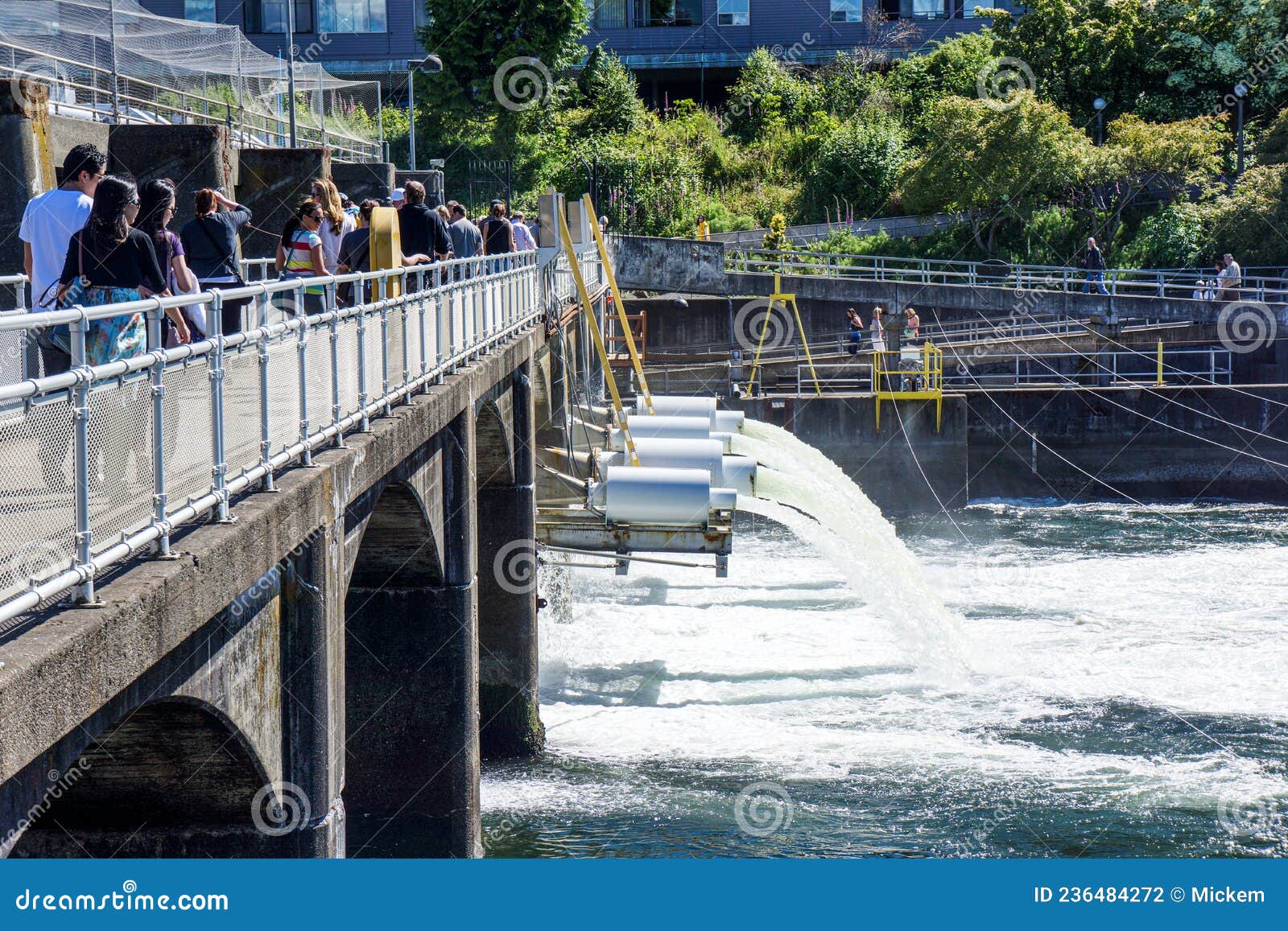
The solution came from an engineer named Hiram Chittenden. He proposed building a lock—a special structure that works like a water elevator for ships. A ship enters a closed chamber, and the water in it rises or falls, bringing the ship to the right level. Simple—and brilliant.
Construction of the lock began in 1911. And it was built mostly by immigrants—people who had come from Scandinavia, Japan, and other countries. The area of Ballard near the lock was a real Scandinavian town: Norwegians, Swedes, Finns—fishermen and sailors who understood the sea well and knew how to work with their hands. They dug the earth, poured concrete, and installed huge steel gates. In 1917, the lock opened. It was a true engineering marvel.
But no one thought about the salmon.
An Ancient Route Suddenly Blocked
Salmon are remarkable creatures. They are born in freshwater, swim out into the ocean, live there for several years, and then return—exactly to the same place where they were born. Scientists still don’t fully understand how they do it. Maybe they can smell their native river. Maybe they navigate by Earth’s magnetic field. But they return—again and again—for millions of years.
Before the lock was built, salmon calmly swam from the sound into Lake Washington and then on into rivers and streams, where they spawned. Now, a concrete wall stood in their way—tall as a two-story house. The fish gathered at the base of the lock, circled, tried to find a passage—and couldn’t.
Fishermen noticed it. Biologists noticed it. Just ordinary people who lived nearby and remembered how the river used to be teeming with silvery fish noticed it too. And someone asked an important question: what if we can help?
A Staircase Made of Water
The solution is called a fish passage, or a fish ladder. It sounds a bit funny, but it works completely seriously.
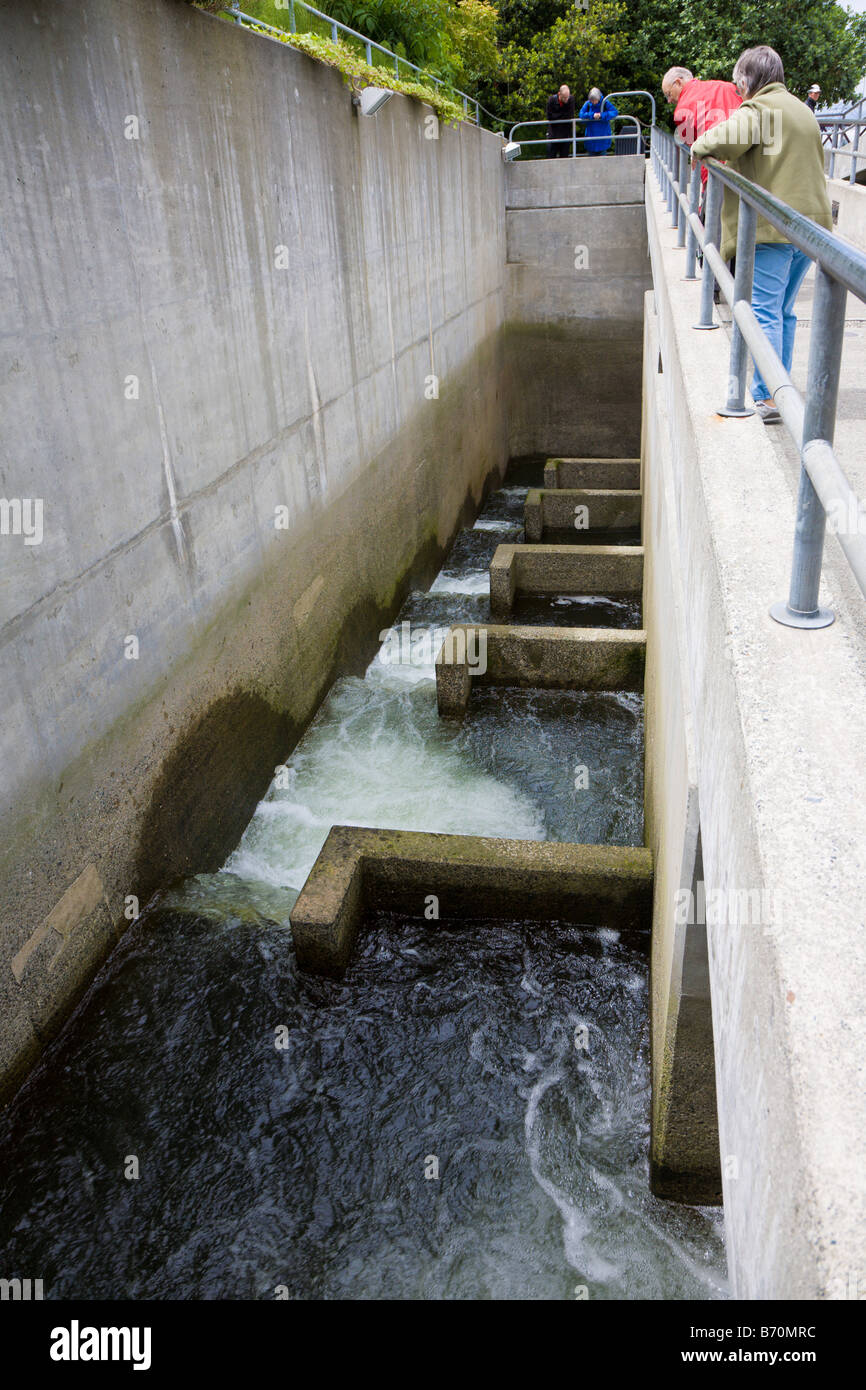
Imagine a staircase. Only instead of steps, there are small pools of water connected by narrow channels. Each pool is a little higher than the last. The water flows from top to bottom—slowly, calmly. And the fish swim from bottom to top, “jumping” from one pool to the next. Not the whole route at once—just in small steps. Rest in one pool, gather strength—and then leap into the next.
The first fish passage at the Chittenden lock was built in 1917—at the same time the lock opened. But it wasn’t perfect, and salmon used it hardly at all. Engineers learned, redesigned,改 and improved. The modern fish passage that works today was built in 1976. It has twenty-one pools. It’s like climbing to the height of a six-story building—jump after jump.
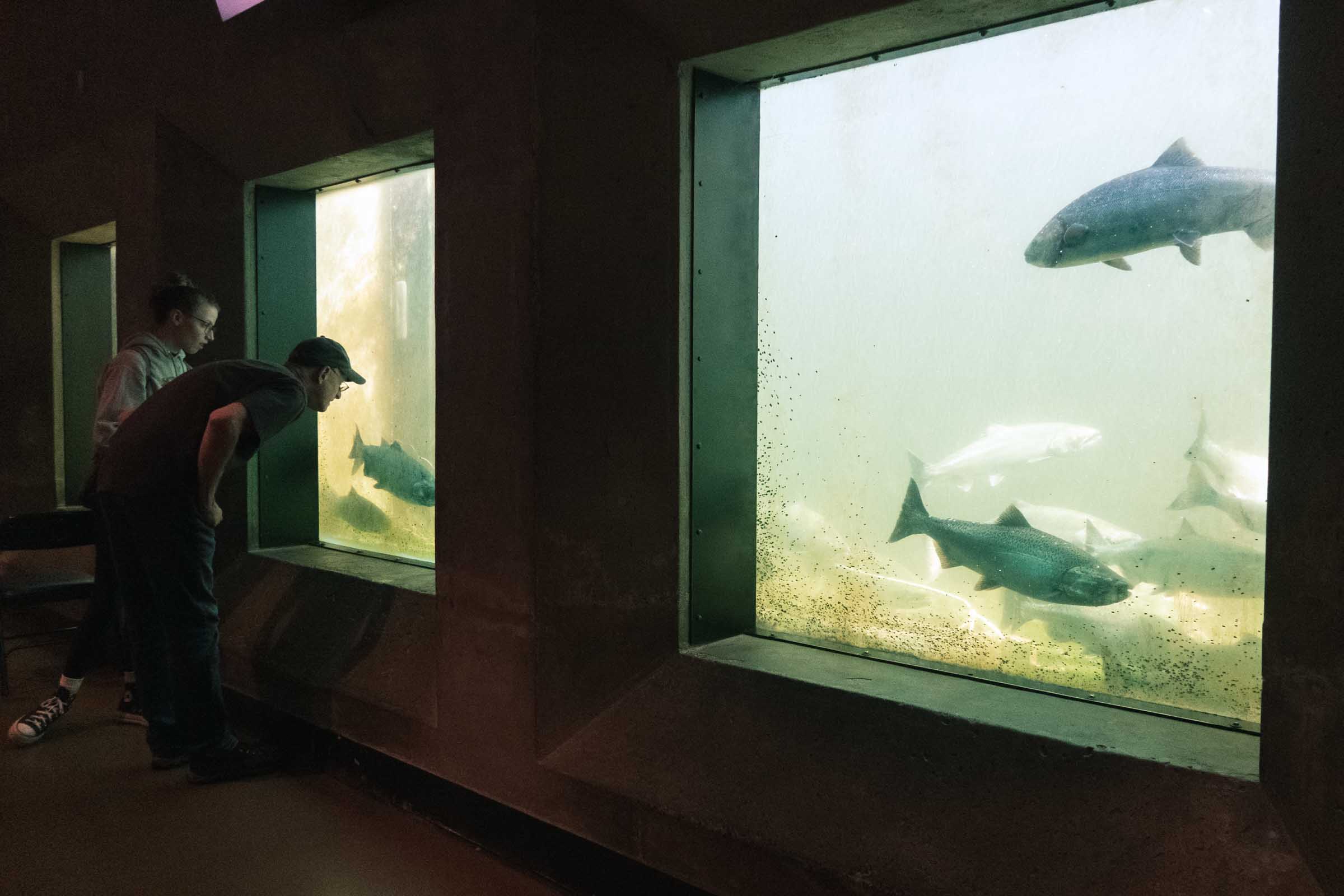
And the most amazing part: there are underwater windows. Right in the walls of the pools are glass viewing panels—like portholes—through which anyone can watch fish swimming by. In summer, during spawning season, it becomes a real crowd scene—both for the fish and for people. Kids press their noses against the glass and watch huge chinook and sockeye squeeze through the narrow channels. The fish are so close it feels like you could reach out and touch them.
When Engineering Learns From Nature
The story of the Chittenden lock isn’t just about ships and fish. It’s a story about how people first broke something—and then found the strength to fix it.
The immigrants who built the lock weren’t thinking about salmon. They were thinking about the work, their families, and the future of the city. That’s understandable and not frightening. The frightening thing would be if nobody later stopped and said: wait—what about the fish?
Today, tens of thousands of salmon pass through the fish passage at the lock every year. Biologists count each fish—literally, by hand, sitting by those very underwater windows. They’ve been keeping records for decades. This data helps show how the entire ecosystem is doing—not only the fish, but also the eagles that eat them, the bears, and the trees that grow along riverbanks, nourished by the remains of spawning salmon.
One salmon that reaches the lake is a whole chain of life. And this chain continues in many ways because someone, long ago, came up with a staircase made of water.
When you look through the glass at a fish that stubbornly makes its way upstream, you realize that’s real stubbornness. It swam across the entire ocean. It didn’t stop at a concrete wall. It found a ladder—and climbed.