Imagine your city passed a new law: everyone who works must now be paid at least twice as much per hour as before. Sounds great, right? But what if that law made it nearly impossible for some teenagers to find their very first job, while others suddenly could afford things their parents couldn’t even dream of at that age? That’s what happened in Seattle ten years ago, and the story still fuels debates about what fairness really means.
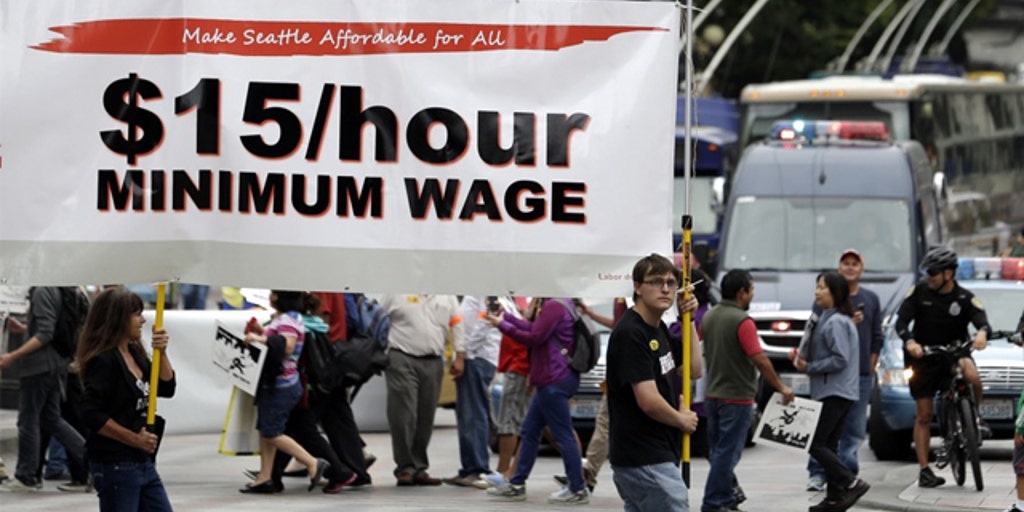
In 2014 Seattle became the first major U.S. city to raise the minimum wage to $15 an hour. That meant even someone washing dishes in a restaurant or bussing tables in a café had to be paid at least that much. For comparison: at the time, the minimum wage in most U.S. states was around $7–$8 an hour. Seattle effectively doubled that figure. Politicians and activists said this would help people escape poverty, pay for housing and food, and stop working three jobs at once. But no one knew for sure what would actually happen. It was a real experiment, and everyday people ended up being the participants.
Maria’s story: when more money means more opportunity
Maria worked as a barista in a small coffee shop in Capitol Hill. She was 19 and attending community college, dreaming of becoming a nurse. Before the new law she earned $9.50 an hour plus tips. That hardly covered her transit pass and lunches. College textbooks cost over $300 each semester, and Maria had to rely on the library, hoping the books would be available when she needed them for exams.
When her wage rose to $15 an hour, everything changed. “For the first time in my life I could buy my own textbooks,” she told reporters in 2015. Maria was also able to cut her hours from 35 to 25 a week while earning roughly the same amount. That meant more time to study. Her grades improved. She even began saving a little each month—something her mother, who worked as a cleaner, could never afford at that age.
There were many stories like hers. Restaurant, retail, and hotel workers suddenly felt they could breathe easier. Some moved out of shared housing into their own apartments. Others stopped skipping doctor appointments because they could now afford insurance. For them, Seattle’s experiment was like a magic wand that made life a little less hard.
Jason’s story: when doors start closing
But there was another side to the story that got less attention. Jason, a 16-year-old from Rainier Valley, hoped to get his first summer job in 2015. He wanted to work in a grocery store or help out at a local café—anywhere to earn money for a new computer and help his mom with bills. Jason sent resumes to 23 places. He got only three replies, all rejections.
“They said they were looking for someone with experience,” he later recalled. But how do you get experience if no one gives you a first chance? The problem was that when small shop and café owners had to pay $15 an hour, they became very selective. Why hire an inexperienced teen who needs training when for the same money you can hire an adult who already knows the job?
Researchers at the University of Washington noticed the trend. They found that after the law was passed, total hours worked by low-wage employees in Seattle fell. It sounds odd: wages went up, but hours went down. What did that mean? Business owners began hiring fewer people and scheduling fewer shifts. They automated some tasks—for example, installing self-checkout machines instead of hiring cashiers. For someone like Maria, who already had a job, this was fine or even positive. But for Jason and thousands of other teens looking for their first job, it meant doors were closing.
Detective work: what actually happened?
When Seattle launched its experiment, scholars from across the country came to study the effects. It was like a giant scientific lab, except instead of test tubes and microscopes there were real people, restaurants, and shops. Researchers collected data: how many people lost jobs, how many got raises, whether prices in stores changed, and whether companies left the city.
The results were complicated—so complicated that even the researchers couldn’t agree. One team from the University of California, Berkeley said, “Look, restaurants didn’t collapse, people didn’t lose jobs en masse, things are fine!” But another team from the University of Washington countered, “Wait—we see that low-wage workers on average earned less per month because they were given fewer hours, even with a higher hourly wage.”
Imagine your weekly allowance was raised from $5 to $10, but you could only get it every two weeks instead of every week. Over a month you’d end up with about the same amount—or even less—despite the larger sum each payout. That’s roughly what happened to some workers.
One finding was particularly striking: the law helped most those who already had stable jobs and experience. Young people, immigrants, and those just starting out found it harder. That created a strange situation: a law intended to help the poorest sometimes benefited those who were slightly better off, while making the most vulnerable worse off.
The human cost of choices
The hardest part of this story is that there are no clear villains. The owner of a small café who can’t afford to hire an inexperienced teen isn’t a bad person—she’s trying to keep her business afloat. Maria, who can finally buy textbooks, deserves that opportunity. Jason, who can’t get his first job, is not at fault. They’re all right, and they all win or lose at the same time.
A woman named Carol, owner of a small bookstore, told how she had to let go of her teenage Saturday helper. “I loved that girl; she was smart and hardworking,” Carol said through tears. “But I couldn’t pay her $15 an hour for work she was still learning to do. My shop barely broke even.” Instead, Carol started working Saturdays herself, even though she was over sixty and had back pain.
This is the real price of economic experiments—not the numbers in reports, but real people whose lives change unpredictably. Some families were able to take a vacation for the first time in years. Other teenagers never got that first job that would have taught them responsibility and given them confidence.
What Seattle taught about fairness
Ten years have passed since Seattle’s experiment began. Today many other cities and even entire states have followed suit and raised their minimum wages. Some have gone further. But the lesson Seattle offered proved more complex than activists and politicians expected.
The lesson was: when you try to help people by changing economic rules, the results are never simple. There will always be winners and losers, even if you act with the best intentions. Maria got her textbooks, but Jason didn’t get his first job. Both stories are true and both matter.
In Seattle people continue to debate: was the experiment a success? Some say “yes,” pointing to thousands of workers whose lives improved. Others say “no,” pointing to small businesses squeezed and young people unable to start careers. Perhaps the right answer is “both yes and no.”
The most important thing Seattle showed is this: when we decide how an economy should work, we are choosing who to help more and who to help less. There is no perfect decision that makes everyone happy. And that’s probably the most adult and honest lesson one city can teach the world. Fairness proved far more complicated than simply “pay people more money.” It requires thinking about consequences, listening to different stories, and acknowledging that even the best ideas can have unexpected and not always pleasant results.