In 1982 something strange was happening in Seattle garages. People who yesterday calculated trajectories for space rockets were now sitting on the floor surrounded by tubing, sensors, and aircraft parts. They soldered things, wrote numbers into thick notebooks, and argued about temperatures. No, they hadn't lost their minds. They were inventing a new way to brew beer — and, without realizing it, creating technologies brewers still use around the world today.
This story began with a sad event Seattle still calls the "Boeing Bust." In the early 1980s the aircraft company Boeing — which employed half the city — laid off 60,000 people at once. Among them were engineers who knew how to calculate pressure in a rocket fuel tank or design a cooling system for a supersonic plane. But there was no work for them anymore. Many families left Seattle. Jokes appeared on the streets: "Last one out, turn off the lights."
When Rocket Scientists Met Brewing Yeast
But some engineers decided to stay and try something new. A group of friends — Charles, Mike, David and Janet — gathered in Charles’s garage and decided to start a small brewery. At that time most beer in America was produced by huge factories and tasted very similar. But the friends remembered trying very different beers on business trips to Europe — beers with bold flavors, hints of fruit or herbs, dark as chocolate or golden as honey.
"We thought: if we can launch a rocket to the Moon, we can certainly brew good beer," Charles later recalled in an interview for the Museum of History and Industry archive in Seattle. But when they began studying traditional recipes they ran into a problem. Old brewers wrote things like: "Heat the water until you can see your reflection in it" or "Boil until the smell is right." To people used to precise numbers and charts, that sounded like magic, not science.
"At Boeing we knew the temperature of every part to a tenth of a degree," Janet said in an oral history recording from 1997. "And here people said 'kind of hot' or 'cold enough.' We realized we needed to turn brewing into a real engineering problem."
The Garage Where Smart Machines Were Born
The friends began applying their aerospace engineering knowledge to brewing. Mike, who had designed cooling systems for aircraft, built a special refrigerator from parts of a decommissioned Boeing 727. He calculated exactly how the temperature should fall during fermentation so the yeast would perform optimally. David, a hydraulics specialist, built a system of pipes that moved liquid between tanks without pumps — using only gravity and pressure, like a rocket fuel system.
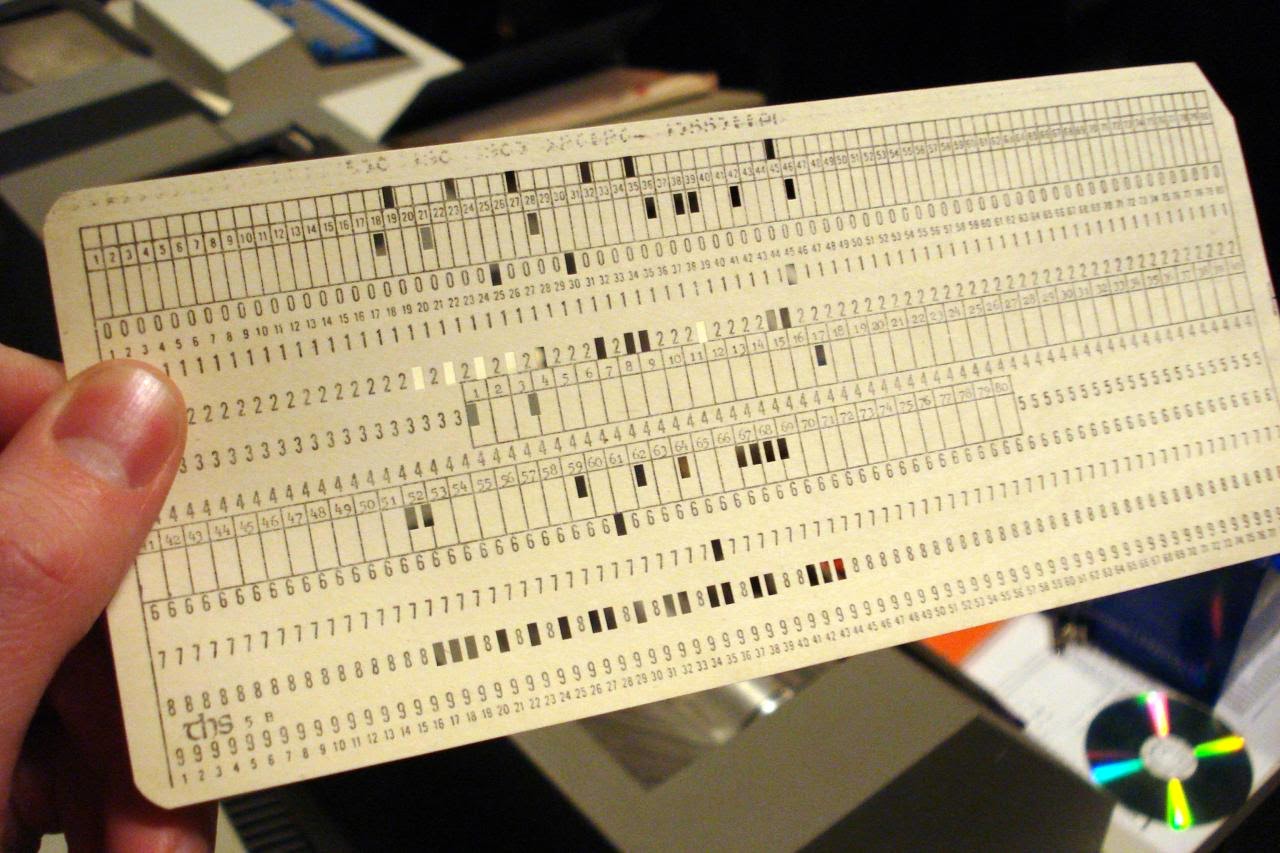
But the most interesting idea came from Janet. She had worked with Boeing's early computers — huge machines that filled rooms and used punch cards to store information. Janet realized the main problem in brewing was remembering thousands of tiny details. What was the temperature on day three? When exactly was the hops added? How long was everything boiled?
She brought a stack of punch cards from the Boeing office that were about to be discarded and created the world's first computer record-keeping system for a brewery. On each card she punched holes indicating the date, temperature, time, and ingredients. The cards could then be "read" by a computer and used to compare different batches. "It was like a spacecraft's logbook," she explained, "only for beer."
When Others Learned the Secret
Neighbors at first laughed at the engineers hauling pipes and wires into a garage. But when the friends brewed their first beer and let acquaintances taste it, everyone went quiet. It was nothing like the typical store-bought beer. It had a rich flavor, beautiful color, and pleasant aroma. Most importantly, it came out the same every time because everything was controlled with precise instruments.
Word spread through Seattle. Other people who had also lost Boeing jobs and wanted to start businesses began coming to the friends for advice. Janet started holding lessons in the garage. She showed her punch-card system and explained why recording every detail mattered. Charles shared blueprints for his equipment. Mike taught how to calculate cooling.
"We didn't keep secrets," Charles said. "At Boeing we were taught to work as a team, share data, and check each other's calculations. We applied that same approach to brewing." This was unusual. Business owners typically hide their secrets from competitors. But the engineers thought differently: the more people brewing good beer, the better for everyone.
How Punch Cards Became Software
By the mid-1980s dozens of small breweries had opened in Seattle, and almost all used methods invented by the group of friends. But technology kept advancing. Personal computers appeared — small machines that fit on a desk. Janet realized punch cards were obsolete. She learned to program in BASIC and created the first computer program for brewers.
The program was called BrewLog. It allowed users to record all brewing data, plot temperature graphs, compare recipes, and even predict how a beer would turn out if a parameter changed. It was revolutionary. Janet gave the program away free — copying it onto floppy disks and mailing it to anyone who wanted it.
"I got letters from all over the country," she remembered. "People wrote: 'Thanks to your program I finally understood why my beer tasted bitter' or 'Now I can reproduce a successful batch.'" Later, in the 1990s, programmers in Seattle (some of whom worked at the newly founded Microsoft) took Janet's ideas and created more advanced brewery software. Today almost every craft brewery in the world uses computerized control systems — and they all trace back to those punch cards Janet brought from Boeing.
The City That Learned to Brew Differently
By the late 1980s Seattle had changed completely. The city that had nearly died after the Boeing layoffs had become America's craft beer capital. It had more small breweries than anywhere else in the country. And nearly all of them used precise engineering methods instead of vague traditional instructions.
Interestingly, many of those brewery owners were former Boeing engineers. They brought not only technology but a particular culture. The Pacific Northwest Historical Society archives hold records of the Seattle Brewers' Guild, formed in 1985. At those meetings people exchanged not only recipes but technical solutions, discussed problems, and helped each other with equipment — just like engineers in Boeing project briefings.
One brewer wrote in his diary (now preserved in a museum): "We are not competitors. We are researchers tackling one big problem from different angles. Each new brewery is an experiment that helps everyone else." That collaborative approach was new to the food industry.
What Happened Next
Today Seattle has more than 200 breweries — more than any other American city of its size. Tourists come from around the world to taste unusual beers: with locally roasted coffee, with lavender grown in Washington, even with seaweed from the Pacific. Behind every unusual flavor are precise calculations, computer programs, and engineering solutions.
Janet continued working with brewers into the 2010s, helping them implement new technologies. Her latest project was a system using sensors to monitor water quality in real time. Charles opened a brewing school where he teaches not only recipes but an engineering approach to the craft. Mike became a consultant, helping breweries worldwide design efficient equipment.
And the garage where it all began is now a museum. There stand the very pipes from the Boeing 727, the first blueprints, Janet's stack of punch cards, and photographs of the four friends who weren’t afraid to apply their rocket knowledge to something completely different.
A Lesson from the Engineer-Brewers
The story of Seattle's engineer-brewers teaches an important lesson: knowledge and skills can be applied in unexpected places. People who calculated spacecraft trajectories were able to improve the ancient craft of brewing. They showed that you don't always need to invent something entirely new — sometimes it’s enough to apply precision and a scientific approach to what people have been doing for centuries.
So the next time you see a bottle of craft beer on a store shelf with a bright label and an unusual name, know this: it may have been brewed using technologies born in a garage by unemployed engineers. They lost their jobs but not their desire to think, calculate, invent, and share knowledge. Thanks to them, a whole city learned to make something new from the old, turn misfortune into opportunity, and apply serious science to simple pleasures of life.