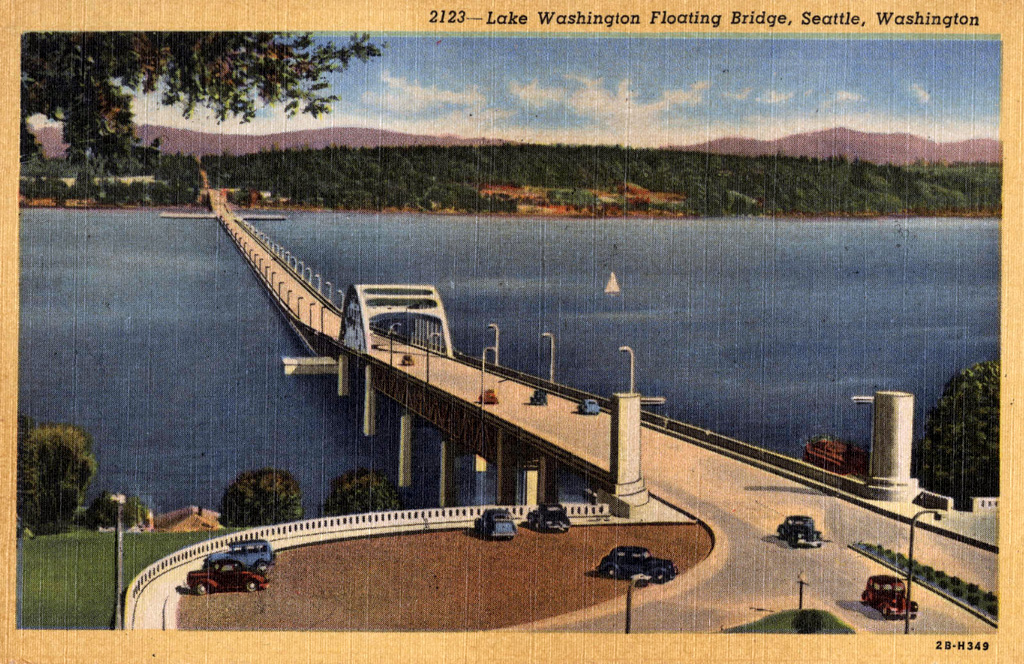
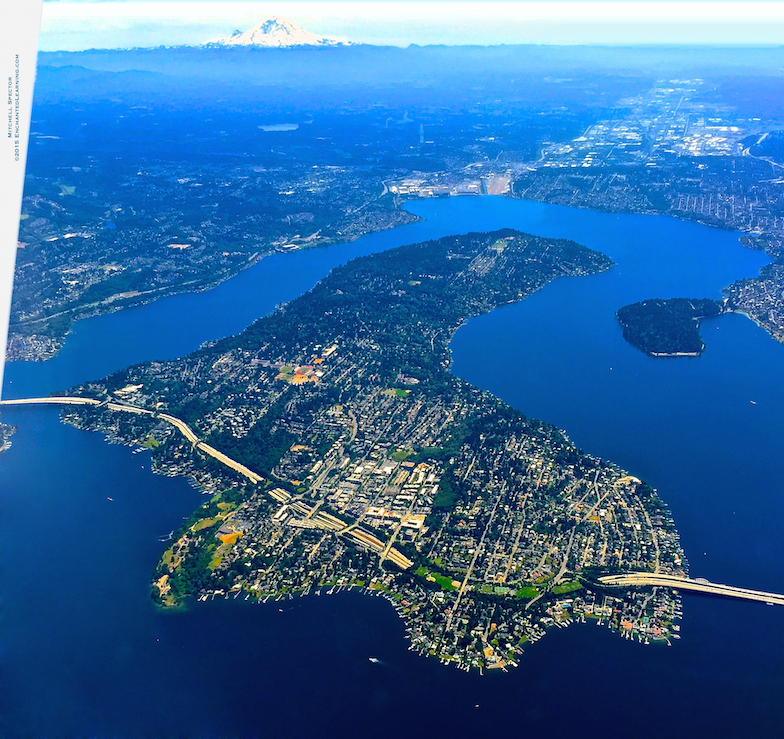
In the 1930s Seattle faced a huge problem. The city sat on both shores of the vast Lake Washington, and people had to spend hours driving all the way around it or take a ferry. A bridge was needed, but a conventional bridge across such a wide, deep lake would cost a fortune. Then one engineer proposed an idea that seemed utterly crazy: build a bridge that would float on the water like a giant boat.
That engineer was Lacey V. Murrow, and he believed in something almost no one else did. His idea was simple and incredible at once: make gigantic hollow boxes out of concrete that would float, and put a roadway on top. A concrete bridge that floats! Many laughed at the idea. Concrete sinks, they said. It’s impossible, it’s dangerous, it will never work.
When ordinary people vote for a dream
But Lacey Murrow didn’t give up. He traveled the city, met with people, and explained his idea in plain language. He showed drawings and explained exactly how it would work. And most surprisingly—the people began to believe him. Not wealthy businessmen, not politicians, but ordinary Seattle residents: teachers, shopkeepers, laborers, housewives.
In 1937 the city’s residents went to the polls. They had to decide whether they agreed to spend taxpayers’ money on this strange floating-bridge experiment. Many experts said “no.” Newspapers wrote it was too risky. But when the votes were counted, a majority had voted “yes.” They believed the impossible.
It was an incredible moment in the city’s history. Ordinary people, many barely getting by during the Great Depression, chose to back a mad idea. They chose a dream over fear. One woman who voted then later recalled: “We thought—what if it works? What if our children can cross the lake in five minutes instead of two hours?”
How they built something that had never existed
Construction began in 1938, and it felt like creating something out of a science-fiction novel. Workers built huge concrete pontoons—hollow boxes the size of a large house. Each pontoon weighed thousands of tons, but inside was air, so they floated like giant empty bottles.
Imagine: concrete boxes the size of a three-story house floating on the lake! They were tied together with special cables and anchored to the lakebed. The roadway was laid on top. The bridge could move with the waves, rise and fall, as if breathing with the lake.
Engineers worked day and night. They solved problems no one had faced before, because no one had ever built anything like it. How to keep the bridge from breaking during a storm? How to protect it from ice in winter? How to connect the floating section to ordinary roads on shore? Every question required a new solution.
The day the dream floated
On July 2, 1940 a miracle happened. The floating bridge opened to traffic. Thousands of people came to see it with their own eyes. Many were afraid to drive on it—what if it sank? But the first brave drivers crossed, and the bridge held. It swayed with the waves, but remained solid.
One of the first drivers recalled: “It was a strange feeling—to drive on a road that moved beneath you like a ship’s deck. But when I reached the other shore in just a few minutes, I realized—we had done the impossible.”
The bridge was named for Lacey V. Murrow, the man who dared to dream. But Murrow always said the real heroes were the people who believed in his idea and voted for it. Without their courage the bridge would never have been built.
Why this story matters today
Today two floating bridges cross Lake Washington, and hundreds of thousands of cars travel them every day. People hardly think about the fact they are driving on water. But these bridges are more than an engineering marvel. They remind us that the impossible becomes possible when ordinary people believe in bold ideas.
The story of Seattle’s floating bridges teaches us important lessons. First, sometimes the wildest ideas turn out to be the right ones. Second, when people unite and believe in something together, they can change the world. Third, you don’t have to be rich or famous to support a great idea—you only need to show up and vote.
Lacey Murrow died in 1966, but his bridges live on. The floating-bridge technology developed in Seattle is now used around the world. It all began with one person who believed the impossible, and thousands of ordinary people who chose to believe with him. And that changed not only Seattle, but the history of bridge building.
Next time someone tells you your idea is impossible, remember the concrete boats that became roads. Remember the people who voted for a dream. Sometimes the impossible is simply something no one has tried yet.