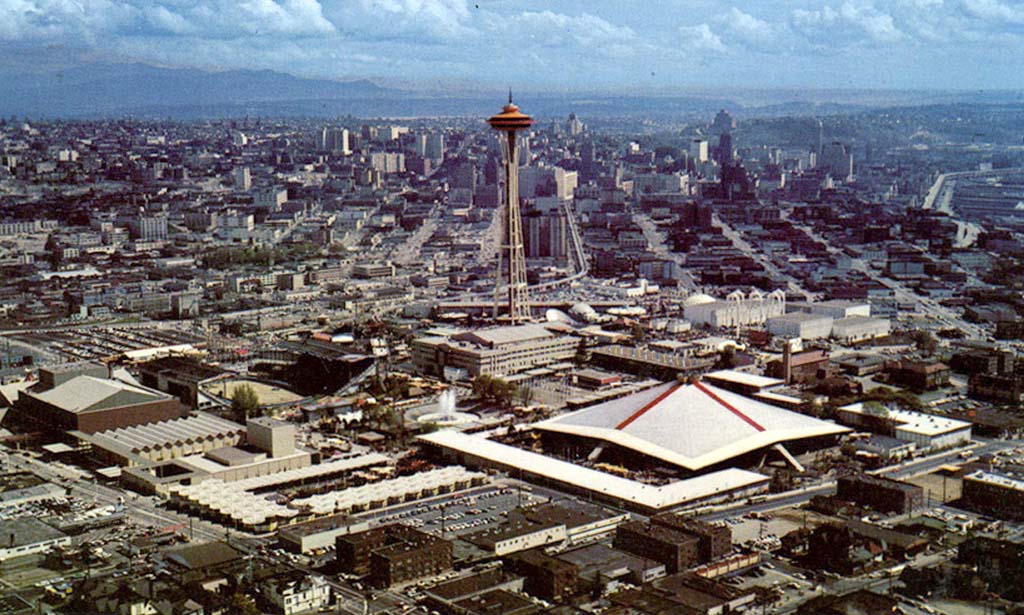
Imagine your room could turn from a bedroom into a playroom and then into an art studio — simply by moving the walls. Sounds like science fiction? But that's exactly how engineers decided to save Seattle Center after the 1962 World’s Fair ended. And it all began with an idea from an ordinary schoolgirl.
When the lights went out on the fair in October 1962, the city faced a question: what to do with a vast site full of pavilions and buildings? Many suggested demolishing everything. The fair was over — why keep those strange futuristic structures? But a group of Seattle residents, including teachers, homemakers, students and even schoolchildren, decided: “We will not give up our center!” They formed the Friends of the Seattle Center movement and began figuring out how to make the place useful to the city every day, not just during big events.
The girl who invented fun on wheels
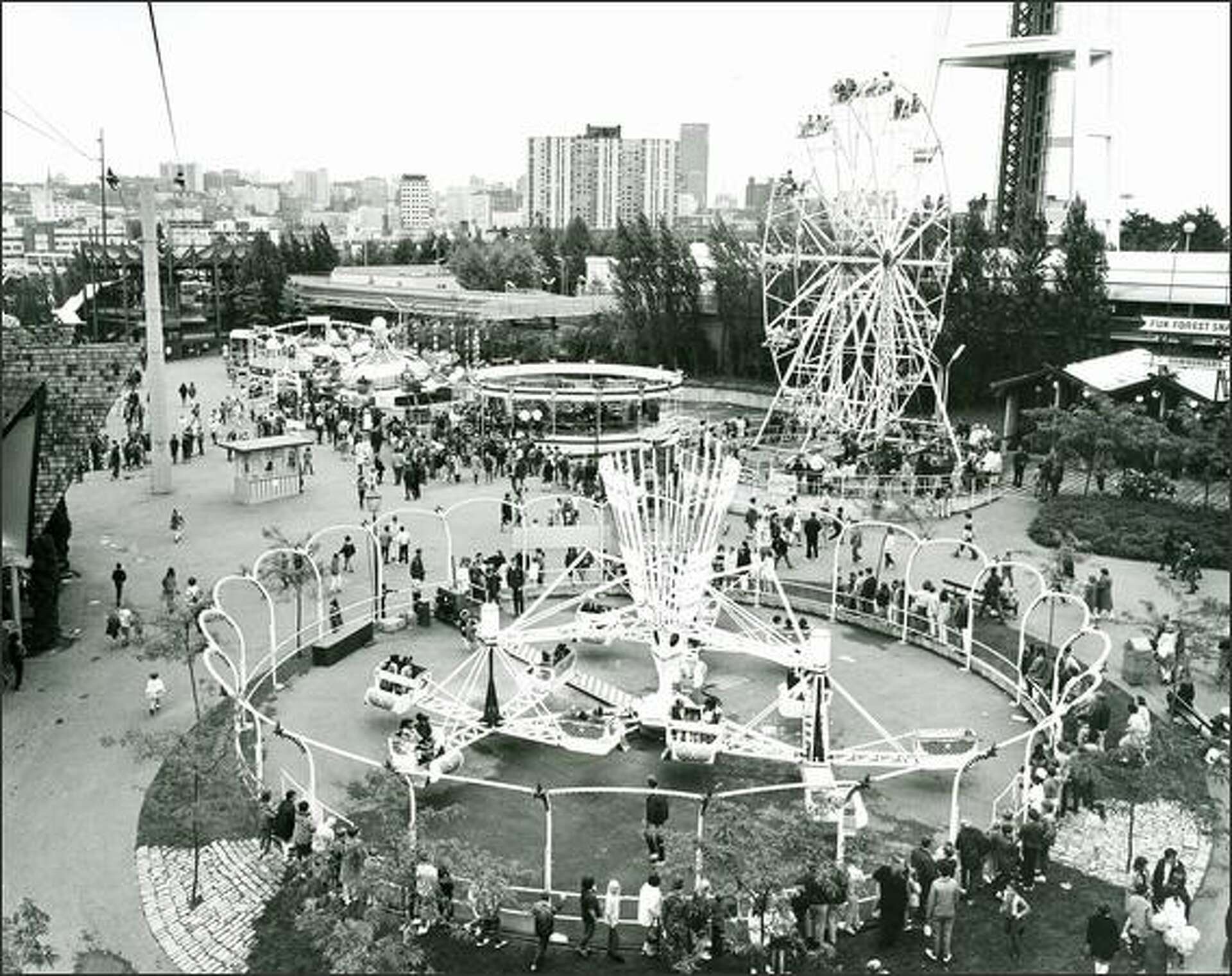
Among the activists was fifteen-year-old Linda Wagner, a student at Roosevelt High School. In spring 1963 she went to a city council meeting with an unusual proposal. Linda drew a plan for a “Fun Forest” — a permanent amusement park that could operate year-round. She calculated that families would come on weekends, schools would organize field trips, and the city would earn money to maintain the whole center.
The city council was surprised: such ideas usually came from adult architects and businessmen. But Linda’s plan was so well thought out it was approved. The Fun Forest opened in 1963 and operated for nearly 50 years! But that was only part of the solution. The main problem remained: huge buildings constructed for the fair stood empty most of the time.
Walls that can move
That’s when architect Paul Thiry and engineer John Graham Jr. proposed a revolutionary idea: what if buildings could change their purpose? Rather than build new ones, teach the old ones to “transform” into whatever the city needed at the moment.
They started with the Opera House — the largest building on the campus. Engineers installed enormous walls on rails (think railroad tracks, but inside the building!). These walls weighed several tons each but moved so smoothly that one person could shift them using a special mechanism. The floor was made movable too — sections rose and lowered on hydraulic lifts, like elevators laid on their sides.
Now the building could turn in a single day from a 3,000-seat opera house into a 2,500-seat concert hall, and a week later into an exhibition space with no seats at all. Acoustic panels in the ceiling moved as well, changing the sound of the hall: opera needs one kind of acoustics, a rock concert needs another.
A transformer city
The idea of “flexible buildings” spread across the Center. The science pavilion became a museum that could reconfigure exhibits by moving entire exhibition walls. The Coliseum arena learned to switch from a basketball court to an ice rink and then to a concert stage. For that, engineers devised a removable-floor system: under the basketball parquet were pipes for freezing ice, and the whole setup could be covered with special platforms for concerts.
One project engineer, Victor Steinbrueck, explained it like this: “We didn’t build buildings, we built life-size Lego kits. Every morning the city could assemble from them what it needed that day.”
It was so unusual for the early 1960s that architects from other countries came to study it. As Linda Wagner (who later became a teacher) recalled: “We wanted the Center to be like a Swiss Army knife — one object with many functions. And the engineers did it!”
Why movable walls changed the world
The idea of “adaptive architecture” — buildings that change with people’s needs — spread worldwide after Seattle. Today many modern museums, theaters and exhibition centers use movable walls and transformable spaces. But in 1963 it was a revolution.
The movement to save Seattle Center showed something important: sometimes the smartest solutions don’t come from experts in offices but from ordinary people who love their place and are willing to fight for it. A fifteen-year-old schoolgirl proposed an idea that brought the city millions of dollars. Engineers devised a technology that saved resources and inspired architects around the globe. And residents proved that if people unite and think creatively, they can change the future of their city.
Today Seattle Center welcomes more than 12 million visitors a year. The buildings still change their appearance, although some mechanisms have been replaced with more modern systems. But the principle remains the same: a city needn’t build new when it can teach the old to adapt. It’s a lesson not only about architecture but about life — flexibility and readiness to change matter more than size and rigidity.