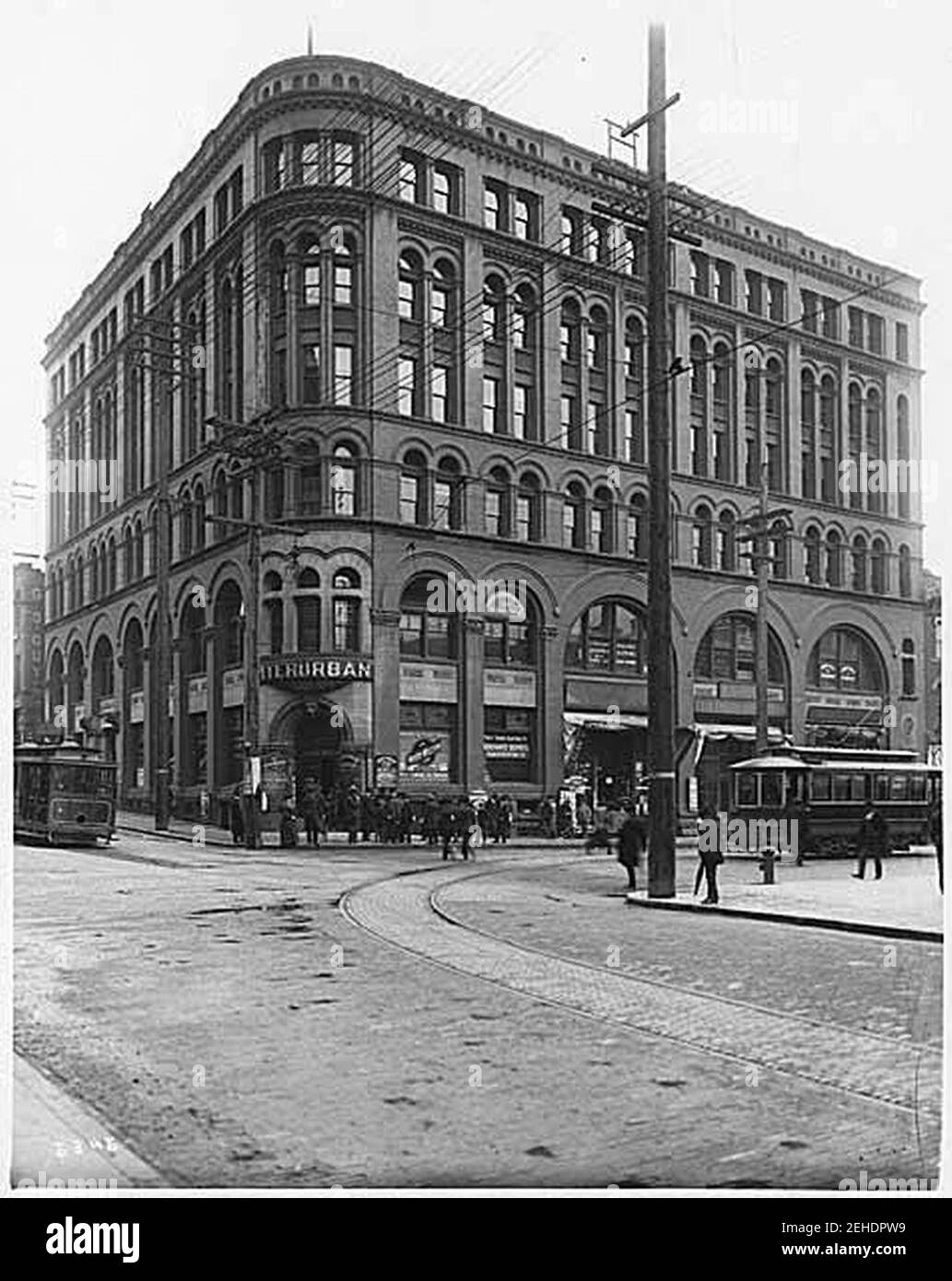
Imagine you moved to a new country where nobody speaks your language, and you miss home terribly. But you have a hammer, a saw, and nails. And you know a secret: you can build a house so it whispers stories of your homeland to those who know how to look. That’s what immigrants did more than a century ago when they built the Capitol Hill neighborhood in Seattle — one of the city’s liveliest and most creative districts, home each summer to the famous Capitol Hill Block Party.
Secret messages in wooden lace
In the early 1900s thousands of people came to Seattle from Scandinavia, Russia, Poland, and other parts of Eastern Europe. Many were carpenters, masons, and builders — people who worked with their hands. They were commissioned to build new homes for a growing city, and they approached the work with an unusual idea.
A Norwegian carpenter named Lars, for example, carved patterns into house cornices that reminded him of the wooden churches in his native village. A Polish mason, Jan, laid bricks in a special way — just like the houses in his town near Warsaw. A Russian family named Petrov, working together, made window frames with small triangular "kokoshnik" shapes — exactly like the houses in their native Pskov.
They didn’t merely copy. They adapted, blended, and reinvented. A Scandinavian “dragon” motif might sit next to a Russian “sun” ornament on the same porch. It was like keeping a diary, but using designs and patterns instead of words — a diary readable only to those who knew the secret code.
Why did they do it?
Life for immigrants was very hard back then. Many Americans looked down on them because of accents or different clothing. Newspapers ran insulting pieces about “outsiders.” Immigrants were often paid less than local workers, even though they did the same jobs.
But when these builders worked, they felt free. Nobody could forbid them from carving a certain pattern or laying bricks in a particular way. As the granddaughter of one of these builders, historian Ingrid Nelson, later said: “My grandfather couldn’t control how people treated him, but he could control every curl of wood he carved. And in those curls, he was home.”
It was their way of saying: “We are here. We matter. We brought something valuable with us.” Each house became a small monument to their homeland and, at the same time, to their new home.
A secret passed by whisper
The most remarkable part of this story is how these builders taught one another. They had no internet or instruction books. Instead they created an informal “school” right on the job sites.
A seasoned craftsman would show a newcomer how to carve a certain pattern and tell the story behind it. “See this wave?” a Norwegian might say. “It reminds me of the sea we crossed to get here.” Or a Polish master would explain: “This cross in a circle is an old protective symbol. We place it above the door so the house will have happiness.”
Gradually an amazing thing happened: styles mixed. An Italian mason learned from a Swedish carpenter, who in turn learned from a Russian roofer. Capitol Hill houses started to look not quite Scandinavian, not quite Eastern European — they became something new, special, and Seattle-made.
It was like children from different countries playing together and inventing a new game that combined the rules of all their favorite games.
Houses that taught people how to live together
But these immigrants built more than pretty houses. They built a particular kind of neighborhood. Almost all the homes in Capitol Hill had large porches facing the street. That was a Scandinavian tradition — the porch as a place where neighbors stop to chat.
They also built houses close together, with small backyards but shared front spaces. That created a sense that the street belonged to everyone together, not to each person alone.
Architect Marcus Weiland, who studied the area, explained: “These builders created a physical structure that forced people to interact. You couldn’t just pull into a garage and shut yourself away — you had to pass your neighbors, see them, say hello. Architecture literally made community.”
From patterns to a street party
Fast forward to 1997 — nearly a hundred years later. Capitol Hill had become one of Seattle’s most diverse neighborhoods. Artists, musicians, students, and people of many nationalities and orientations lived there. Someone suggested a big street party on those old streets.
That idea became the Capitol Hill Block Party — a festival that now draws tens of thousands of people every summer. People dance, listen to music, eat food from many countries, and meet neighbors.
What’s surprising is that many of the people who organized the first Block Party were grandchildren and great-grandchildren of those immigrant builders. They didn’t always realize it, but they continued their ancestors’ tradition of creating spaces where different people could gather.
Jim Anderson, one of the Block Party’s founders, once said: “We just wanted people to get out on the streets and meet each other. Later I learned my great-grandfather built some of these houses. He also wanted people to meet on the streets — that’s why he made such big porches.”
A lesson hidden in the walls
Today, if you walk through Capitol Hill you can still see those patterns: a wooden “dragon” on the cornice of a century-old house. An unusual bricklaying technique. A window with small triangular decorations.
Each of these elements is a message from someone who lived long ago, someone who missed home but found a way to create a new home here. Someone who understood an important thing: you can bring the best of where you came from and use it to make the new place better.
Those builders could not have predicted that a hundred years later thousands would dance in the streets they helped shape. But they created the conditions for it. They built a neighborhood that said: “There is room for everyone here. Your differences make us stronger.”
And perhaps that’s the most important thing you can build — not just a house, but an idea of how people can live together. These immigrant builders were not famous architects. They had no big names. But they changed the city, one pattern, one porch, one house at a time.
Their secret alphabet in wood and stone still whispers to us: “Remember where you came from. But build something new together. And make it so others can join you.”