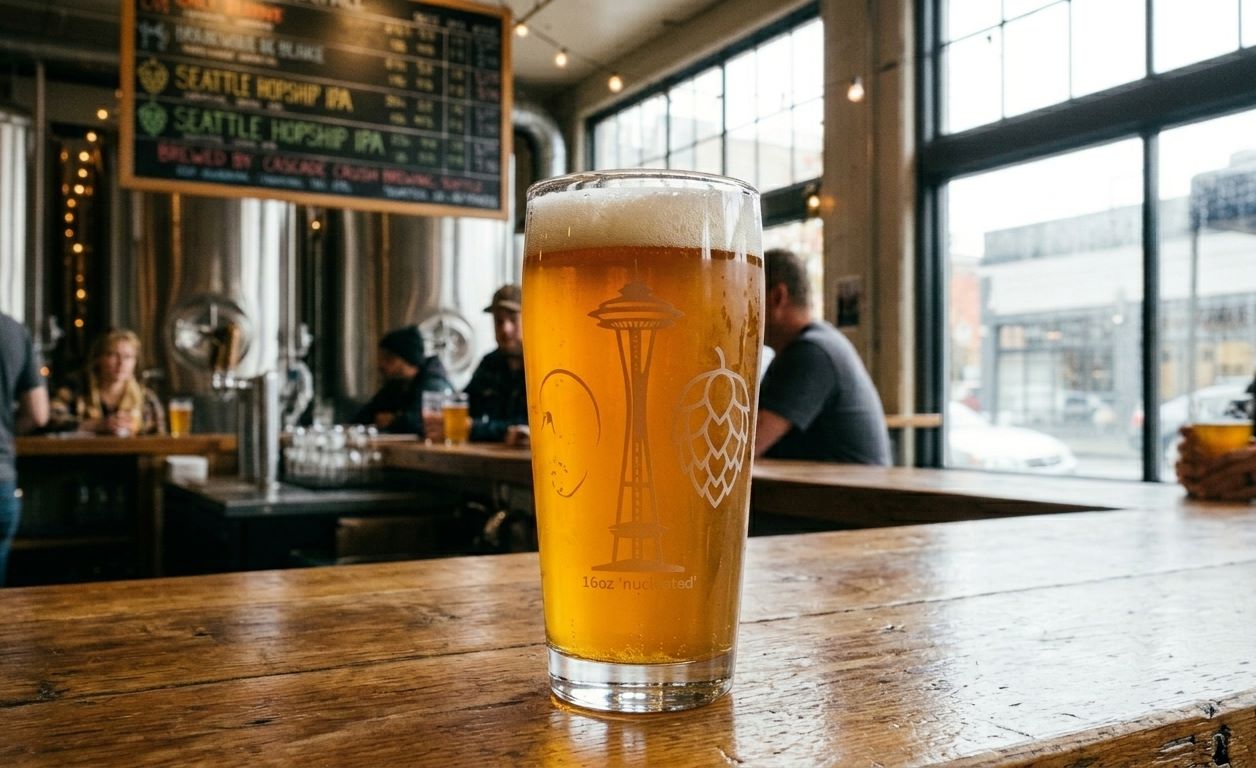
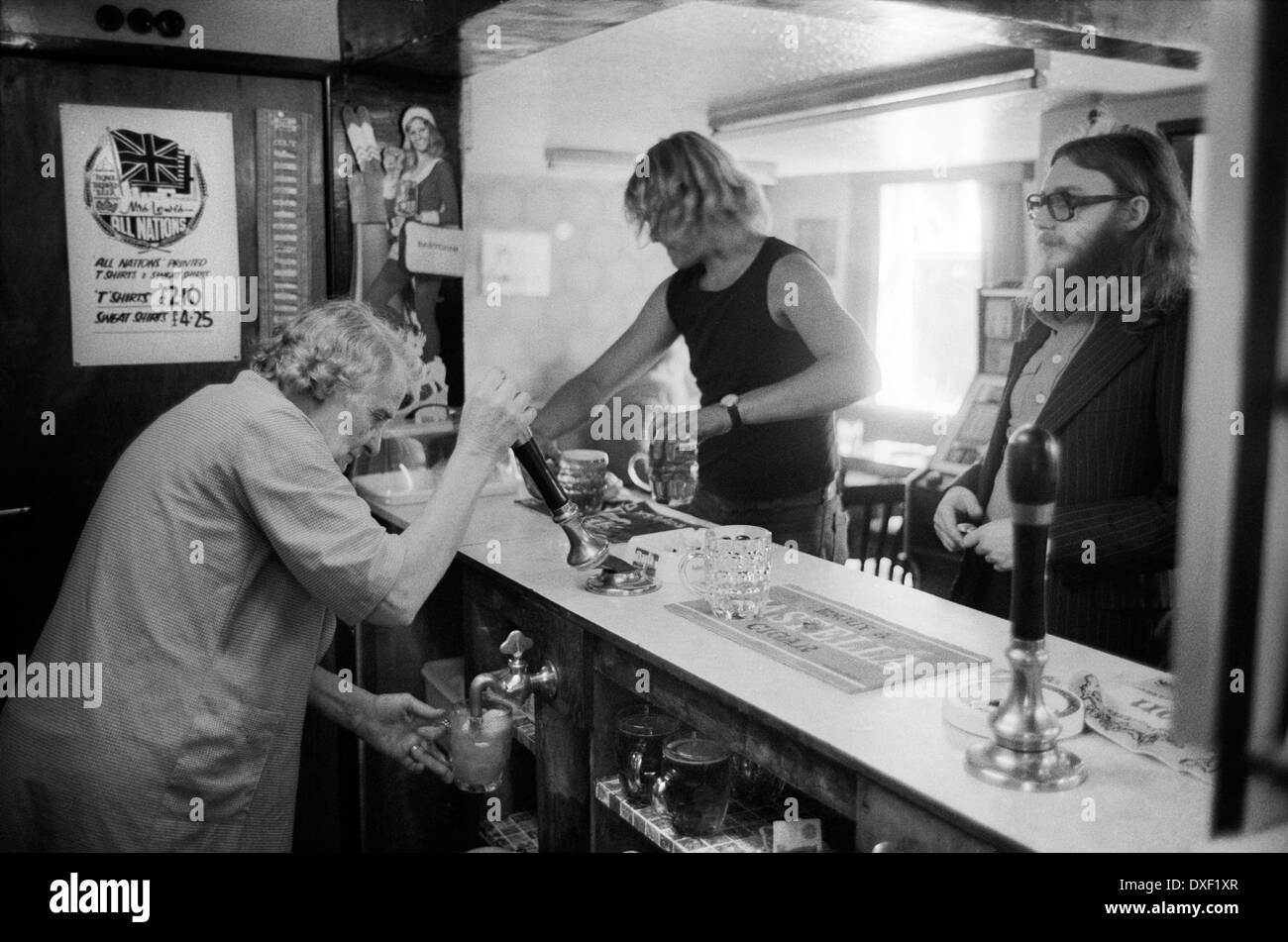
Imagine you love, say, lemonade so much that you decide to make it yourself—right in your kitchen. You read books, ask questions, repurpose old pots and pans, and in the end you come up with a flavor that you can’t find anywhere in the store. Then your friends taste it—and they also want to try making it. And their friends. And before you know it, the whole neighborhood is drinking your lemonade, and then entire little lemonade workshops start popping up all over the city. That’s essentially what happened—only with beer and adult people—and it became one of Seattle’s most surprising stories.
When All the Beer Was the Same
In the 1970s, in America, almost all beer was brewed by a few huge breweries. It tasted the same everywhere: in New York, in Texas, in Seattle. As if every book in the country had been written by the same boring author. Many people were unhappy about that, but it seemed like nothing could change—those breweries were too big, too rich.
But in 1978 something important happened. U.S. President Jimmy Carter signed a law that allowed ordinary people to brew small amounts of beer at home—for themselves, not for sale. It was like opening a door behind which a whole crowd of eager people was waiting.
Kitchen Engineers and Milk Cans
In Seattle and nearby cities in Washington State, hundreds of home “brewers” appeared. They were the most ordinary people: teachers, mechanics, programmers. They met in garages, swapped recipes the way kids trade trading cards. But the most interesting part was that they had to solve real engineering problems.
Beer is a living thing. Inside it, tiny organisms called yeast work away. They “eat” sugar and exhale carbon dioxide—those same bubbles. For the yeast to work properly, you need an exact temperature. Too hot and they’ll die. Too cold and they’ll go dormant. Home experimenters built makeshift thermostats, insulated their containers with old blankets, and checked the thermometer several times a day.
And where do you get large brewing tanks? Buying new ones was expensive. Then someone realized: dairy farms were selling old equipment! Milk tanks, pipes, pumps—everything was perfect for beer. People literally converted little dairy operations into breweries. This is called “retooling”—when something designed for one purpose is given an entirely new use.
The Man Who Opened the Door for Everyone
In 1982, a resident of a neighboring city, Yakima, named Bert Grant did something many people dreamed about but were afraid to do. He opened a small brewery inside an old opera house building and let people come in to drink beer brewed right there, behind a glass wall. That’s a “brewpub,” and Grant’s place became the first of its kind in the U.S. after a long, long break.
Grant had a chemistry background. He understood how hop molecules work, how temperature changes flavor, and how time affects aroma. But most importantly, he could explain it to others in simple terms—and he never kept his knowledge secret. “I want people to understand what they’re drinking,” he said. He was a real teacher in a brewer’s apron.
Following Grant, small breweries began opening one after another in Seattle and across the state. By the end of the 1980s, there were dozens of them, and Washington State itself became one of the country’s main centers for craft beer.
When Knowledge Matters More Than Money
The most surprising thing about this story isn’t the beer itself. What’s surprising is how it happened. Not big companies, not famous scientists, not the government—just people who were curious and weren’t afraid to try things. They shared recipes at homebrewers’ gatherings, published homemade magazines, and helped each other repair equipment.
It’s very similar to how people share instructions online today: “Look, I did it like this—try it too.” Only then there was no internet, and everything passed hand to hand, from garage to garage.
Today, Seattle is known around the world for its craft beer culture—hundreds of small breweries with unusual flavors and stories. But few people know it all grew out of simple curiosity among ordinary people, old milk tanks, and the desire to make something of their own—not like everyone else. Sometimes the biggest changes start exactly that way: with one person in a garage who thinks, “What if I try?”