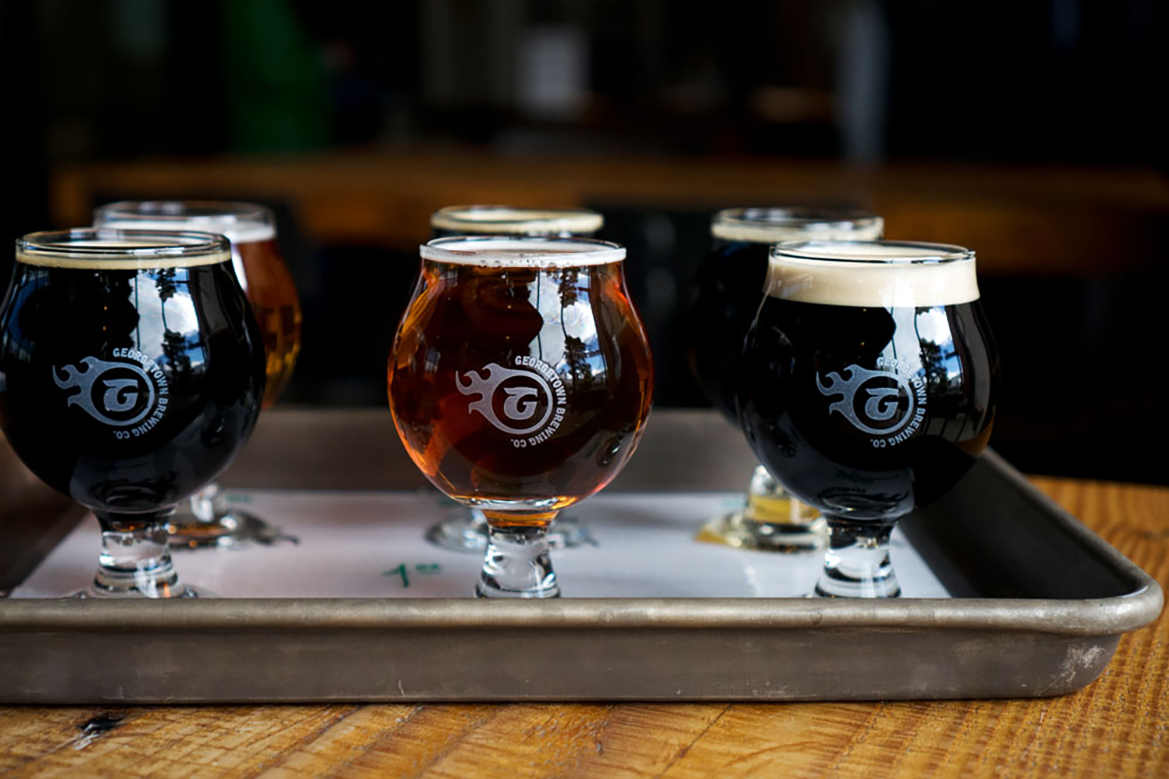
In Seattle in the 1980s something strange and wonderful happened. People who opened small breweries did what seemed crazy: they began sharing their secret recipes with competitors. Imagine you invented the world’s best cookie recipe and then told every girl in class who also bakes cookies and sells them at the school fair. Sounds foolish? Many adults would think so. But Seattle’s brewers decided to try it — and a kind of magic happened that changed not only their city, but how people think about work and success.
How it began: small breweries and a big question
Before the 1980s, almost all beer in America was made in huge factories. It was uniform, dull, and nobody paid much attention to flavor. But a few people in Seattle — a city of rain and fog in the Pacific Northwest — decided they wanted to make beer differently. They opened tiny breweries in garages and basements, experimented with flavors, and added unusual ingredients. This was called "craft brewing" — making drinks by hand, with heart, like an artist painting a canvas.
The problem was that no one really knew how to do it right. Big factories had scientists and expensive equipment. These enthusiasts had only a dream and the desire to create something of their own. In such situations, most people would hide their discoveries, afraid competitors would steal ideas. But in Seattle the opposite happened.
The first brewers — like Charles and Rose Ann Finkel, who founded Pike Brewing, or the team behind Redhook Brewery — started meeting not to compete but to help one another. If someone couldn’t get the beer’s body right, another brewer would come by and show how to fix it. If someone came up with an interesting recipe using orange zest or coffee, they didn’t lock it in a safe; they told the others: “Try it like this — it turns out great!”
The secret that stopped being a secret
The most surprising thing began when brewers invented “collaborative brewing.” That meant two or even three breweries that might otherwise compete for customers would join forces to create a new beer together. Imagine two school teams that usually compete in sports suddenly deciding to paint a huge picture for an exhibition together. Each brings their best paints and ideas, and the result is a masterpiece neither team could have made alone.
One well-known example is when brewers from different Seattle neighborhoods gathered in someone’s garage and brewed together, experimenting through the night. They weren’t afraid someone would “steal” their methods because they understood: when everyone makes good beer, people become interested in craft brewing as a whole. Ten excellent small breweries in a city are better for everyone than one good and nine bad ones.
This philosophy was called “a rising tide lifts all boats.” It’s an old sailors’ saying: when the water in the harbor rises, all the ships rise with it, not just one. Seattle’s brewers decided to create that “tide” together.
How the idea spread beyond breweries
Interestingly, the idea didn’t stay only among brewers. It spread across Seattle like ripples from a stone thrown into a pond. Coffee roasters — and Seattle is famous for its coffee (Starbucks was born there) — also began sharing roasting secrets. Restaurant owners told each other where to find the best suppliers. Artists taught other artists their techniques.
But the most incredible thing happened when Seattle’s tech industry began to develop. Software companies adopted this openness philosophy. They started creating “open source” — programs anyone could study, improve, and use for free. This was revolutionary! Usually companies guard their code like dragons guarding treasure. But in Seattle, where a spirit of collaboration brought by the brewers hung in the air, programmers thought differently.
Cultural researchers noted that a special community emerged in Seattle where people from different professions helped each other not for money but because it felt right. At meetings and festivals you could see a brewer discussing team organization with a programmer, and that programmer sharing ideas with restaurateurs about using technology to improve service.
What it changed for ordinary people
For people simply living in Seattle, these changes meant their city became different. Instead of large faceless companies there were many small cozy places where owners knew patrons by name. Neighborhoods turned into communities where people didn’t just live near each other but were friends and helped one another.
“Craft districts” appeared — streets with a small brewery, a coffee shop, a bakery standing side by side, all supporting each other. If someone stopped by a brewery, the owner might say: “Get your coffee over at that café — Maria is a wizard!” And in the café they’d recommend the beer from the neighboring brewery. This was the opposite of how business usually works, where everyone tries to lure customers away from their neighbor.
Children in Seattle grew up seeing adults cooperate, not just compete. That influenced how they thought about work and success. Many of them later started companies and projects remembering this lesson: sharing knowledge doesn’t mean losing an advantage — it makes the world around you richer and more interesting.
Why this matters to all of us
The story of Seattle’s brewers teaches an important lesson: sometimes the boldest choices are those that go against the “rules” of how business “should” work. These people proved that generosity and openness can be strengths, not weaknesses. When you help others grow, you grow with them.
Today there are more than 200 small breweries in Seattle, many of which still befriend and collaborate with one another. More importantly, the spirit of collaboration they created lives throughout the city. It’s in coffee shops, in tech companies, in schools where teachers share best practices, in libraries where people exchange not only books but ideas.
This story reminds us that success does not necessarily mean “beating everyone else.” Sometimes true success is helping others achieve their goals, and together creating something beautiful. Like the brewers in garages who decided it was better to have a city full of interesting places and happy people than to be the single successful person in a boring city.
Maybe next time you learn something new — a new way to draw, solve math problems, or make bead bracelets — you’ll remember the Seattle brewers and think: “What if I share this with my friends? Maybe together we’ll come up with something even more amazing!” Small changes like that can turn into large kinds of magic that change whole cities.