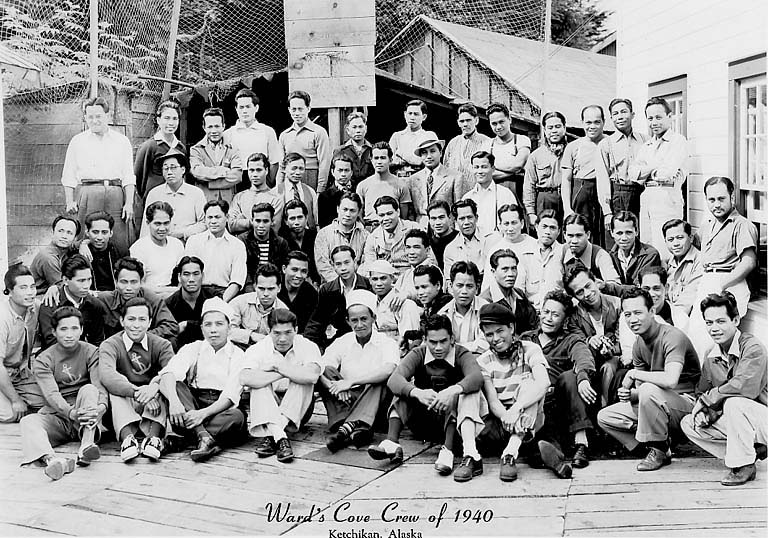
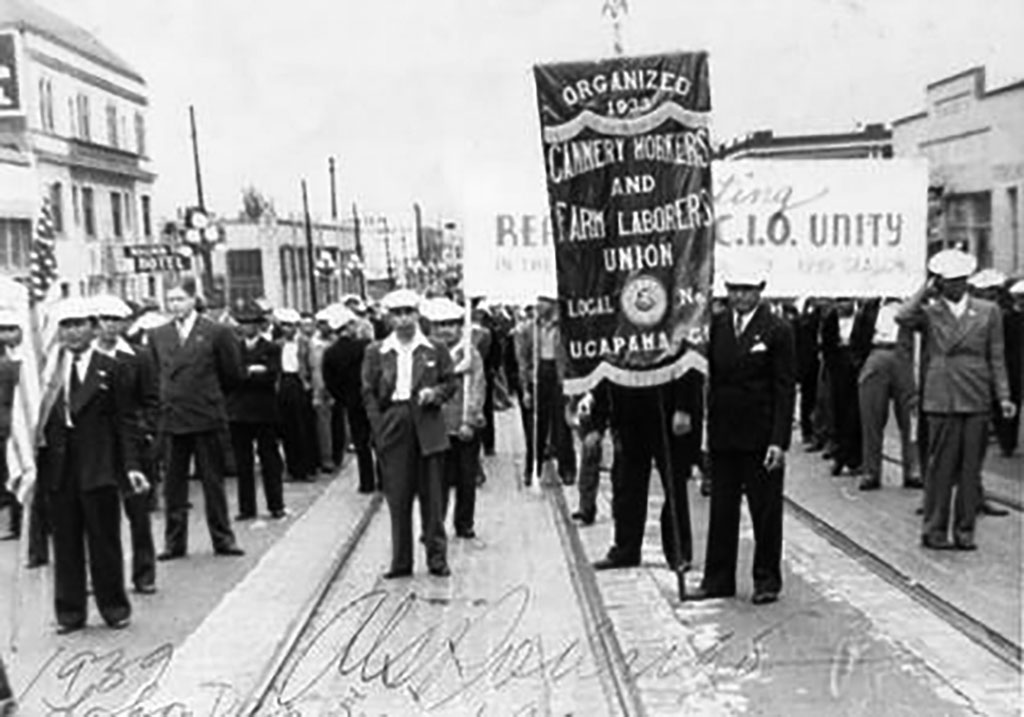
Nearly a century ago, young men from the distant Philippine Islands crossed the ocean to work in Alaska’s fish canneries. The work was hard, the pay was low, and almost no one listened to the workers. But one day, they realized something simple: when you’re alone, no one hears you; when there are many of you speaking together, everyone hears. This story began in 1933, but it bears a striking resemblance to what is happening today.
Far from Home
Imagine you’re fifteen or twenty years old and traveling to the other side of the world. That’s what many young Filipino men did in the early 20th century. At the time, the Philippines was under U.S. rule, so its people were called “U.S. nationals.” That sounds almost like they were “one of us,” doesn’t it? But in reality, things were different: in many places, it was hard for them to rent a home, buy land, or even make friends with local people. They were not allowed to become U.S. citizens.
Many of them ended up in Seattle, a city on the shores of Puget Sound. There, in the neighborhood now known as the International District, they found one another: shared dining halls, barbershops, and small rooms where they could talk in their native language and eat familiar food.
Summer in Alaska
Every spring, hundreds of workers boarded ships and headed north to Alaskan towns with canneries. Thousands of salmon were caught, then had to be quickly cleaned, packed into cans, and sealed. The work went on at a fast pace for hours at a time, in damp, cold conditions.
The most interesting part was how workers were hired. They didn’t negotiate directly with the cannery owners. Between them stood a contractor—someone who recruited and managed a crew. Contractors took a share of the workers’ earnings and sometimes also withheld money for food, housing, and transportation.
Put simply: imagine you sold a lot of cookies at a fair, but someone else got the money—not you, but the person who “helped you find a spot.” That’s how it worked: some people did the labor, while others took a substantial share of the money.
A Voice Together
In 1933, during the hard years of the Great Depression, when work was scarce and life was difficult for everyone, the workers decided to unite. They formed a union—an organization where people in the same profession negotiate together. It was called the Cannery Workers' and Farm Laborers' Union, and later became part of the larger dockworkers’ union (ILWU) as Local 37.
What is a union? It’s like a team at school: if one student asks the teacher to change an assignment, the teacher might not listen, but if the whole class asks, it’s a different conversation. The workers wanted fair pay, clear rules, and respect.
The road was not easy. Contractors and cannery owners were not always happy that the workers had joined forces to demand better conditions. But gradually the union grew stronger, and Filipino workers became more visible. Among those who wrote and spoke about this life was writer Carlos Bulosan, whose book America Is in the Heart tells the story of migrants like them.
What Remained
The story didn’t end in the 1930s. Many years later, in 1981, two young union leaders, Silme Domingo and Gene Viernes, were murdered for fighting for fair rules within the union. Their memory is still honored in Seattle, and films and articles have been made about them.
Today, you can visit the Filipino Hall and museums in the International District that tell the story of those times. And it’s easy to see echoes of this history in the world today: people who have come from other countries work on farms, in warehouses, and in delivery—and often face intermediaries, low pay, and fear of speaking out, too.
The Human Dimension
It seems to me that the most important things in this story are not the dates or the names of organizations. The most important moment is when someone realizes: “I’m not alone.” Even if you’re far from home, even if people don’t really listen to you, there may be others nearby just like you. And together, you can say what would be frightening to say alone.
Conclusion
The 1933 strike and union formed by Filipino workers remind us that change often begins not with powerful people, but with ordinary young men who decide to support one another. This story from Seattle teaches us to be attentive to those who have come from far away and to remember: justice usually grows out of kindness, courage, and the ability to listen to one another.