Imagine a city that is home to Amazon’s headquarters — the giant company that sells books online and because of which thousands of traditional bookstores closed across America. Now imagine that in this very city small bookstores not only survived but became stronger than ever. And most surprisingly, they turned into places where people didn’t just read about nature, they began to protect it for real. This is the story of how bookstores in Seattle became "greenhouses for ideas," where pages read aloud grew into real trees and real deeds.
The Amazon city paradox: when the enemy lives next door
In the early 2000s it seemed that Seattle’s small bookstores were doomed. Amazon, founded by Jeff Bezos right in this city in 1994, grew like a giant octopus, and its tentacles reached every home. Why go to a store when you can order a book in your pajamas without leaving the house? Across America independent bookstores were closing — by 2010 their number had nearly halved compared to the 1990s.
But Seattle residents began to notice a strange thing: they were missing something important. Not the books themselves — there were plenty on screens and in mailboxes. They missed the places where they could talk about books with real people. Places where you could stumble upon a book you didn’t even know you wanted to read. Places where a bookseller could say, “If you liked this book, this one will really get to you!”
And something unexpected happened. Around 2010 independent bookstores in Seattle began to revive. Elliott Bay Book Company, having moved to a new location on Capitol Hill, became larger and more popular. Third Place Books opened three branches at once. New stores appeared: Phinney Books, Queen Anne Book Company, Secret Garden Books (for children). By 2020 Seattle had more independent bookstores per capita than most American cities.
But the most interesting thing wasn’t that these stores survived, it was what they became.
When a bookshelf becomes a launchpad for action
Seattle bookstore owners quickly realized: to compete with Amazon you need to offer what a screen can’t. They started creating not just shops, but "third places" — neither home nor work, but spaces where a community gathers.
This was especially evident in the environmental sphere. Seattle has always been a city where people care about nature — the ocean, mountains, and forests are nearby. Bookstores became points where that concern turned from feeling into action.
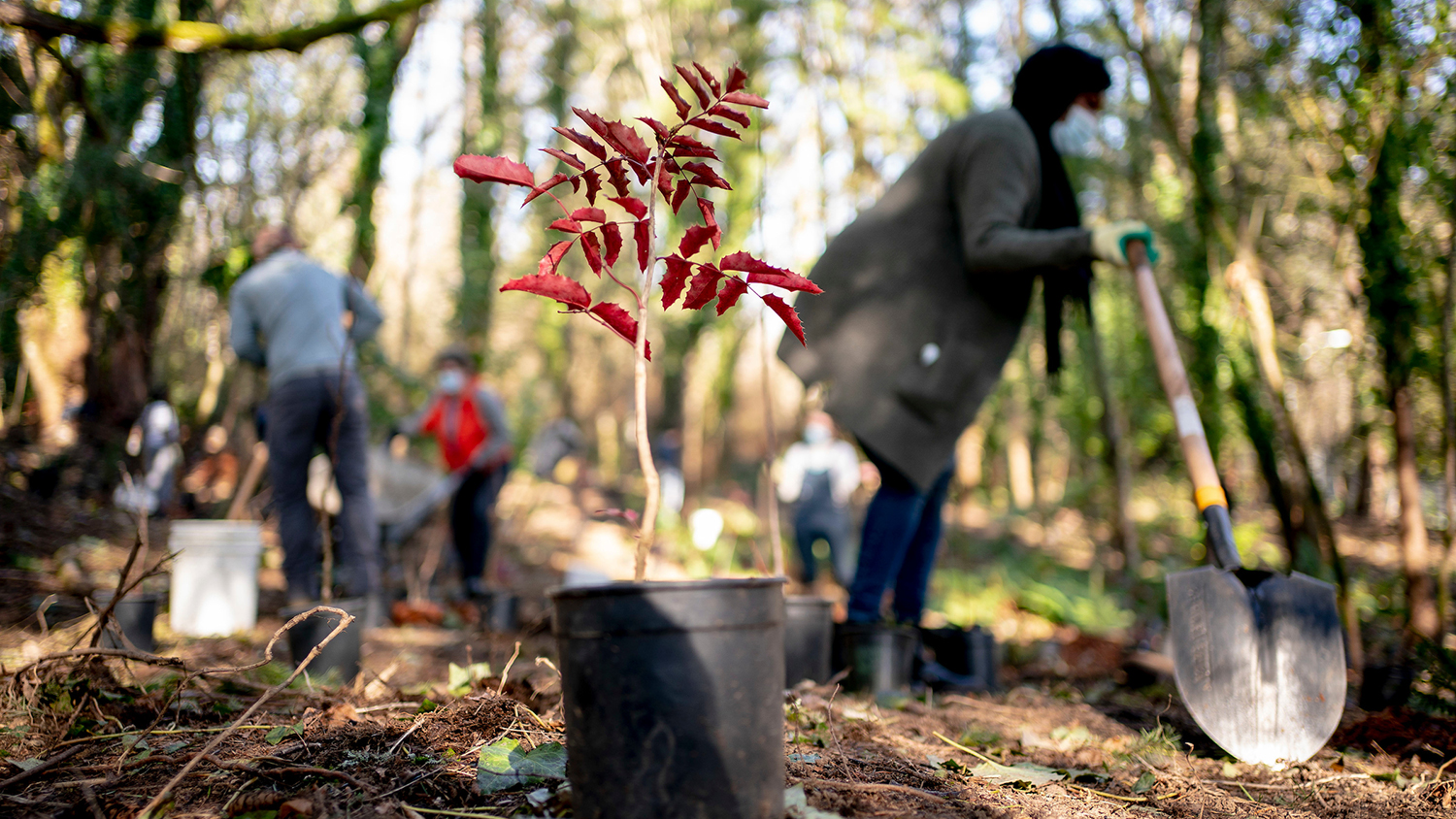
Third Place Books started monthly “Green Reading Clubs” — people read books about climate, oceans, and forests, then discussed what could be done right away. But the discussions didn’t stop at conversation. Club members organized joint beach cleanups in Puget Sound, planted trees in city parks, and created community gardens.
Elliott Bay Book Company went further. They began inviting not only authors but environmental activists and scientists studying climate change. After a talk by the author of a book on salmon conservation, a group of readers formed a volunteer organization that helps clean the streams where those fish spawn. After a presentation on urban gardening, several families joined forces and turned a vacant lot in their neighborhood into a flourishing community garden.
Phinney Books, a small shop in the north part of the city, created an “Action Shelf” — a special section where next to every ecology book there was a card with a concrete suggestion: “Read about plastic in the ocean? Here’s the address of the nearest coastal cleanup this Saturday.” It was a brilliant idea: turn the emotion from reading into a concrete step.
Kids who read about trees and planted forests
This “culture of action” was especially strong among young readers. Secret Garden Books, a children’s bookstore, launched the “Read a Tree — Plant a Tree” program. The idea was simple: every child who finished a nature book (whether a fictional story or a nonfiction book about animals) received a sapling they could plant in their yard or in designated city areas.
In the first year of the program Seattle children planted more than 500 trees. But more important than the numbers was this: children began to see the connection between pages and reality. Ten-year-old Mia, after reading a book about how trees communicate through their roots, planted three oaks nearby “so they wouldn’t be lonely.” Eight-year-old Lucas, inspired by a book about birds, built five birdhouses with his dad and hung them around his neighborhood.
Teachers started bringing whole classes to bookstores not just “for books” but as starting points for school environmental projects. One fifth-grade class, after visiting Elliott Bay Book Company and reading a book about pollution, organized a battery-collection campaign at their school — in a year they collected more than a ton of hazardous waste that was properly disposed of.
Numbers that tell a story of change
The effect of this movement can be seen in concrete numbers:
| Indicator | 2010 | 2020 |
|---|---|---|
| Independent bookstores in Seattle | 8 | 17 |
| Environmental events organized through bookstores (per year) | about 20 | over 200 |
| Participants in "green" book clubs | about 150 people | over 2,000 people |
| Trees planted through bookstore programs | 0 | over 3,000 |
But behind these numbers are real changes in how people think about books and action. A 2019 survey showed that 67% of visitors to Seattle’s independent bookstores had participated at least once in an environmental action they learned about at the store. That’s an incredibly high figure!
Third Place Books owner Rhonda Palmer said in an interview: “We realized we don’t sell books. We sell the possibility of changing and changing the world. A book is a seed. But for a seed to grow into a tree you need soil, water, and sunlight. Our store is that soil and that sun. We create the conditions for ideas to sprout into action.”
Why this matters for the whole world
The story of Seattle’s bookstores shows three important things.
First, even in the digital age physical places where people gather remain incredibly important. You can read a book on a tablet, but you can’t accidentally meet a neighbor online who’s also worried about deforestation and together go plant trees next Saturday. Real encounters create real movements.
Second, culture and action are not opposites but allies. People used to think: either you read books (a cultured person), or you go out and act (an activist). Seattle showed that reading leads to action, and action makes reading deeper and more meaningful. When you’ve planted a tree with your own hands, a book about forests reads differently — you understand every word with your whole body.
Third, small places can create big change. A bookstore isn’t a government or a huge corporation. It’s just a place with shelves, books, and people who love to read. But those are precisely the places where people trust each other and share values, and they can spark waves of change that sweep through a city.
Today the model of the “bookstore as a center for environmental action” has spread to other American cities. But Seattle remains special — a city where Amazon’s headquarters sits next to dozens of bookstores that have proven the future belongs not to the one who sells fastest and cheapest, but to the one who creates meaning and community.
And next time you open a book about nature, animals, trees, or oceans, remember: that book may be more than a story. It could be the start of your own adventure, in which you become a hero who protects the real world, not an imaginary one. That’s what Seattle residents understood, and that’s why their bookstores turned into places where not only ideas are born, but forests too.