Imagine that almost all the bookstores in your city have disappeared. Not because people stopped reading, but because a huge robotic store appeared that sold books cheaper and faster than anyone else. That’s what happened in Seattle in the early 2000s. The city where Amazon was born almost lost all its ordinary bookstores. But then something surprising happened: people didn’t just bring bookstores back — they invented a new way to build them. And now other cities around the world are learning from Seattle how small shops can beat the giants.
When books nearly vanished from the city
In 1995 an online store called Amazon opened in Seattle. Its founder, Jeff Bezos, began selling books straight out of a garage. The company grew incredibly fast — like a dragon from a fairy tale that gets bigger every day. By 2000 Amazon was selling books cheaper than anyone else, delivering them in a couple of days, and people could order without leaving home.
For ordinary bookstores this was a catastrophe. One after another they shut down. First went large chains like Borders. Then small independent bookstores — those cozy shops where clerks knew customers by name and could recommend the perfect book for you — began closing.
By 2010 only a few independent bookstores remained in Seattle. It seemed that soon books could be bought only through a computer or in huge faceless supermarkets. The city that gave the world Amazon was losing what made it special — places where people could meet, talk about books, flip through pages and find something unexpected.
The secret weapon of small shops
But in the 2010s something odd began to happen. People — teachers, librarians, simply book lovers — started opening new bookstores. They didn’t try to become as big as Amazon. Instead they did what a big company could never replicate.
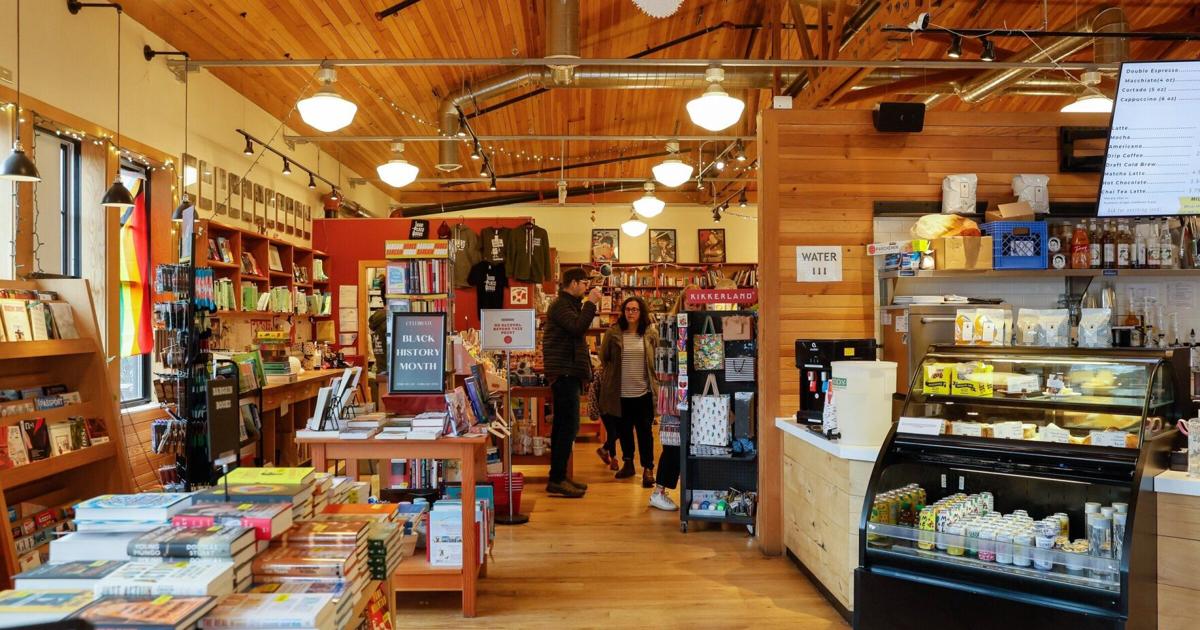
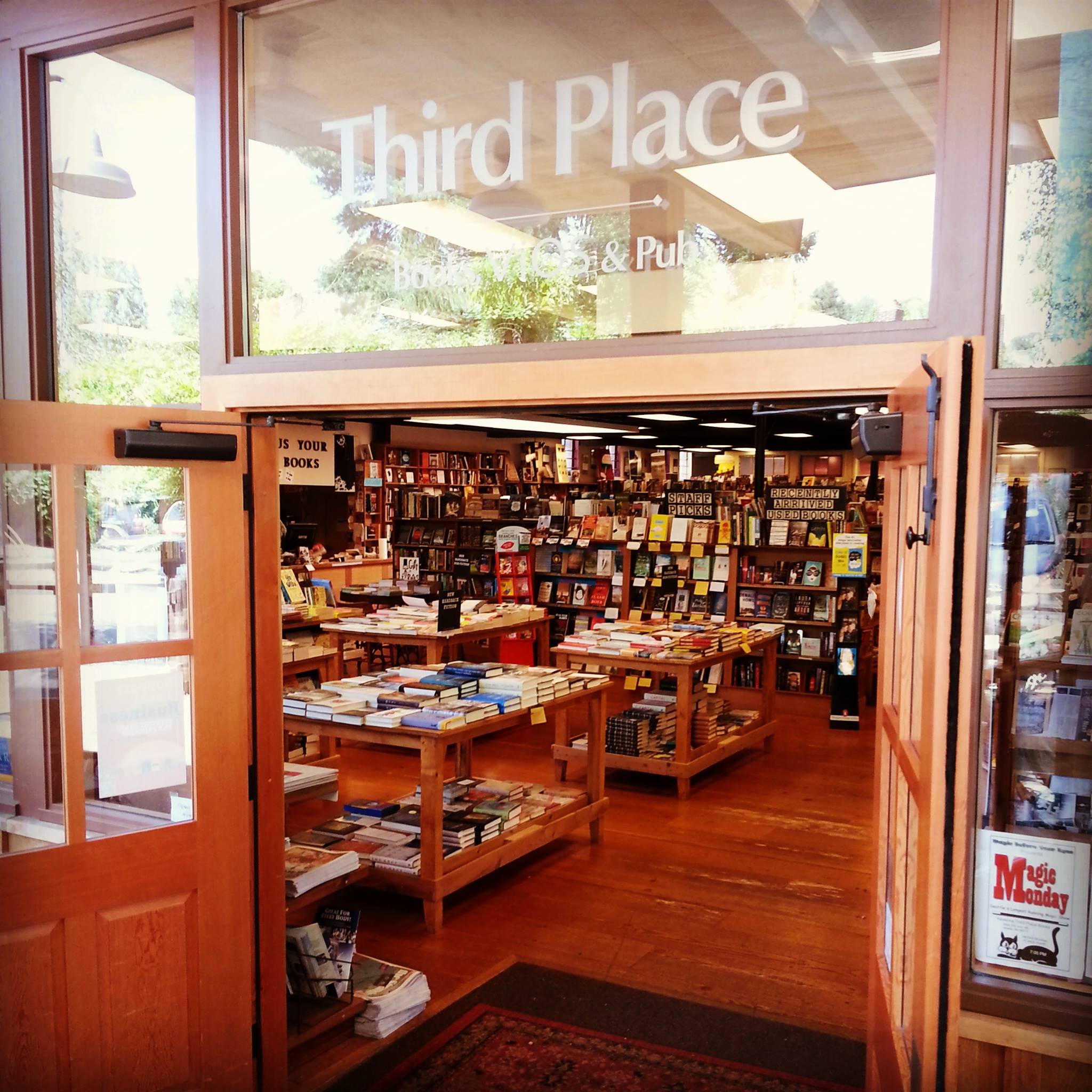
For example, Third Place Books opened in an old building and created more than a place to buy books — a real "third place" (that’s the meaning of its name). The first place is your home, the second is school or work, and the third is a spot you come to just be, meet friends, read. This shop has a café where you can sit for hours with a book, a children’s area, and even a stage where writers read their new stories.
Phinney Books was opened by a woman named Tom Nissley in an ordinary house in the Phinney Ridge neighborhood. She turned the rooms into cozy book-filled halls. It always smells of fresh coffee, soft rugs lie on the floor where children can sit and read, and a cat named Captain Cook greets visitors at the door. Tom knows almost all the neighbors and remembers what books each child in the neighborhood likes.
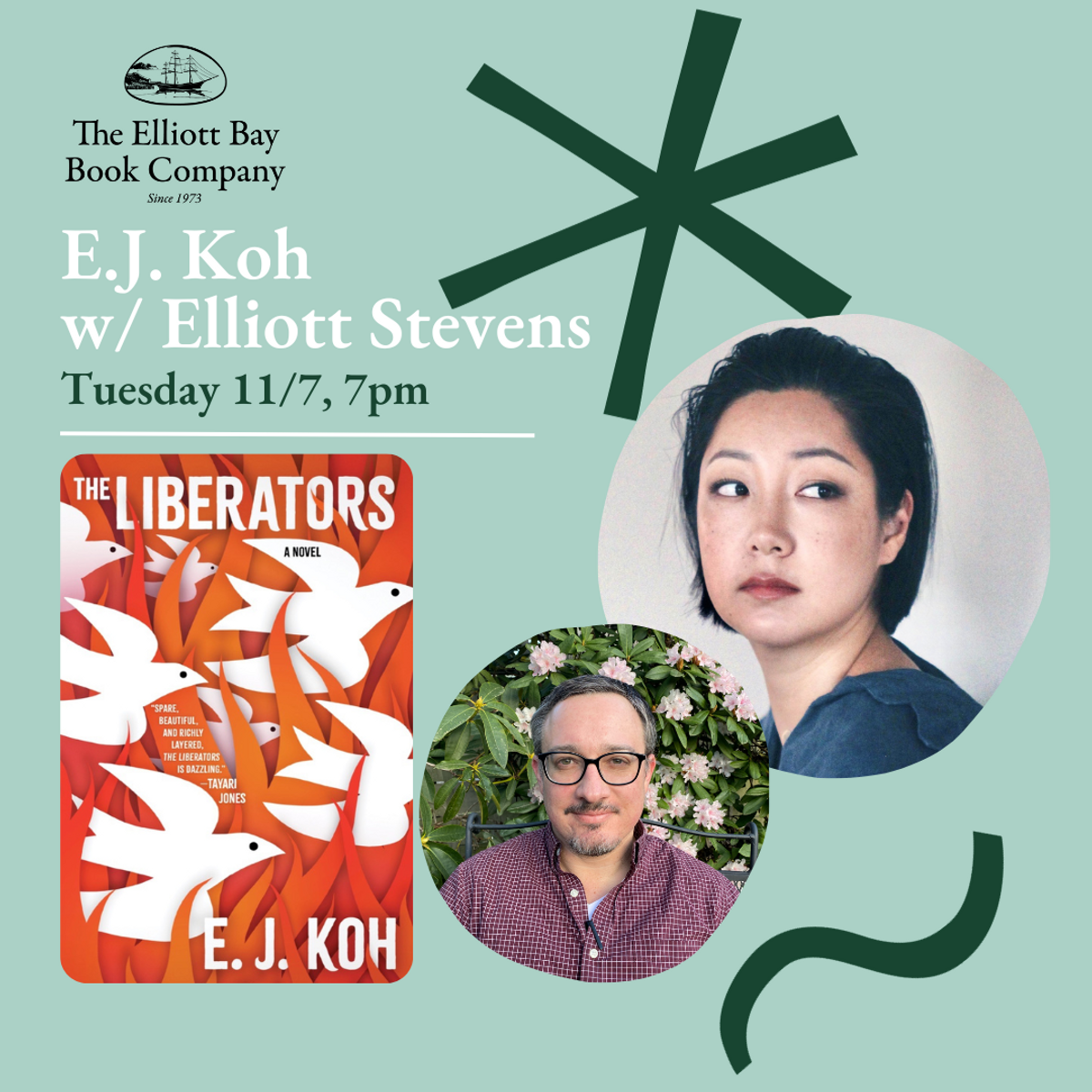
Elliott Bay Book Company moved into an old building that had been an auto repair shop. The owners preserved the brick walls and wooden beams, creating the feel of a library from an old movie. Every evening there are author events — sometimes famous writers, sometimes newcomers who have just written their first book.
What small shops can do that a robot cannot
The owners of these new bookstores understood one important thing: they cannot sell cheaper than Amazon and they cannot deliver faster. But they can do what a computer never can.
First, they create surprises. When you walk into a bookstore, a clerk might ask, "Did you like Harry Potter? Then try this book — it’s about a girl who also studies at a magic school, but it’s set in Africa!" Amazon’s computer also recommends books, but it does so by formula: "People who bought book A usually buy book B." A real person thinks differently: "I know this girl, I remember how her eyes lit up when she read about dragons, so she’ll like this story."
Second, they create events. At Ada's Technical Books (which specializes in science and technology) there are weekly workshops: kids learn to program robots, conduct chemistry experiments, build model rockets. Books become not just a product, but the start of an adventure.
Third, they become part of the neighborhood. When the pandemic began in 2020 and people couldn’t go out, Seattle bookstores didn’t close. They started delivering books to neighbors by bicycle, holding online author talks, creating "surprise book boxes" for children. Queen Anne Book Company even organized a "book emergency service" — if someone urgently needed a specific book (for example, a school textbook or a bedtime story for a sick child), they delivered it the same day for free.
How Seattle became a city of books again
The results were striking. Here’s how the number of independent bookstores in Seattle changed:
| Year | Number of independent bookstores | What happened |
|---|---|---|
| 2000 | about 25 | Flourishing, before Amazon |
| 2010 | 8 | The hardest period |
| 2015 | 15 | The revival begins |
| 2020 | 23 | Almost back to 2000 levels |
By 2020 Seattle had more independent bookstores per capita than almost any other American city. That’s especially surprising considering Amazon’s headquarters is here!
But the most interesting part isn’t just the numbers. People’s relationship with bookstores changed. They stopped being merely places to buy books. They became places where neighborhood life happens: children attend clubs, teenagers meet friends, adults go to lectures and author events, older people find company over a cup of coffee.
Lessons for other cities
The story of Seattle’s bookstores teaches a few important things. First: small doesn’t necessarily mean weak. When you’re small, you can be flexible, change quickly, and do what a big company cannot.
Second: sometimes the best way to beat a giant is not to try to become as big, but to do something completely different. Seattle’s bookstores did not compete with Amazon on speed and price. They offered what cannot be bought online: warmth, community, surprises and a sense of belonging.
Third: people are willing to pay a bit more and wait a bit longer if they get something special in return. A book bought online is just a book. A book recommended by a clerk who knows you and your tastes, or a book you found yourself while browsing shelves in a cozy shop that smells of coffee and paper — that becomes a story, a memory, part of your life.
Now cities around the world are studying Seattle’s experience. In Moscow, Berlin, Tokyo, Buenos Aires new independent bookstores are opening that use the same principles: create not just a place of sale but a place of gathering; don’t try to outdo the internet in convenience, offer what the internet cannot; become part of neighborhood life, not just a shop.
Why this matters
It might seem that the story about bookstores is just a story about books. But it’s really about how people can change their city, even when it seems everything is already decided by big companies and computers.
When I think of Seattle’s bookstores, I imagine a girl who goes into Phinney Books after school. She pets Captain Cook the cat, takes a book from the shelf, sits on a soft rug and begins to read. Tom the clerk comes quietly and places another book beside her: "If you like this one, try this — I think you’ll like it." The girl smiles. In that moment something happens that no algorithm or two-hour delivery can do: a love of reading is born, trust between people is formed, a feeling that you are in the right place.
That is why Seattle’s small bookstores beat the giant. Not because they became bigger or faster. Because they stayed human in a world growing more automated. And that’s a lesson not only for bookstores, but for all of us: sometimes the greatest strength is to remain small, warm and real.