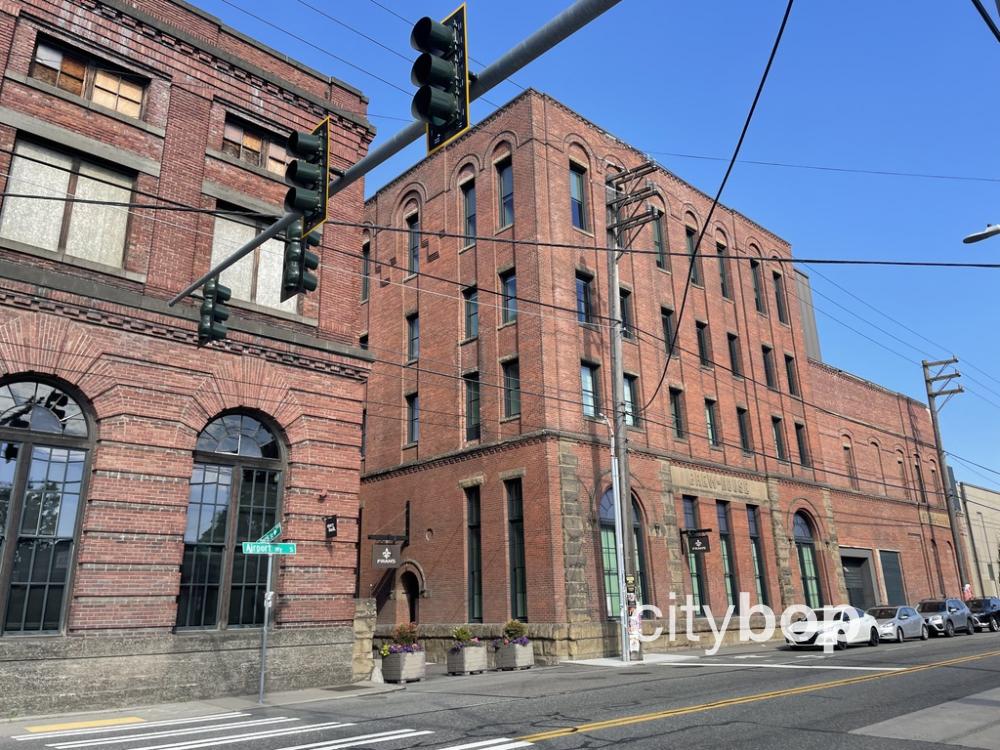
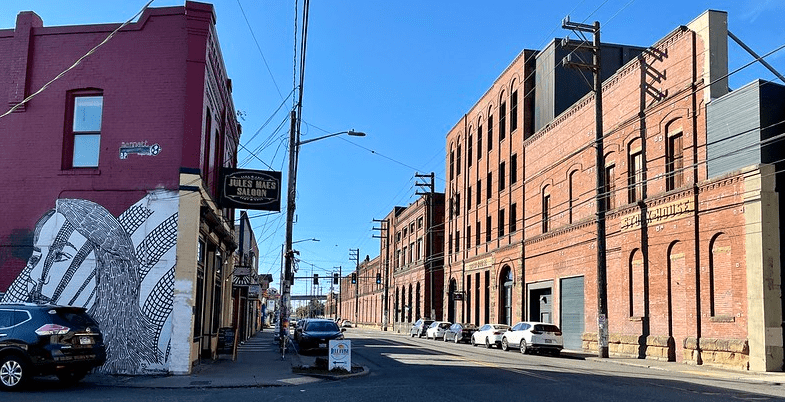
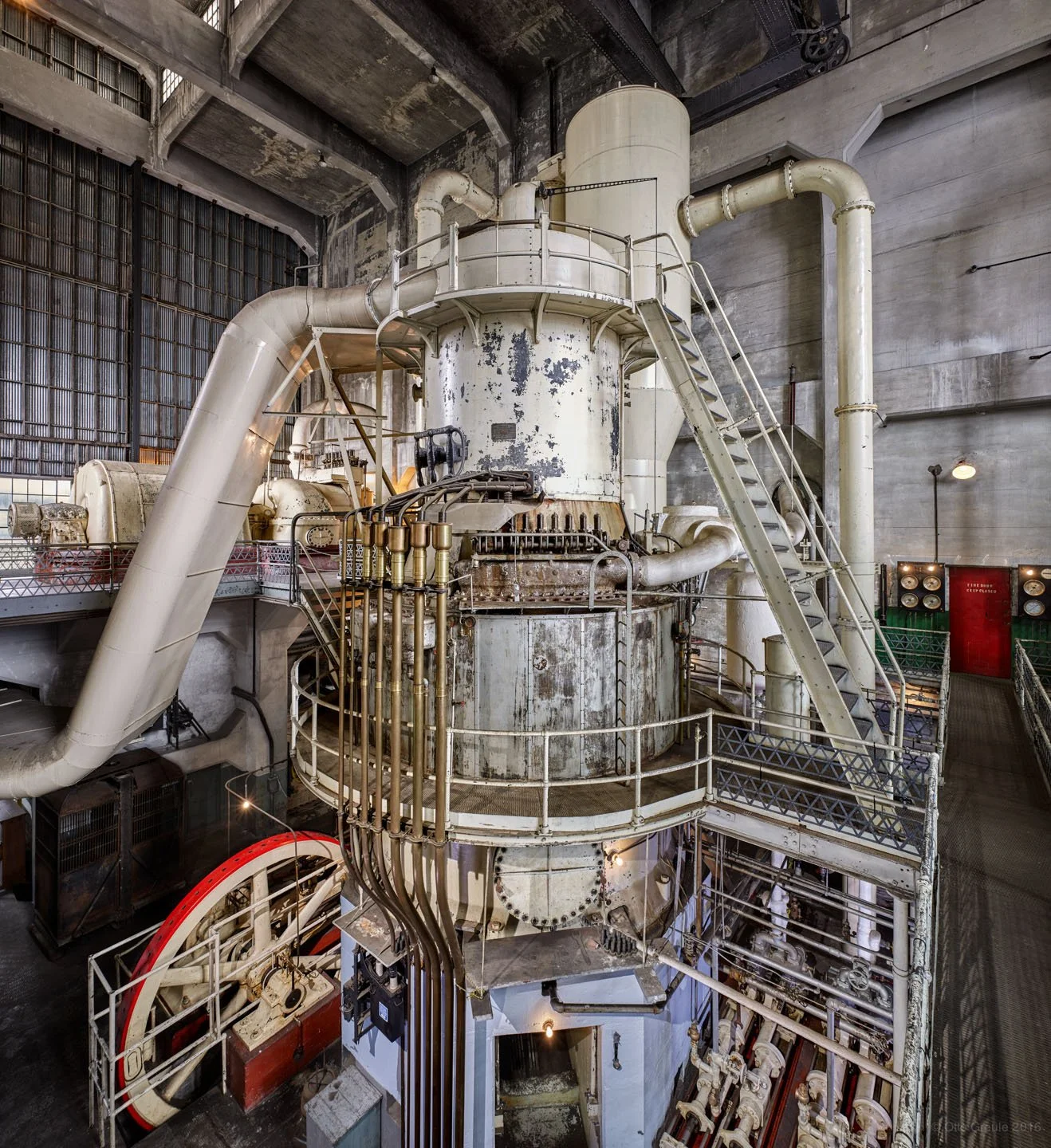
Imagine a huge brick building the size of an entire city block. Inside — giant pipes, rusted staircases, windows set high beneath the ceiling that let light pour in like in a fairy-tale castle. A hundred years ago machines thundered here and work bustled, then everyone left and the giant fell asleep. But one day artists came with paints and hammers — and began to wake it up.
This is the true story of Seattle’s Georgetown neighborhood, where old factories and mills turned into homes for art. But this fairy tale has an unexpected twist: when the giants woke up and became famous, they began to forget those who had awakened them.
When Georgetown Was a Town of Machines and Smoke
In the early 1900s, Georgetown was one of the noisiest places in all of Seattle. Huge red-brick buildings were built here — factories that brewed beer, refined steel, and repaired railcars. Streetcars ran down the streets, and smoke billowed from stacks, signaling one thing: people were working, the city was growing.
The most important building was the Steam Power Plant, built in 1907. It was a true palace for machines — with arched windows three human-heights tall, brick walls nearly a meter thick, and giant boilers inside. The plant generated electricity for all the city’s streetcars. When its turbines ran the ground trembled, and at night the windows glowed like a dragon’s eyes.
But then what happens to many industrial areas happened here. In the 1960s and 1970s factories began to close. Companies moved to other locations where it was cheaper. Streetcars were replaced by buses, and the Steam Plant was no longer needed. The enormous buildings stood empty, with broken windows. Georgetown turned into a ghost town in the middle of a big city.
Artists Who Saw Treasure in the Rust
In the 1980s strange people with backpacks and cameras began to arrive in Georgetown. They were painters, sculptors, musicians. They looked at the abandoned factories and saw not trash, but treasure.
“Look at these high ceilings!” they said. “And those huge windows! So much light!” Artists needed large spaces to work, and such rooms in the city center were very expensive. In Georgetown, however, the owners of old buildings were happy with anyone willing to rent.
A magical transformation began. An artist named Karen and her friends rented a whole floor of an old factory for the same price as a small downtown apartment. They cleared out the junk, painted the walls, installed heating. The vast space was divided into studios — each artist got a corner the size of a large room, and a common hall was left in the middle where everyone could meet and show their work.
The Steam Power Plant was saved by a group of enthusiasts in the 2000s. City officials wanted to demolish the building — it was old and repairs seemed too costly. But artists and local residents collected signatures, wrote letters, and held exhibitions right inside the half-ruined building to show that this giant could still be useful. Eventually the building was recognized as historically significant and restoration began.
A Neighborhood Where Machines Gave Way to Dreams
Gradually Georgetown changed. Old factory buildings filled with life, but a very different kind than before. Instead of the clatter of machines, music played — rock bands rehearsed in former workshops where acoustics were perfect thanks to the high ceilings. Instead of smoke pouring from windows, workshop light spilled out as artists worked late into the night.
A center for the arts opened in the Steam Power Plant. Giant turbines were removed, but some pipes and mechanisms were left as reminders of the past. Now in the hall that once produced electricity for the streetcars, concerts, exhibitions, and dance performances take place. The old brick walls remember both the machines’ roar and the sound of violins.
Artists didn’t just occupy empty buildings — they created a special atmosphere. On the second Saturday of every month the whole neighborhood holds an “Art Attack”: all studios open their doors to visitors. You can step right into a sculptor’s workshop and watch him work with metal. Or climb to the third floor of an old factory where a painter creates huge canvases about the ocean. People wander from building to building like through an open-air museum — only here the art is still being made; it’s alive.
A Puzzle That’s Hard to Solve
But something unexpected happened. Georgetown became so popular and attractive that rents began to rise. Those same large spaces in old factories that once cost little can now only be afforded by wealthy companies or galleries.
It’s a strange situation: artists saved the neighborhood, made it vibrant and appealing, but now can’t afford to live there themselves. It’s like planting a seed in a garden and tending it until a beautiful tree grows — but it grows so large it takes up the whole garden, and you no longer have room there yourself.
Some artists have already left Georgetown for other, cheaper neighborhoods. They look for new “sleeping giants” — abandoned buildings they can wake up. But those who remain are trying to find solutions. They form cooperatives — where several artists jointly buy a building so no one can evict them. They ask the city for help: to create special rules ensuring that historic Georgetown buildings always retain space for artists and studios, not just expensive offices.
The Steam Power Plant has faced this problem too. Maintaining a huge historic building is costly: the roof needs repair, the old walls must be monitored, heating bills are high. The arts center began renting spaces for private events — weddings, corporate parties — to raise funds. This helps the building survive, but some worry: what if one day the giant forgets it’s a home for art and becomes just a trendy venue for the wealthy?
A Lesson from Old Walls
Georgetown’s story teaches an important lesson: when we save and improve something, it changes not only the object itself but everything around it. The artists wanted only a place to work, and ended up changing an entire neighborhood. That’s wonderful, but it also creates new challenges.
Today in Georgetown the old brick buildings stand as bridges between past and future. They remember what they were a hundred years ago — full of machines and workers. They remember standing empty and forgotten. And they know how artists brought them back to life. Now the question is whether people can preserve this magical transformation or whether the giants will change again and become something entirely different.
Perhaps the most important lesson is this: saving a building once is not enough. You have to keep caring for it and for the people who brought it to life. Otherwise we risk waking a giant only for it to forget who helped it open its eyes.