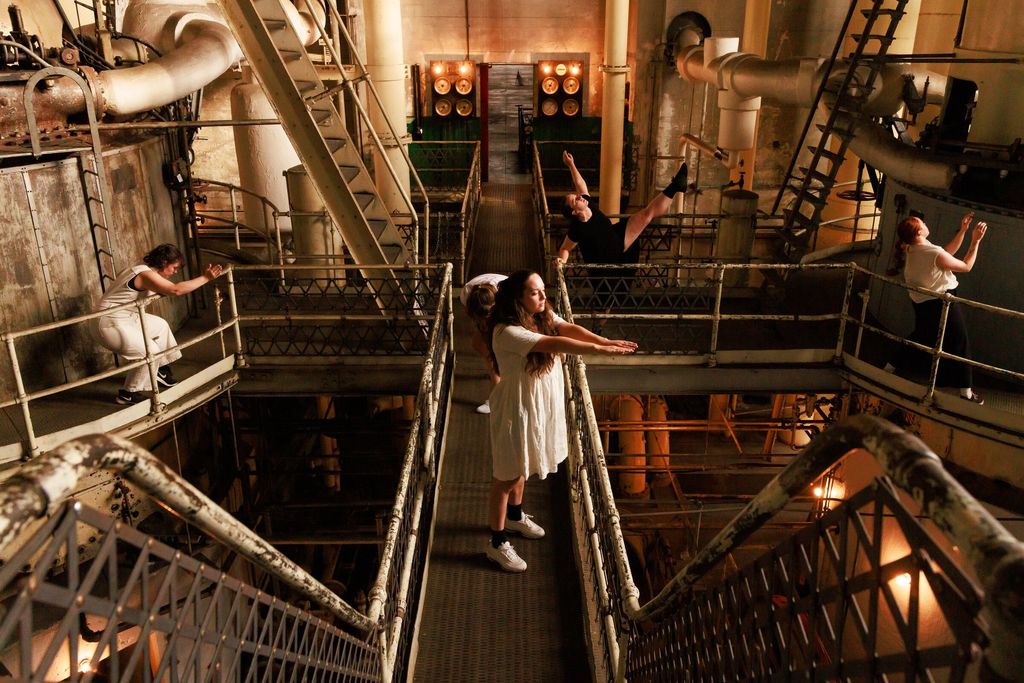
In the early 2000s, huge empty buildings stood in Seattle’s Georgetown neighborhood. Factories had once hummed there, machines clattered, and people made airplane parts and other important things. Then the factories closed, workers left, and only quiet brick boxes with broken windows remained. Inside lay junk, old tools, and rusty pipes. Most people drove past without even looking at these buildings. But a few saw something different. They saw treasure.
These people were artists, sculptors, musicians—people who made beautiful or unusual things. They had one big problem: studio space in Seattle was very expensive. In the city center, a small painting studio could cost a thousand dollars a month or more. The artists simply couldn’t afford that. So they began looking for places where nobody wanted to be. They found Georgetown.
When trash becomes a workshop
Owners of the old factory buildings were happy to rent them to anyone. A huge space with high ceilings could be rented for $300–$400 a month—three times cheaper than a tiny apartment elsewhere. Sure, there was no proper heating, the windows were broken, and the floor was covered in grime. But that didn’t bother the artists. Quite the opposite!
Sculptor Dan Webb recalled in a 2008 interview: “When I first walked into this building, there was a pile of old metal parts the factory had just dumped. I didn’t see trash. I saw material for twenty sculptures.” He gathered the rusty pieces of iron, welded them together, and made a huge metal bird that later stood at the entrance to his studio.
Another artist, Sarah Lynn, turned an old room with oil stains on the floor into a gallery. She simply painted the walls white, hung bright lights, and began showing paintings—hers and her friends’. “We left the stains on the floor on purpose,” she told a local paper. “They reminded people that this place has a history.”
Gradually more creative people moved to Georgetown. They didn’t just work there—they started throwing events open to everyone.
Second Saturday: when the whole city comes to visit
In 2004, a few artists came up with an idea. Every second Saturday of the month, they would open their studios to visitors for free. Anyone could come, see art being made, talk with the artists, buy something, or just wander. They called it “Georgetown Art Attack.”
The first such Saturday drew about fifty people—mostly friends of the artists. But people told other people, and through word of mouth, within a year a few hundred visitors were coming to the Art Attack. In three years—thousands.
Imagine: an ordinary industrial area with gray buildings suddenly becomes a festive scene. Music plays in the streets, light and laughter spill from the doors of old factories. Inside you might see someone painting a huge mural on a wall, a sculptor carving a figure from wood, or a jeweler making pieces from old bicycle chains. People traveled from other parts of Seattle specifically for this festival.
And then something interesting started happening to the neighborhood’s economy.
How art changes prices
When lots of people start coming to a place, other businesses follow. Cafes opened in Georgetown to feed gallery visitors. Then shops selling unusual items appeared—vintage clothing, old records, antique furniture. The neighborhood became “trendy.”
A 2007 Seattle Times archive article quotes a cafe owner explaining why he picked Georgetown: “Three thousand people come here every second Saturday. That’s three thousand potential coffee customers.” It was simple business math.
But what happened next: as the area grew popular, building owners realized they could charge more rent. A space that cost $400 a month in 2003 cost $1,200 by 2010. By 2015 it was $2,500.
For the artists this was a disaster. The same people who had made Georgetown an interesting place could no longer afford to work there. Dan Webb, the sculptor with the metal bird, was forced to move in 2012. “It’s a sad irony,” he told reporters. “We made this place beautiful, and that’s why we were pushed out. Not pushed out on purpose, of course. Prices just went up.”
A lesson about how value works
The Georgetown story teaches an important lesson about how money and value operate. A place doesn’t become valuable because there’s gold in the ground or beautiful mountains. It becomes valuable because people want to be there. And people want to be there because other people made the place interesting.
The Georgetown artists created value through their labor and creativity. But that value didn’t go to them—it went to the building owners who simply raised rents. Economists call this “gentrification”—when a poor neighborhood becomes wealthy, and the people who lived there before are forced to leave.
Today Georgetown still holds its Art Attack every second Saturday. But many of the original artists are gone. They’ve moved to other inexpensive neighborhoods—and may soon make those places trendy and expensive too.
It’s a somewhat sad story, but it shows how creativity and art can transform a whole neighborhood. It also shows that sometimes the people who create something valuable don’t get rewarded for it. That’s unfair, but it helps us understand how the world works—and maybe to think about how to make it fairer.