Imagine your city decided to build an entire island in one year. Not a small picnic isle, but a huge piece of land the size of 500 football fields! That’s exactly what Seattle did during World War I. But this story isn’t only about how quickly people can build. It’s about how one decision can change nature for a hundred years—and how we’re still trying to fix what seemed like a good idea to our great-grandparents.
When the city urgently needed ships (and forgot to ask the fish for permission)
In 1917 the world was at war, and America urgently needed ships—many ships, and very fast. Seattle sat near the ocean and vast forests, so the government decided: “We’ll build them here!”
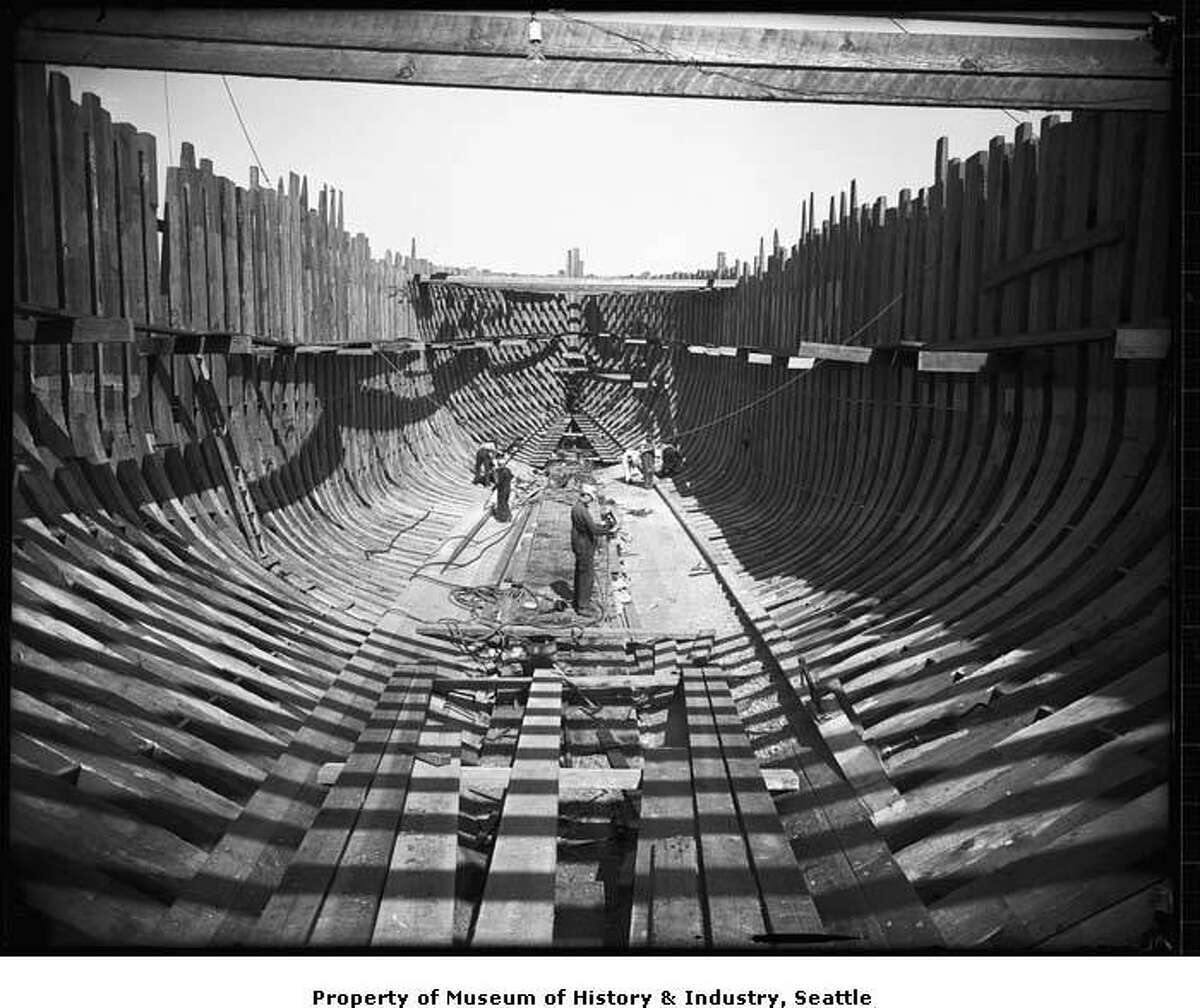
But there was a problem: steel was needed for tanks and weapons, so the ships were made of wood. Huge wooden ships! One vessel required hundreds of old spruces and firs—trees 300–400 years old. Loggers worked day and night, cutting down ancient forests around Seattle. Trucks hauled trunks straight to the bay where they were sawn into planks.
And there needed to be room for construction. Lots of room. Engineers looked at the bay and said, “Let’s just fill in this water and make an island!” That’s how Harbor Island was born—an artificial island that became the largest man-made island in the world at the time.
Workers dumped millions of tons of soil, rock, and, oddly enough, sawdust from the mills into the water. Beneath all that were tidal flats—shallow areas that were alternately covered and uncovered by the tide. Those flats were home to tiny fish, crabs, shellfish. They were also where young salmon stopped to rest and feed before heading out to the ocean.
A city that smelled of wood and dreams
For people in Seattle it was an extraordinary time. The city became a giant construction site. Thousands worked the shipyards—men who had been farmers or teachers, women who picked up hammers and saws for the first time.
One worker recalled: “We built a ship in 60 days. Sixty days from the first plank to launch! The whole city rang with hammer blows, the air smelled of fresh wood and paint.”
During the war Seattle built more than 100 ships. The pace was incredible! But there was a downside: whole forests around the city vanished. Hills once covered in giant trees stood bare. And the bay was changed forever—winding shores and mudflats gave way to straight concrete walls and a huge island.
Interestingly, many of those wooden ships served only briefly. The war ended, and the large wooden vessels were no longer needed. Some never even sailed. They were left to rot in the bays or were broken up for firewood. So ancient forests and salmon habitat were lost for ships that were hardly used.
Salmon that can’t find their way home
A hundred years later scientists discovered a serious problem: salmon are nearly gone from the waters around Seattle. These remarkable fish are born in rivers, go out to the ocean, and after a few years return to the exact same place to spawn. But many now can’t complete their journey.
Why? One reason is the changes made during the war. When the mudflats were filled and Harbor Island built, places where young salmon rested and refueled disappeared. Imagine running a marathon and suddenly all the water and food stations are gone—continuing becomes very hard!
Scientists estimate that where salmon of many species were once abundant, their numbers have dropped by 90%. Nine out of ten fish are simply gone. This is a catastrophe not only for salmon but for the whole ecosystem. Bears, eagles, seals feed on salmon. When salmon die in rivers after spawning, their bodies fertilize the trees. One salmon is an entire web of life.
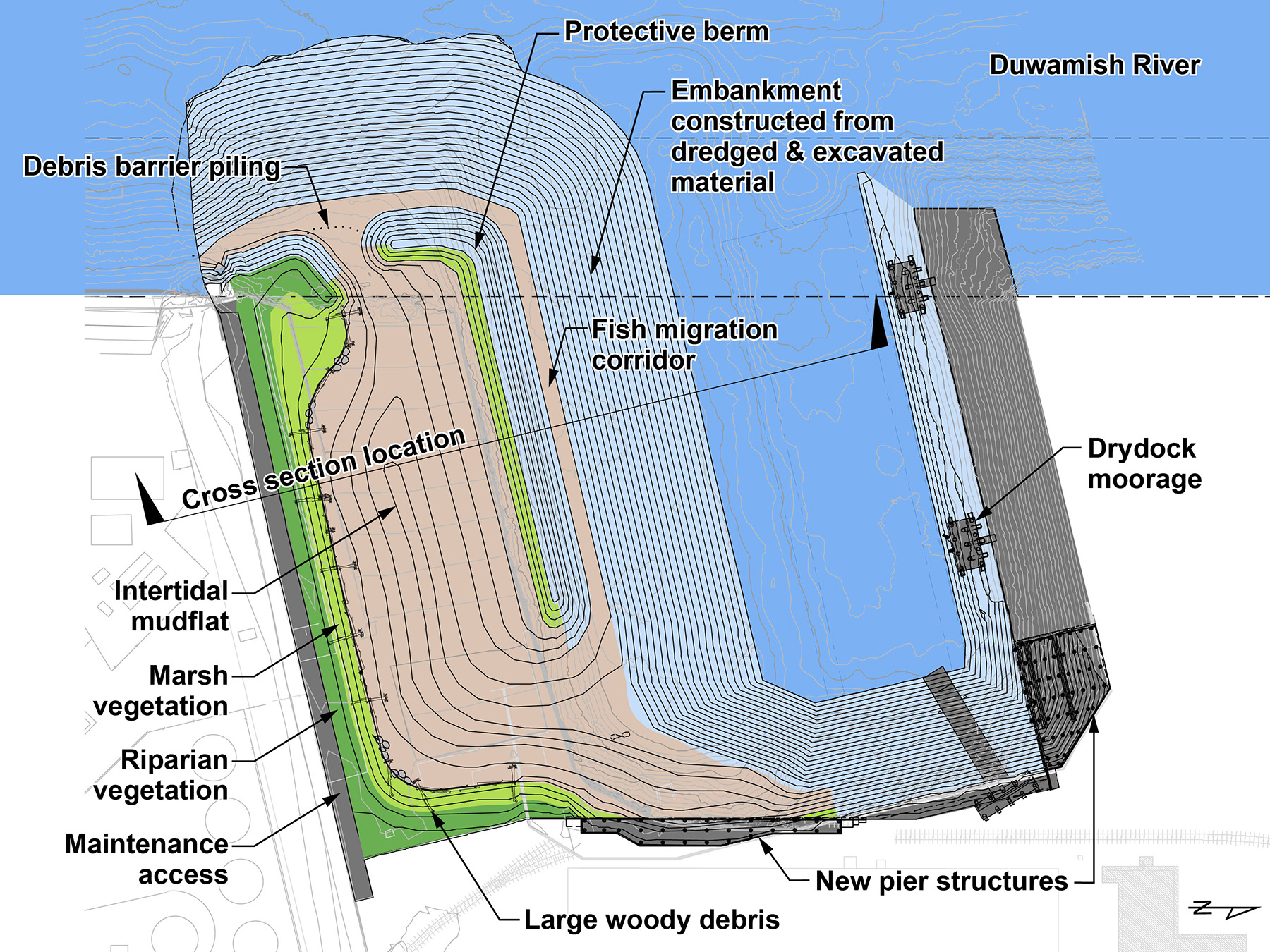
Now Seattle spends millions trying to bring nature back. Engineers remove concrete walls and create artificial mudflats. They plant the seaweeds and grasses that once grew here. It’s like trying to glue back a broken vase—you can repair it, but it will never be the same.
A lesson from our great-grandparents (they didn’t mean to leave us this)
The story of Seattle’s shipyards teaches an important lesson: when we change nature, the consequences can last a very, very long time. People in 1917 weren’t bad or stupid. They did what seemed right: they defended their country, created jobs, and built a future. But they didn’t think about what would happen in 50 or 100 years.
Today, when builders want to create something new in Seattle, they must first study how it will affect nature. There are specialists who check whether a project will harm fish, birds, and trees. This is called an environmental impact assessment, and it exists because people learned from past mistakes.
One biologist working on salmon recovery in Seattle says: “We can’t bring back those ancient forests—trees take centuries to grow. But we can give the surviving salmon a chance. And we can teach the next generation to think a hundred years ahead.”
Harbor Island still exists. It’s an important port where thousands work. But now small green islets are appearing around it—restored mudflats that flush with the tide and where young salmon can find food and shelter. It’s not the same as before, but it’s hope.
Next time you see a big construction site or hear someone talk about “solving the problem quickly,” remember Seattle’s wooden ships. Sometimes the fastest solution creates problems your grandchildren will spend their lives fixing. Sometimes it’s worth pausing and asking not only “Can we do this?” but also “What will this look like in a hundred years?”