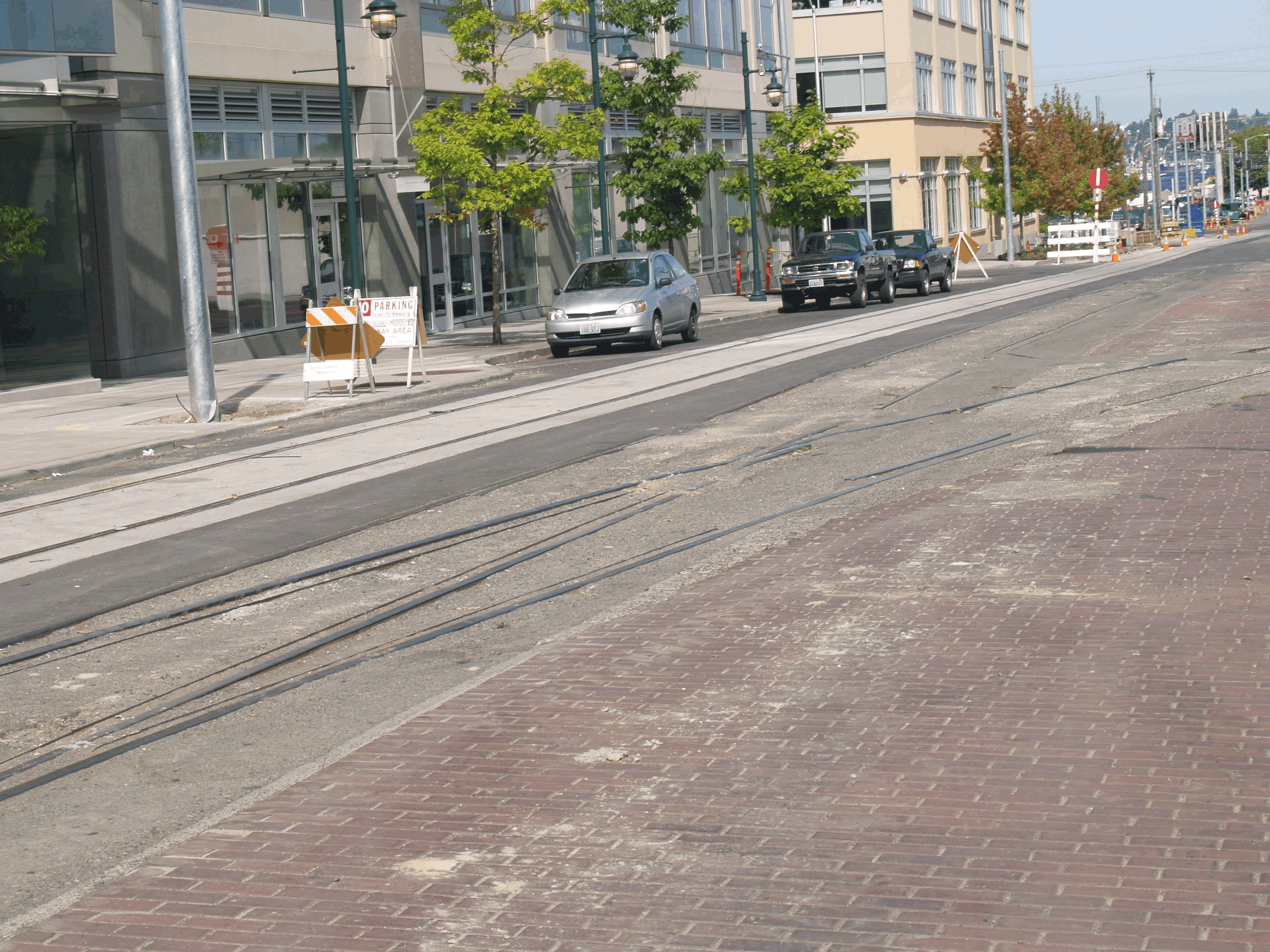
Imagine this: one day workers dig a hole in the center of the city to repair a water pipe. A shovel hits something metal — ding! The workers look down and see old rails hidden under the asphalt. Those rails had lain there for more than forty years, like a secret message from the past. This is how Seattle residents repeatedly found traces of their old streetcars — the transport that once was the heart of the city, then vanished, and now is returning. At the center of this story is one special red streetcar that made an incredible journey across the Pacific Ocean.
A city that lived on rails
In the late 1800s Seattle was a young, fast-growing city. People built houses, opened shops, and everyone needed a way to get around the hilly streets. Cars were rare then, and walking up Seattle’s steep hills was very hard. Then the streetcars appeared!
The first streetcars were horse-drawn — imagine poor horses pulling a car full of people uphill! But then electric streetcars were invented, and the city transformed. By the 1940s Seattle had nearly 250 kilometers of streetcar tracks — about the distance from Moscow to Tula! Streetcar lines connected all the neighborhoods: Ballard, Fremont, Georgetown, Capitol Hill. You could go anywhere by hopping on a streetcar for just a few cents.
Streetcars were more than transportation — they determined where people would live. When a streetcar line appeared in a neighborhood, families moved there, schools and shops opened. The tracks were like blood vessels in the body of the city, delivering people where they needed to go.
The great disappearance
But after World War II something changed. Cars became cheaper, and more families could buy their own vehicle. The government began building wide roads and highways. Many believed cars were the future, and streetcars were old-fashioned and slow.
Companies that operated streetcars started losing money. Maintaining tracks was expensive, and ridership fell as people switched to private cars. In 1940 Seattle closed its last streetcar line. The rails weren’t removed — they were simply covered with asphalt, as if buried. The beautiful streetcar cars were sold, dismantled, or just thrown away.
The city decided it no longer needed streetcars. But that decision turned out to be a mistake.
When the city realized what it had lost
Decades passed. Seattle grew and grew. There were so many cars that the streets turned into one big traffic jam. The air became dirty from exhaust. People spent hours stuck in traffic instead of time with their families. The city realized: giving up streetcars had been a huge mistake.
In the 1980s and 1990s Seattle residents began to dream of bringing streetcars back. But how to convince everyone this was a good idea? So many years had passed! Young people didn’t even remember what the old streetcars looked like. Something special was needed, something that could show people how wonderful streetcars had been.
Enter streetcar number 124, given a beautiful name — "Desire."
A voyage across the ocean
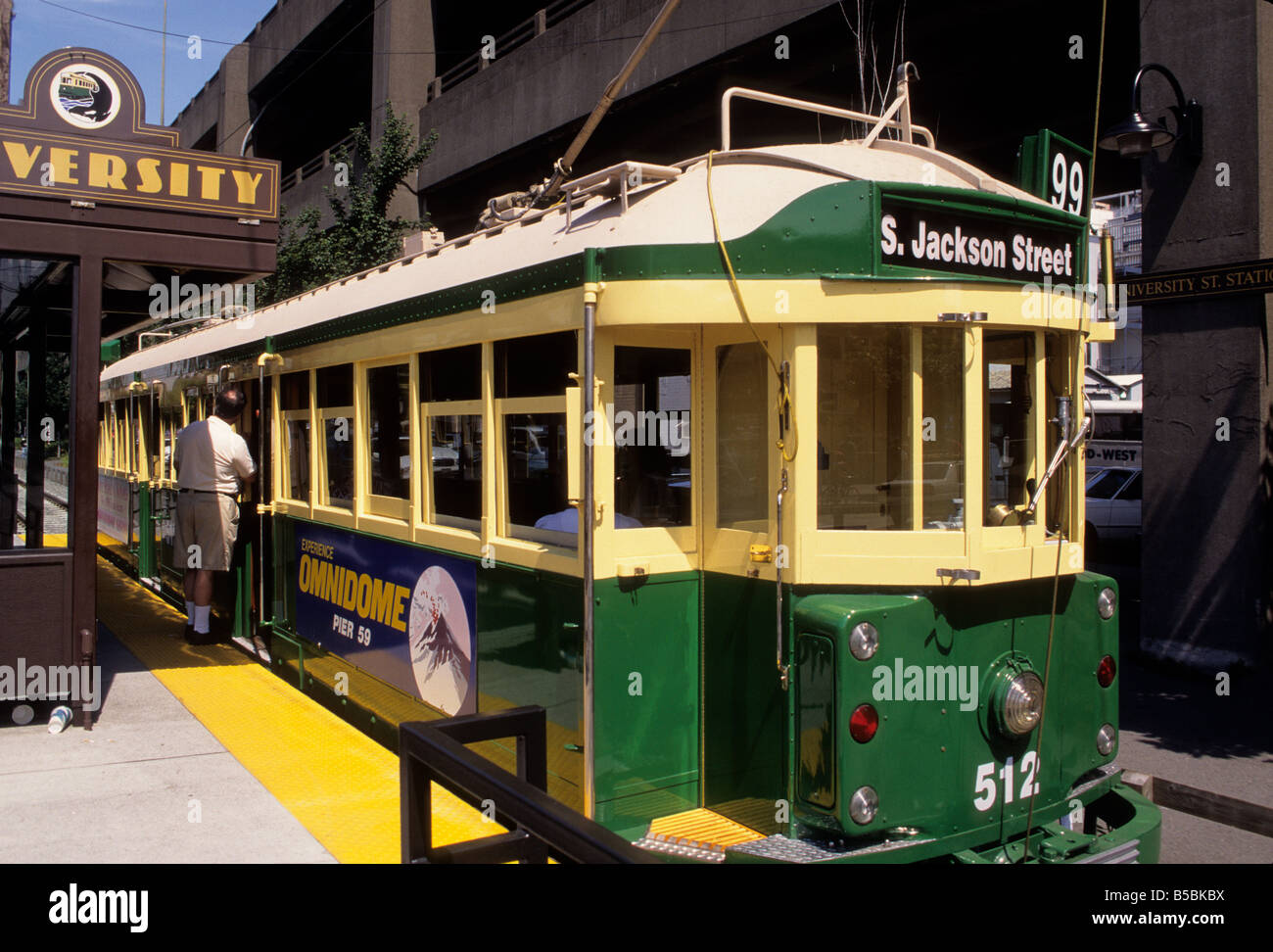
In Melbourne, Australia, streetcars never disappeared. There the old streetcars still ran, very similar to those that had once run in Seattle. In 1979 a Seattle resident named George Benson learned that Melbourne was selling its old streetcars. George had a crazy idea: what if he bought one and brought it to Seattle?
It sounded insane. How could you transport a huge streetcar across the Pacific Ocean? But George and his friends didn’t give up. They raised money, bought streetcar number 124, and loaded it onto a large ship. Imagine: a red streetcar sailing across the waves as if off on an adventure!
When the streetcar finally arrived in Seattle in 1982, it was named "Desire" — after the famous play "A Streetcar Named Desire." The name fit perfectly, because the streetcar truly symbolized the city’s desire to reclaim its streetcar past.
How one streetcar changed the city's future
At first "Desire" simply sat and rusted — there were no rails for it. But a group of enthusiasts refused to give up. They restored the streetcar, making it beautiful and shiny. In 1982 a short stretch of track was built along the waterfront, and "Desire" could finally run again!
People lined up to ride this special streetcar. Older residents remembered their youth when streetcars were everywhere. Children saw for the first time what it was like to travel the city on rails, hearing the melodic ring of the bell. "Desire" became living proof that streetcars could be not only transportation but part of the city’s soul.
This single streetcar helped people understand that Seattle had lost something important. It showed that streetcars could be beautiful, convenient, and environmentally friendly. Thanks to "Desire" and other restored historic streetcars, in the 1990s the city built a new streetcar line in South Lake Union. Later a line appeared on Capitol Hill. New lines are now being planned.
Lessons from old rails
The story of Seattle’s streetcars teaches important lessons. First, sometimes what seems old-fashioned is actually wise. Streetcars don’t pollute the air, don’t create the same congestion as cars, and help people connect — in a streetcar you travel with others, not alone in a car.
Second, cities can correct their mistakes. Seattle gave up streetcars but later found the courage to admit it was wrong and start again. It’s like arguing with a friend and then making up — sometimes you need to step back to move forward.
Third, one person or a small group really can change a whole city. If George Benson hadn’t brought "Desire" from Australia, Seattle might never have brought back its streetcars.
Today, when you travel around Seattle, you can still see old streetcar rails jutting out from under the asphalt on some streets. They remind you of the city’s past. And the new streetcars running again on the streets remind us that good ideas never truly die — they sometimes just hide under the ground, waiting for their time to return.
And it all began with one red streetcar that sailed across the ocean because someone believed in a dream.