Imagine your family has lost its apartment and you need to build a new home. Now imagine the only place you can build it is a huge dump of sawdust, old boards, and industrial waste that the city has dumped straight into the bay. Sounds like the start of a sad fairy tale? But for thousands of children in 1930s Seattle, this was real life. They lived in a place called Hooverville, and every morning walked to school from houses built on an actual garbage dump. And the decisions adults made then — and long before — still create problems for the city today.
When jobs disappeared and homes became cardboard boxes
In 1929 the United States plunged into the Great Depression — an economic catastrophe when factories closed, shops went bankrupt, and millions lost their jobs. Imagine the parents of all your classmates suddenly having no wages at the same time. People couldn’t pay rent, buy food, and sometimes there wasn’t even money to buy shoes for the children.
In Seattle, as in other American cities, unemployed families began building temporary homes from whatever they could find: old planks, tin sheets, and cardboard boxes. These settlements were called “Hoovervilles” — a jab at President Herbert Hoover, whom many blamed for the crisis. But Seattle’s Hooverville was unusual. It became one of the largest in the country (up to 1,200 people lived there) and lasted a full decade — from 1931 to 1941.
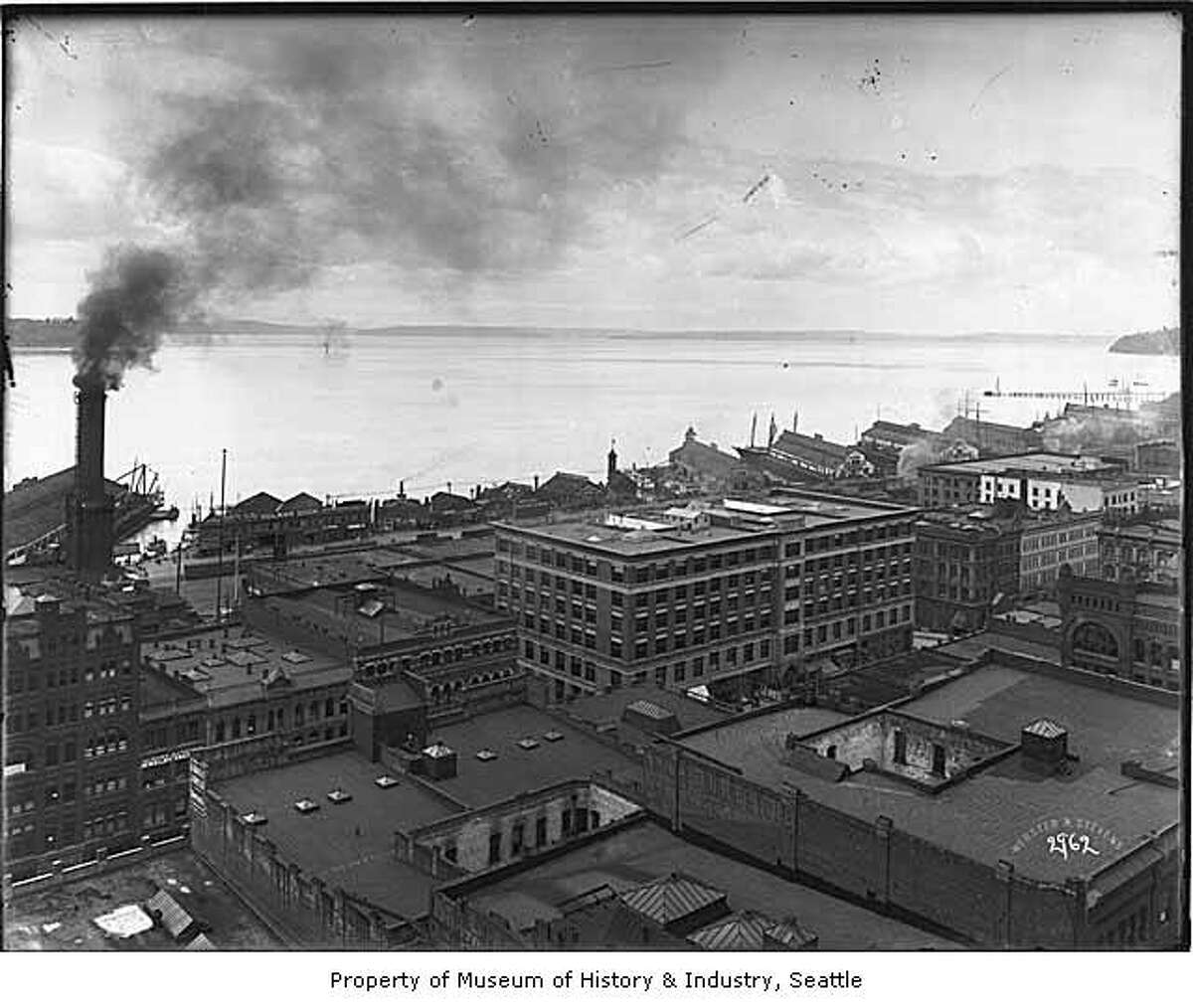
The site for this “town” was on the shore of Elliott Bay, on land locals called the “tidelands.” But these weren’t ordinary shores. It was territory the city had been filling in with refuse for decades.
When the city decided to make land out of sawdust
To understand why Hooverville ended up on a dump, you have to go further back — to the late 1800s. Seattle was then a small logging town, with dozens of sawmills operating around it. Every day they produced mountains of sawdust — millions of kilograms of wood dust and chips. What to do with it?
Sawmill owners found a “simple” solution: dump the sawdust straight into Elliott Bay. City trash, industrial waste, and construction debris were added to the sawdust. Gradually the bay grew shallower in places and new “land” appeared. The city even celebrated it: free land for expansion! Nobody really thought that sawdust would rot and poison the water, that chemicals from industrial waste would soak into the soil, or that all this would ever become a problem.
By the 1930s some warehouses and docks already stood on these artificially made landfill areas. And when the Depression hit, people with nowhere else to go moved in.
School, a mayor, and rules in a town without rules
Hooverville wasn’t just a chaotic heap of shacks. Residents created a real community with rules. They elected their own “mayor” (a man named Jesse Jackson), who kept order. Alcohol, fighting, and stealing were banned. If someone broke the rules, they were expelled.
Many children from Hooverville attended regular city schools. Teachers recalled these students often arriving in patched clothes, sometimes without breakfast, but eager to learn. One teacher remembered a boy from Hooverville who walked several miles each day because his family couldn’t afford the tram. His shoes were made from old car tires.
Parents in Hooverville did odd jobs: mending things, collecting scrap metal, fishing in the bay (even though the water was already polluted). Women washed clothes in communal tubs, shared food, and looked after each other’s children. It was a life of poverty, but people stuck together.
The invisible poison underfoot
Hooverville residents didn’t know exactly what they had built their homes on. Under their feet was not just sawdust but a toxic cocktail from decades of industrial pollution. At that time the bay received:
- Creosote (a wood-preserving chemical, highly poisonous)
- Heavy metals from factories
- Petroleum products
- Household waste
- Rotting organic materials
All of this slowly poisoned the soil and water. Fish in the bay accumulated toxins. Children playing on the shore came into contact with contaminated soil. But in the 1930s few people understood the long-term consequences of such pollution. Environmental science was only beginning to develop.
In 1941, when the United States entered World War II, the economy revived. Factories started up again and people were needed for work. Hooverville residents found jobs and moved away. The city demolished the last shacks, and the area became an industrial zone.
A bill that came due 50 years later
Fast-forward to the 1990s. Seattle was a very different place — wealthy, tech-savvy, famous. But scientists began discovering frightening things in Elliott Bay. Fish were poisoned. Dangerous concentrations of chemicals were found in the sediment. The former Hooverville area and surrounding industrial zones turned out to be among the most contaminated sites on the U.S. West Coast.
The federal government designated Elliott Bay a Superfund site. A massive cleanup program began that continues to this day. What does that mean?
- Thousands of tons of contaminated sediment are dredged from the bay bottom
- Polluted soil is transported to special disposal sites
- Clean sand and rock are placed over remediated areas
- Marine life is restored and fish populations are supported
This work costs hundreds of millions of dollars. Taxpayers pay — ordinary Seattle residents, many of whom weren’t even born when the pollution was created. It turns out grandchildren and great-grandchildren are paying for decisions made by their great-grandparents more than a century earlier.
The lesson the city still teaches
The story of Hooverville and Elliott Bay teaches us several important lessons:
Quick fixes create long problems. When sawmills dumped sawdust in the bay, it seemed convenient: no need to figure out where to put the waste. But that “convenience” turned into a catastrophe being corrected by the third generation.
Poor people often live in the most dangerous places. The families in Hooverville didn’t choose to live on a toxic dump. They simply had no choice. This problem persists today: in many cities the most polluted neighborhoods are where the least affluent people live.
Nature remembers everything. Chemicals dumped into water a hundred years ago are still found in fish and sediment. The ocean doesn’t “digest” our waste — it stores it and returns it to us.
Community is stronger than circumstances. Even in terrible conditions, people in Hooverville created rules, helped one another, and ensured children went to school. They didn’t give up.
Today modern buildings, art galleries, and restaurants stand where Hooverville once was. Elliott Bay is slowly getting cleaner — sea stars, crabs, and healthy fish are returning. But the work is not finished. Every time divers pull another bucket of contaminated sediment from the bottom, they bring up a piece of history — a reminder of how past decisions shape the present.
The children who once walked to school from shacks on a dump are long grown. Many of them, despite a hard childhood, got an education, found work, and built decent homes. Their story is one of survival, but also a warning: the world we build today is the world our children and grandchildren will inherit. Every decision — where to dump waste, how to use natural resources, how to care for people in need — will echo for decades to come.