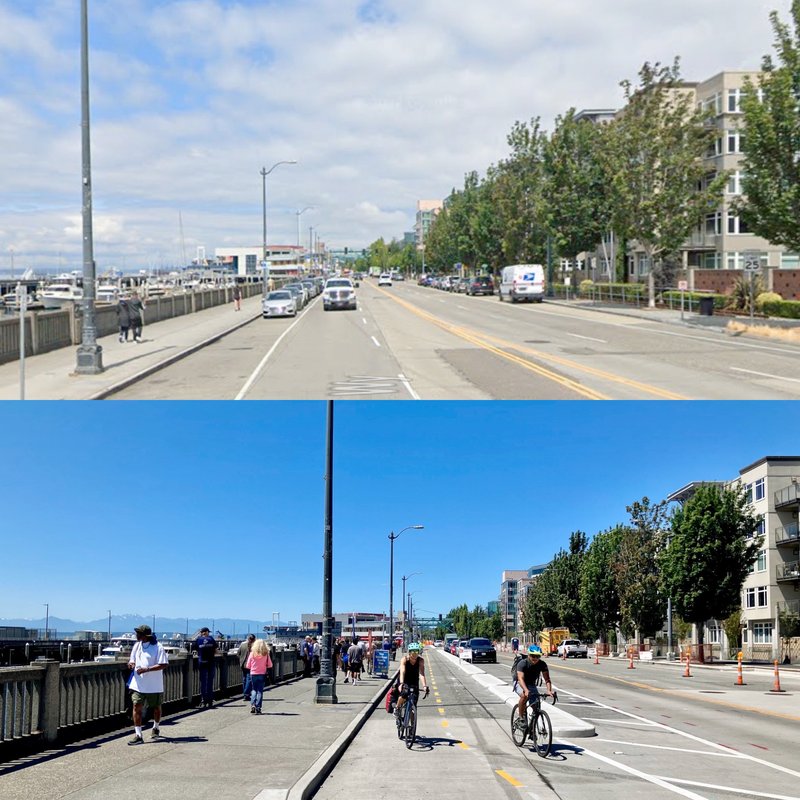
Imagine riding a bicycle along the waterfront in Seattle, the wind in your face and ducks running nearby. The path seems completely ordinary—pavement, trees, signs. But if this trail could talk, it would tell an amazing story about people who arrived from another country more than a century ago and decided, “We’ll build our own road!”
A Fishing Town That Loved Wheels
At the end of the 19th century, Ballard was a separate town near Seattle. Fishermen from Norway and Sweden came there to catch fish, build boats, and work incredibly hard. But to get from Ballard to Seattle, people had to either walk through the mud or jostle along in a wagon. Then a new machine came into fashion: the bicycle. It was light, fast, and didn’t need hay like a horse!
Scandinavian workers quickly realized that bicycles meant freedom. They could ride to work, bring fish to market, and meet up with friends. There was just one problem—there were hardly any roads. The streets were rocky and muddy, and after rain they turned into outright swamps.
People with Shovels Take On the Muddy Roads
Then something incredible happened. Instead of complaining about the city, residents took matters into their own hands. Seattle’s “Good Roads Club” emerged—hundreds of bicyclists, including immigrants from Ballard, went out with shovels, rakes, and boards. They leveled the ground and laid down boards and gravel, creating special bicycle paths.
One of these paths connected Ballard with downtown. People rode along it to work, home, and visits—as if it were a real “bicycle highway,” only without pavement. It was like children building a slide in the yard themselves because the adults had forgotten to do it!
Here is what local newspapers wrote about the cycling boom at the time:
“The streets are filled with bicyclists from morning until night—you might think the entire city had moved onto two wheels.”
From Gravel to the Burke-Gilman Trail
More than a hundred years passed. The wooden paths disappeared long ago, but their route was not forgotten. Today, the famous Burke-Gilman Trail runs through these same areas—one of Seattle’s longest and most beloved trails. It stretches along the water, connecting neighborhoods that were once separated by mud and rocks.
Here is how the story changed over time:
| Year | What happened |
|---|---|
| 1890s | Scandinavian immigrants build the first bicycle paths between Ballard and Seattle |
| 1900s | The bicycle boom gradually gives way to automobiles |
| 1970s | The Burke-Gilman Trail is created along the route of an old railroad |
| Today | Thousands of children and adults ride along the route every day |
The modern trail, then, is like the great-granddaughter of the wooden paths built by tired fishermen after a long day at work.
Why It Is Important to Remember
The next time you ride your bicycle along a beautiful waterfront path, remember this: once, there was nothing here but mud and determined people with shovels. They did not wait for someone else to make the world more convenient—they did it themselves, with their own hands, because they believed in the small miracle of the bicycle.
It is a great lesson for all of us: sometimes, to change an entire city, all you need is a few brave people, a shovel, and a big dream of riding with the wind at your back.