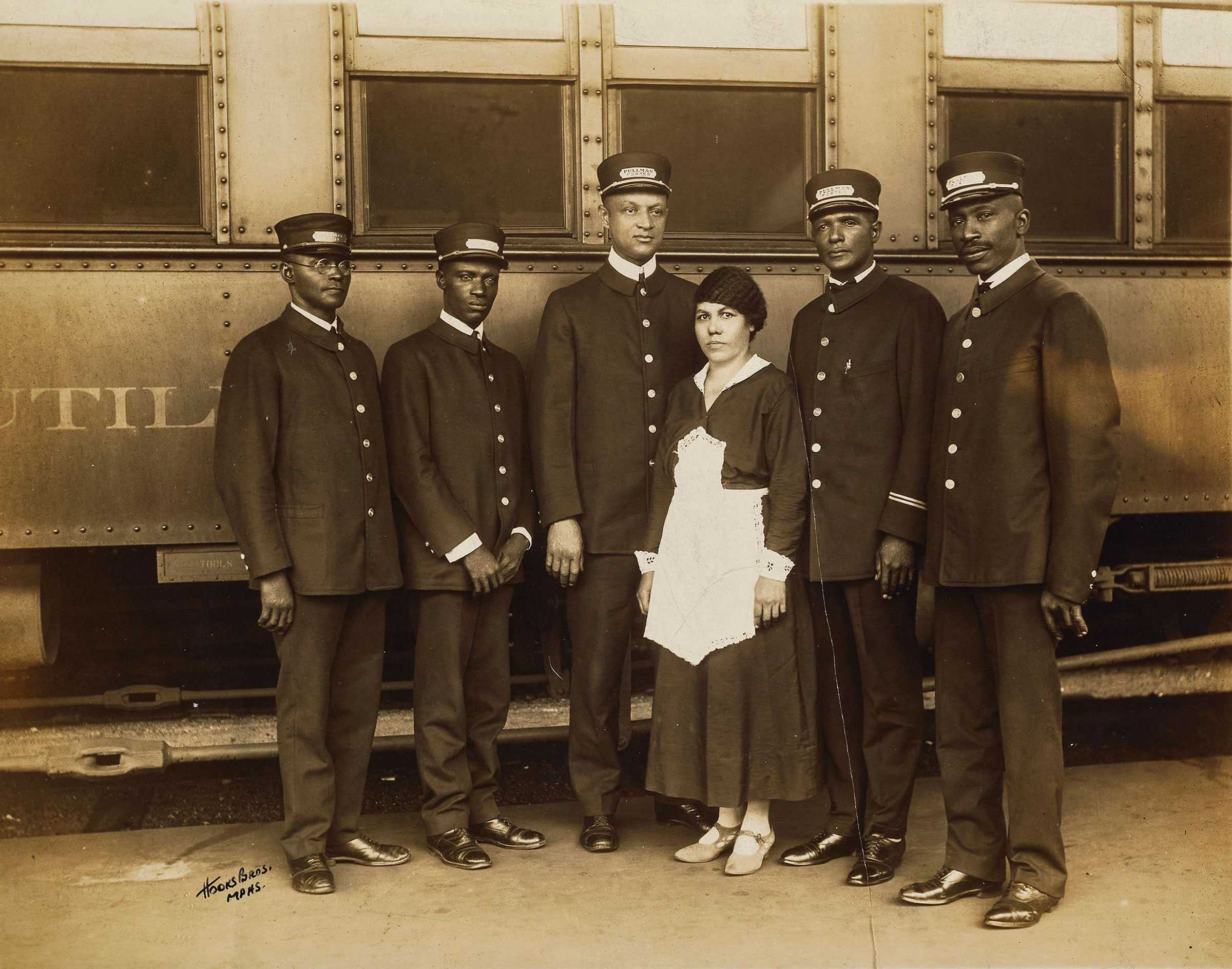
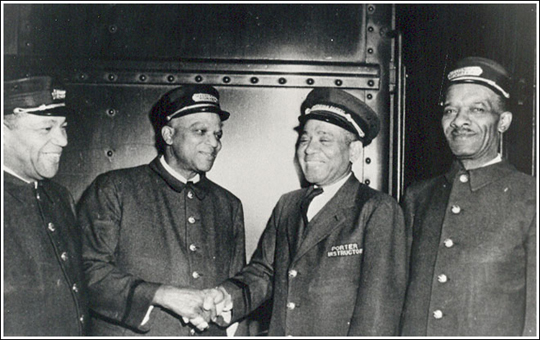
Imagine this: A hundred years ago, there was no internet, no phones in people’s pockets, and not even color television. Yet people still found out what was happening in other cities—quickly, engagingly, and with plenty of jokes. And they were helped not by scientists or engineers, but by neatly dressed workers who carried passengers’ suitcases through train cars. They were called porters, and these nearly invisible heroes turned Seattle’s train station into a place from which news spread across the country.
Who Were the Porters, and Why Was Their Work Special?
At the beginning of the 20th century, hundreds of African American porters worked at Seattle’s Union Station. These men assisted passengers in sleeping cars: carrying luggage, making beds, bringing water, and answering questions. The work was demanding: shifts could last for days, wages were low, and the railroad companies often treated porters unfairly. Many passengers did not even remember their real names—everyone called them “George,” after the company’s owner, George Pullman.
At the same time, working as a porter was considered one of the few stable and respected professions available to Black men in those years. Porters dressed neatly, spoke politely, and traveled across the country—from Seattle to Chicago and New York. Those journeys made them special: they saw things that almost no one in Seattle had seen.
The Train as One Big Living Messenger
Imagine a train as a giant messenger on wheels. In every city where it stopped, porters bought fresh newspapers published by Black journalists, including the famous Chicago Defender. In early 20th-century Seattle, there were very few newspapers like these, and news about African American life in other parts of the country rarely reached the city. Porters brought the papers back in their suitcases, alongside passengers’ clothing, and distributed them in the Jackson Street neighborhood, where many Black families lived.
In addition to newspapers, porters passed along news by word of mouth: who had opened a new jazz club in Kansas City, where workers were needed, and what laws had been passed in another state. At the time, Union Station already used the technological innovations of the era—telegraphs and pneumatic mail systems, networks of tubes through which letters “flew” around the building under compressed air, like in old banks. Porters used these systems to quickly send messages between train cars and the waiting room. It was similar to sending a chat message today, except that instead of a screen, there was a tube filled with air.
The Union That Became a Nationwide Network
In 1925, an important organization was founded: the Brotherhood of Sleeping Car Porters, created by activist A. Philip Randolph. It was the first major union for Black workers in the United States. But what is especially interesting is that the union served not only to protect workers’ rights—it effectively functioned as a real information network.
Here is a table showing how the role of porters changed over time:
| Year | Event | Significance |
|---|---|---|
| 1900s | Porters begin working on transcontinental trains | The first steady jobs for African Americans in Seattle |
| 1910s | Black newspapers spread via trains | News reaches Seattle more quickly |
| 1925 | Brotherhood of Sleeping Car Porters is founded | Creation of a nationwide network for communication and workers’ rights |
| 1930s–40s | Jackson Street neighborhood flourishes | Jazz clubs, businesses, and the city’s cultural center |
| Today | Central District is recognized as a historic neighborhood | The memory of the porters lives on as part of the city’s heritage |
Historian Quintard Taylor, who studied the history of Seattle’s Black residents, wrote that “it was the railroad that connected Seattle’s small Black community with the rest of the country long before radio and television appeared in every home.” These are very precise words: the train was not simply a means of transportation but a genuine communications channel.
From Underappreciation to Neighborhood Pride
At first, many people underestimated porters’ work. They saw it as “just carrying suitcases,” paid little, and showed them little respect. This is the “contradiction” at the heart of the story. Over time, however, it became clear how important these workers were: they did not simply travel to work—they literally connected cities through information and helped new newspapers, clubs, and businesses emerge.
The area around Jackson Street, where many porters’ families lived, gradually became the heart of Seattle’s jazz scene. Clubs opened there where the future famous musician Ray Charles performed, along with Black-owned shops and restaurants. Today, the area is part of the historic Central District—a neighborhood the city takes pride in and that many people call a true community treasure.
There is something genuinely moving about this story. People who were once called simply “George” and largely overlooked were, in fact, like the first internet providers of their time. The difference was that their wires were railway tracks, and their messages were newspapers in suitcases and kind words exchanged on the platform.
Why It Matters to Remember This Today
The story of Seattle’s porters teaches us a simple lesson: technology is not only computers and wires. Sometimes technology is simply the idea of how to deliver important information to the right people more quickly and intelligently. Porters did not invent the telegraph or radio, but they made brilliant use of what they had—trains, suitcases, and human connections—to build a genuine news network long before the internet.
And today, as you walk through Seattle’s historic Central District, it is worth remembering that this vibrant, musical, proud neighborhood emerged in large part because of people who once simply carried other people’s suitcases—and, along with them, carried news, hope, and connections between cities across the country.