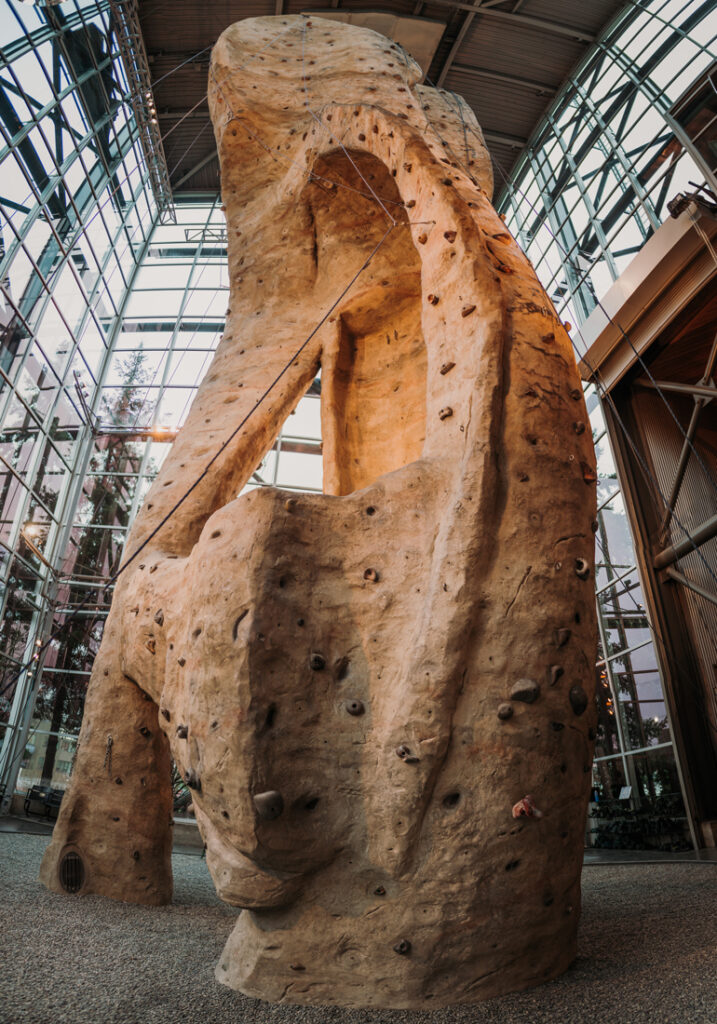
Imagine walking into a store to buy boots and finding a rock standing inside. You can climb it, and nearby there’s a room where real rain falls. A store like this really exists in Seattle, and it wasn’t built just to look good. The building tells the story of an unusual company where the customers are also the owners.
What Is a Cooperative?
The word “cooperative” may sound grown-up, but the idea is simple. Imagine your whole class pitching in to buy a big ball for gym class. The ball belongs to everyone, and everyone decides how to use it. REI works in a similar way. In 1938, a group of mountaineering friends in Seattle decided to buy good equipment for the mountains together. The cooperative was founded by Lloyd and Mary Anderson and their friends, who numbered about two dozen at the time. Today, it has more than twenty million members.
To become a member, you pay a small fee once—currently about $30—and your membership lasts a lifetime. In return, you get the right to vote in board elections and receive a share of the money from your purchases. Instead of distributing its profits among a few wealthy people, the company shares them with its members.
A Building You Can Touch
In 1996, REI opened its flagship store in Seattle. The architecture firm Mithun worked on the project. The idea was this: if all the members are owners, the store shouldn’t be a warehouse but a shared home where you don’t have to buy anything without trying it first.
So they built an indoor climbing wall shaped like a peak, about 20 meters high. You can bring a rope and try out new climbing shoes there. There’s also a “rain room,” where they turn on the water to test whether a jacket will keep you dry. A trail runs around the building, where you can test hiking boots and bicycles over rocks, roots, and mud. The store feels like a little adventure park hidden inside a building.
I think it’s clever. A typical store says, “Buy.” The REI building says, “Try it, then decide.” That’s how owners of a shared enterprise behave: they want to choose what really works for them.
What They Decided in the Past—and What Happened Today
The idea of a “store as a place to try things out” has proved especially useful today. Many people shop online, which makes things difficult for traditional stores. REI’s answer is that you can’t climb a rock with friends online or get advice from an experienced hiker. So the company offers classes, organizes hikes and workshops, and likes to remind people that the most important thing is being outdoors. In 2015, REI even closed its stores on Black Friday—the busiest day of the year for sales—and invited people to go outside instead. The campaign was called #OptOutside.
Not every decision from the past has stood the test of time so well. REI built a huge new headquarters in Bellevue. But in 2020, as employees began working from home because of the pandemic, it turned out they hardly needed such a large office. The company reconsidered its plans and sold the building to another organization. That’s an important lesson, too. A good building starts with a good idea, but when the world changes, you have to test your ideas again.
Why This Is Interesting
If you look closely, buildings “speak.” A school with lots of windows and shared tables says, “We learn together here.” A store with a mountain in the middle says, “We’re all in this together, and everyone can try things out.” I think REI shows that some companies build not just profits, but also a place where people want to spend time.
So next time you find yourself in an unusual building, think about what it’s telling you—and who you think it belongs to.