Imagine you have two aquariums: one filled with fresh water, sweet as tea with sugar, and the other with salt water, salty as soup. Now imagine that you need to build a route between them for boats—but in such a way that the fresh water does not become salty. More than a hundred years ago, engineers in the American city of Seattle faced roughly this challenge. What they created was a genuine engineering marvel, though surprisingly few people know about it.
A City Between a Lake and the Sea
Seattle is in a very unusual location. On one side, it is bordered by Puget Sound, where the water is salty. On the other lies the large freshwater Lake Washington, with the smaller Lake Union between them. In the past, these bodies of water were almost completely cut off from one another. Ships from the sea could not reach the lake, and people transporting logs, fish, and cargo by water had to find complicated detours.
People dreamed of digging a canal so ships could travel freely. Attempts to make this dream a reality began as early as the 1850s, but the canal was not truly completed until 1917. It was called the Lake Washington Ship Canal and connected all three bodies of water into a single route.
But then a puzzle arose—one that took some serious thinking to solve.
The Lock Stairway Puzzle
The problem was that Lake Washington sits higher than the sea. If engineers simply dug a canal, water from the lake would rush downhill like water from an overturned bucket, and the lake would become shallower. Ships would not be able to navigate such a turbulent current, either.
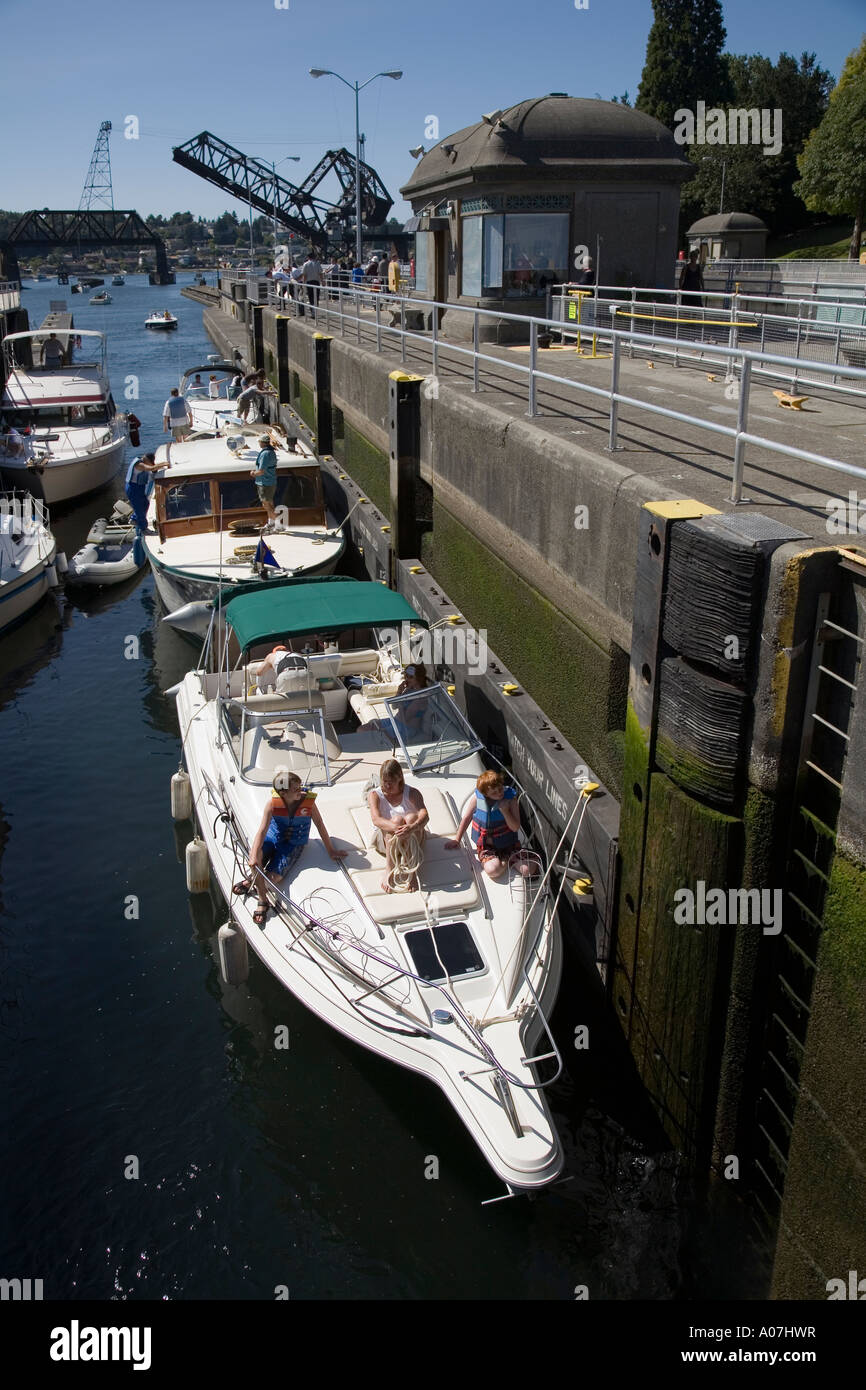
The engineers came up with locks. They are like elevators or “stairways” for ships. Here is how they work: a ship enters a large chamber with gates. The gates behind it close. Then the water in the chamber either rises or falls until it reaches the level of the body of water toward which the ship is traveling. The gates ahead then open, and the ship continues on its way. You can think of it like a bathtub: if you turn on the faucet, the water rises; if you open the drain, it falls. Except this bathtub is enormous—and contains a real ship!
Seattle’s locks were named after the engineer Hiram Chittenden, who oversaw their construction. They are located in the Ballard neighborhood, where you can watch yachts and fishing boats rise several meters, as if riding in a magic elevator.
The canal also caused the level of Lake Washington to drop by almost three meters. Imagine it: entire sections of shoreline that had once been underwater became dry land. Some streams and creeks disappeared, while the lake’s shape changed. Building large things is never simple: they change the world around them.
The Secret That Keeps Out the Salt
Now let’s return to our sweet tea. Seawater is heavier than freshwater because salt is dissolved in it. When the gates of a lock open, the salt water tries to creep along the bottom toward the lake, like heavy dough spreading across a table. If it entered the freshwater lake, the fish, algae, and all the creatures accustomed to clean freshwater would suffer.
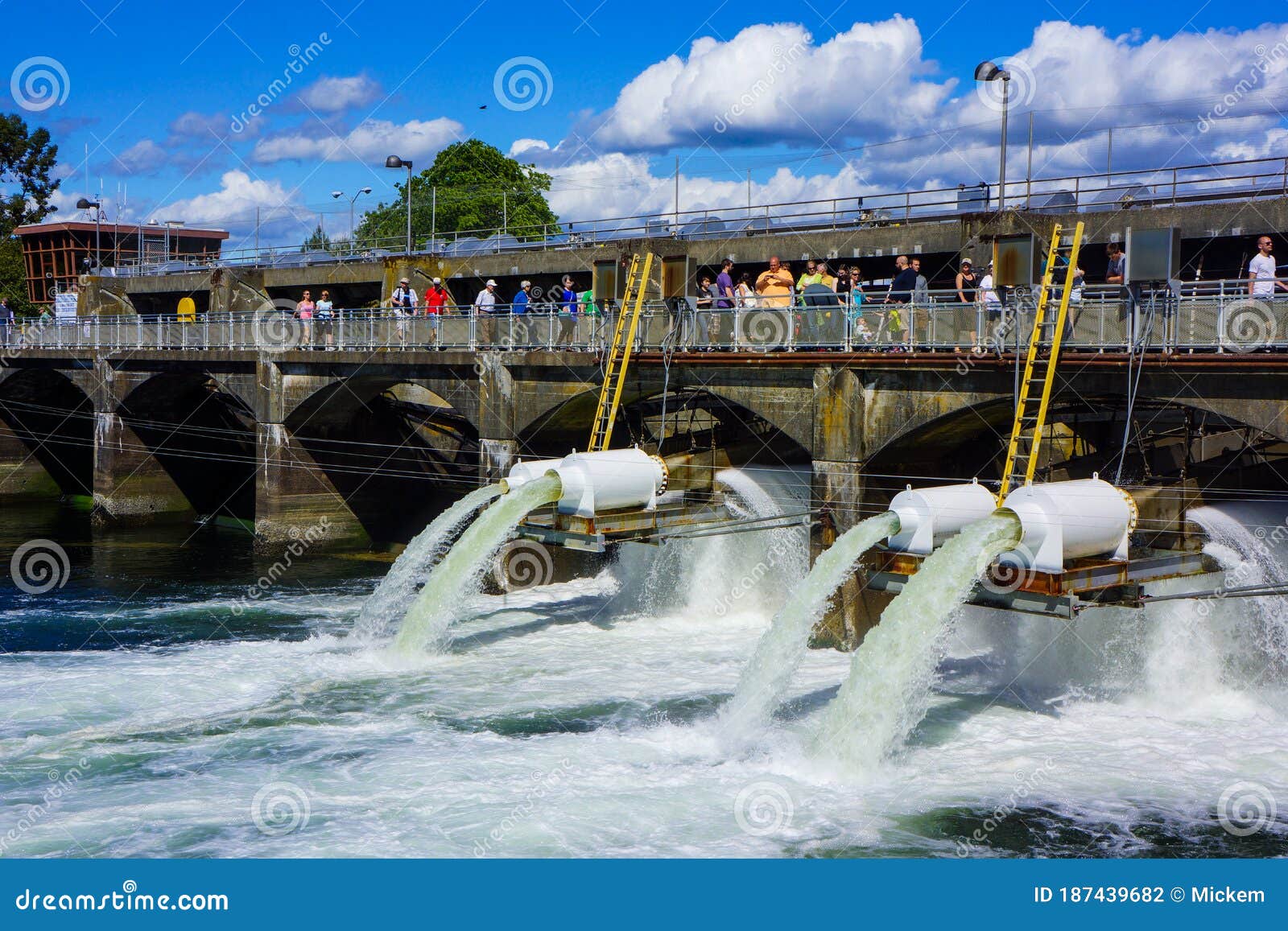
The engineers devised a clever form of protection. They built a special channel along the bottom of the large lock to collect the heavy salt water and carry it back out to sea. It is a little like placing a small spoon in a bowl of soup and scooping the salt from the bottom each time. Thanks to this system, Lake Washington remained fresh and clean, even though seawater knocks on the lock gates every day.
Try a small experiment at home. Pour warm fresh water into one glass, and dissolve a generous amount of salt in another. Add food coloring to the salt water, then very carefully pour it down the side of the first glass. You will see that the colored salt water initially sinks to the bottom and settles there in a layer. Seawater behaves in much the same way near the locks!
Salmon Making Their Way Home
There are other important heroes in this story: salmon. They are born in freshwater streams, then swim out to the salty sea. When they mature, they return home to reproduce. In the past, they could swim freely through the rivers, but the canal and locks became obstacles for them.
Once again, engineers came to the rescue. A fish ladder was built beside the locks. It is a long pool with steps: the fish leap from one level to the next, gradually making their way upward like climbing a slope. And so people could watch them, a large viewing window was built into the wall. You can walk in, look through the glass, and see salmon swimming right in front of you! The best time to see them is in summer and autumn, when the fish head upstream to spawn. Some are silvery, others reddish, and all of them are determined to get home.
To me, this is one of the most touching details of the whole story. When people built a major canal for ships, they did not forget about the little fish. Of course, things did not turn out perfectly, and scientists still monitor the salmon’s well-being. But the example itself shows that construction and care for nature can go hand in hand.
What Other Cities Can Learn from This Story
Today, tens of thousands of vessels pass through the Ballard Locks each year: yachts, fishing boats, barges, and even small ships. Nearby is a beautiful park with a garden where people can stroll and watch this entire “stairway for ships” at work.
Here are some lessons cities around the world can take from Seattle’s story:
- Before connecting different bodies of water, think about how they will interact and find a way to protect the more vulnerable one.
- Along with people and ships, remember the inhabitants of the water: fish, birds, and plants.
- Major construction projects always change something, so it is important to consider the consequences in advance and look for “kind” solutions.
- It is useful to preserve places where people can see how everything works. This helps children learn to respect both nature and science.
Conclusion
Seattle’s Ship Canal and locks show that an engineer can be a little bit like a magician. Engineers do not use magic wands, but they can invent a stairway for ships, a barrier against salt, and steps for fish. If you ever need to solve a difficult problem, remember the freshwater lake and salty sea that became friends thanks to clever and caring people. Who knows? Perhaps you will be the one to come up with the next big idea that helps nature and people live side by side without getting in each other’s way.