Imagine that your school suddenly banned the sale of ice cream. Would anyone want ice cream less? Probably not: someone would start selling it secretly out of a backpack. That’s what happened in Seattle a hundred years ago—except that instead of ice cream, the product was a strong drink for adults, and instead of a backpack, there was an entire sea route through foggy straits.
A Ban That Came Early
Many people think that Prohibition began everywhere in America at once, in 1920. But Washington State, where Seattle is located, got there first. It banned alcohol in 1916, four years before the nationwide ban.
Across the water was Canada. Things were different there: after several years of strict prohibition, the authorities in the province of British Columbia allowed alcohol sales under government control. Canadian companies could also legally sell alcohol abroad, including to the United States. The result was an odd situation: on one side of the straits, the goods were legal; on the other, they were forbidden. Between them lay a stretch of water several dozen kilometers wide.
Secret Routes on the Water
How could you get a shipment across the straits? The Coast Guard might spot it during the day, so boats traveled at night—or better yet, in the thick fog that often envelops Seattle. They crossed the Strait of Juan de Fuca and Puget Sound, then hid among the islands. The cargo was unloaded in secluded coves, and trucks then delivered it around the city.
It was like a very big, very dangerous game of hide-and-seek. The Coast Guard searched; the smugglers hid. The sailors knew the currents, shallows, and islands well, which helped them avoid capture. In those years, the Coast Guard also began building special speedboats to compete with them.
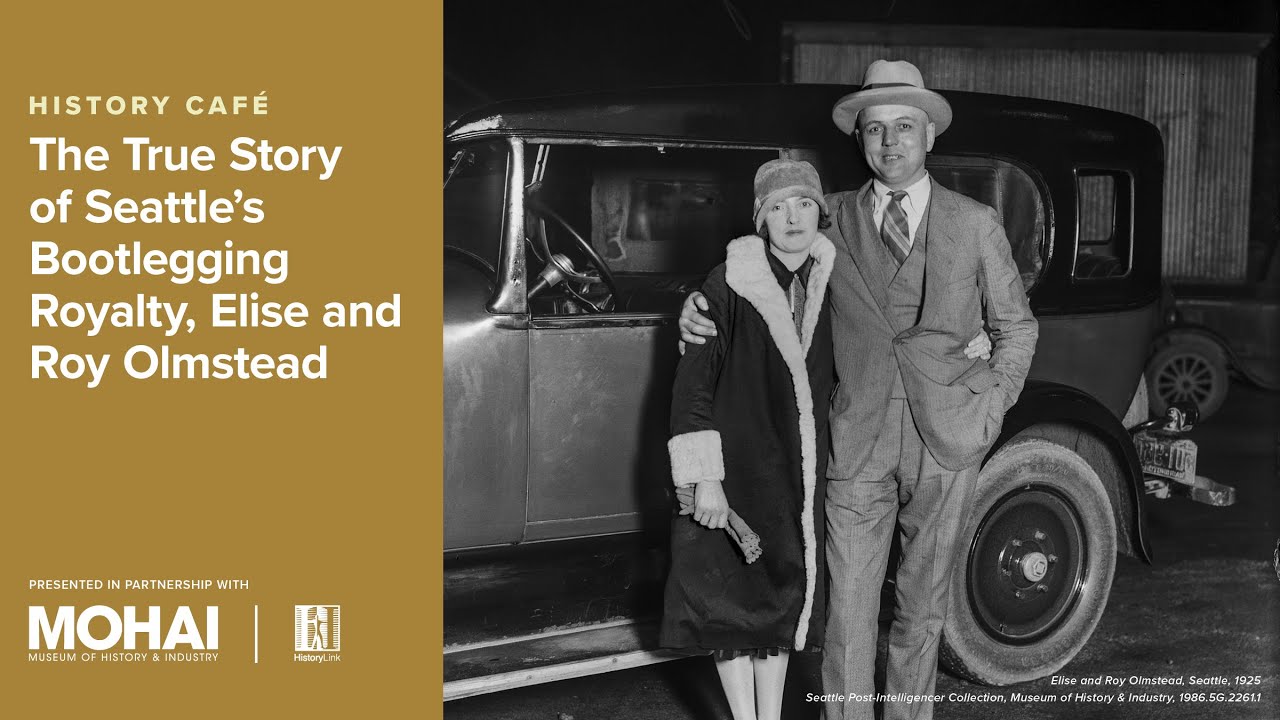
The best-known organizer of the network was Roy Olmstead. He had served on the Seattle police force, then ended up on the other side of the law. According to historians, he employed about fifty people: drivers, sailors, accountants, and even lawyers. Huge sums of money changed hands. Estimates vary, but the business turned over millions of dollars a year. For comparison, an ordinary worker earned a few hundred dollars a year at the time.
Bedtime Stories with a Secret at Sea
The most unusual detail in this story has to do with the radio. The Olmsteads had their own radio station. Roy’s wife, Elsie Olmstead, went on air as “Aunt Vivian” and read bedtime stories to children. Many Seattle children fell asleep to her voice.
Some historians write that the radio was also used to relay business messages, since communication between boats, shore, and trucks was essential. But the details are still debated, and we don’t know exactly what the evidence proves. What we do know is that radio was new in those days, and not everyone understood how it could be used. To me, it’s a remarkable combination: a comforting voice reading stories, with a secret network operating in the fog nearby.
In 1926, Roy Olmstead went on trial and was convicted. He spent several years in prison on McNeil Island, then was pardoned by President Franklin Roosevelt in 1935. Later, he took up entirely different pursuits, unrelated to maritime transport.
Where the Money Went: From Bottles to Rules
The most interesting part begins when we look at what remained after Prohibition. Here are some important dates:
| Year | What happened |
|---|---|
| 1916 | Washington State bans alcohol |
| 1920 | Prohibition takes effect nationwide |
| 1926 | Olmstead and his network go on trial |
| 1933 | Prohibition is repealed throughout the United States |
| 1934 | State-run liquor stores open in Washington, and a special commission begins regulating alcohol |
| 1935 | Roosevelt pardons Olmstead |
| 2012 | State residents vote to return alcohol sales to private stores |
What was the result? Canadian whiskey producers grew considerably wealthier during Prohibition, thanks to the enormous market across the border. Some of them became known around the world. Washington State drew a lesson: if alcohol is banned, the money goes to secret operators; if it is legal and regulated, it goes into the public treasury. So after 1933, the Liquor Control Board was established, and sales took place through state-run stores. That system lasted for almost eighty years, until state residents decided to change it in 2012.
Today, Washington State is home to many small breweries and distilleries. They operate openly, pay taxes, and follow the rules—and their owners don’t need to hide anything along foggy routes.
What This Means for Us
It’s easy to turn this story into an adventure, but it has a serious side, too. A ban that was meant to be a simple solution led to secret routes, broken laws, and huge sums of money in the wrong hands. When the state chose regulation instead of a total ban, things took a different course.
To me, the main lesson is that simple bans rarely work on their own. We need to understand why people want something and come up with rules that work for everyone. And when you’re falling asleep to a bedtime story, it’s worth remembering: behind every story there may be another, much more complicated one—and it can be fascinating to untangle it.