Have you ever heard the phrase “to end up at the bottom”? In English, there’s a similar one—“Skid Row”—and people all over the world know it. But few people know that the expression was born in one specific place: in Seattle, on a real road of logs. And even fewer know that it was around this road that a tradition of caring for people first took root—one that still lives on in the city today.
The road the giants slid down
Picture a massive forest—so dense that the trees there are taller than a ten-story building. That’s the kind of forests that surrounded young Seattle in the 1850s. The city was just beginning to take shape, and timber was needed by everyone: for homes, ships, and bridges. In 1852, an entrepreneur named Henry Yesler built a sawmill on the shore of the bay—an enormous machine that cut tree trunks into boards.
But how do you haul the felled trees from the hills down to the sawmill? Horses couldn’t handle those giants. So the workers came up with a trick: they laid a road made of logs straight down the slope of the hill, greased them with grease—and the huge logs slid down on their own, like sleds down a hill. The road was called “Skid Road”—the “sliding road.” Today it’s Yesler Way in the heart of Seattle.
It sounds fun—like giant wooden slides! But beneath that fun hid very hard work.
People nobody helped
The lumberjacks who worked on this road and in the forests around Seattle lived extremely difficult lives. They went into the woods for several months, sleeping in cold barracks, working from sunrise to sunset with massive saws and axes. The work was dangerous: a falling tree could kill a person in seconds. If a worker got injured—no hospital, no help. If someone fell ill—no money for treatment. If they lost their job—nowhere to go.
After a few months in the forest, the lumberjacks would come into the city—tired, lonely, with only a little money in their pockets. They gathered specifically around Skid Road: there were cheap hotels, taverns, and shops. Over time, the area became a place where the city’s poorest and most exhausted people lived.
That’s why the word “Skid Road” (and later “Skid Row”) came to mean “a place where people who didn’t get lucky end up.” It’s a little sad—because these people weren’t bad. They simply worked so hard that they had no energy left for anything else.
When people decided to help each other
But this is where the most surprising part of the story begins. Lumberjacks and workers around Skid Road realized something important: alone, they couldn’t survive—but together, they were strength.
In the early 1900s, an organization with an unusual name appeared in the area—Industrial Workers of the World, or simply “Wobblies” (so they were nicknamed because of their playful pronunciation). They weren’t rich people and they weren’t politicians. They were the workers themselves—lumberjacks, dockworkers, builders. They met in small halls near Skid Road and figured out how to help one another.
The Wobblies did remarkable things. They organized libraries so workers—many of whom had never attended school—could read books. They raised money for those who were injured on the job. They demanded that the owners of factories and sawmills pay people fairly and not force them to work 16 hours a day. One of their slogans was simple: “An injury to one is an injury to all.”
That sounds a lot like what sometimes happens in a good classroom: if someone starts helping a newcomer or someone who’s sad, gradually everyone joins in. Kindness is contagious. And that’s exactly what happened in Seattle.
How the old road lives on today
More than a hundred years have passed. The log road is long gone—its place is now ordinary asphalt. But the neighborhood around it—Pioneer Square—still preserves the spirit of those lumberjacks who chose to care for one another.
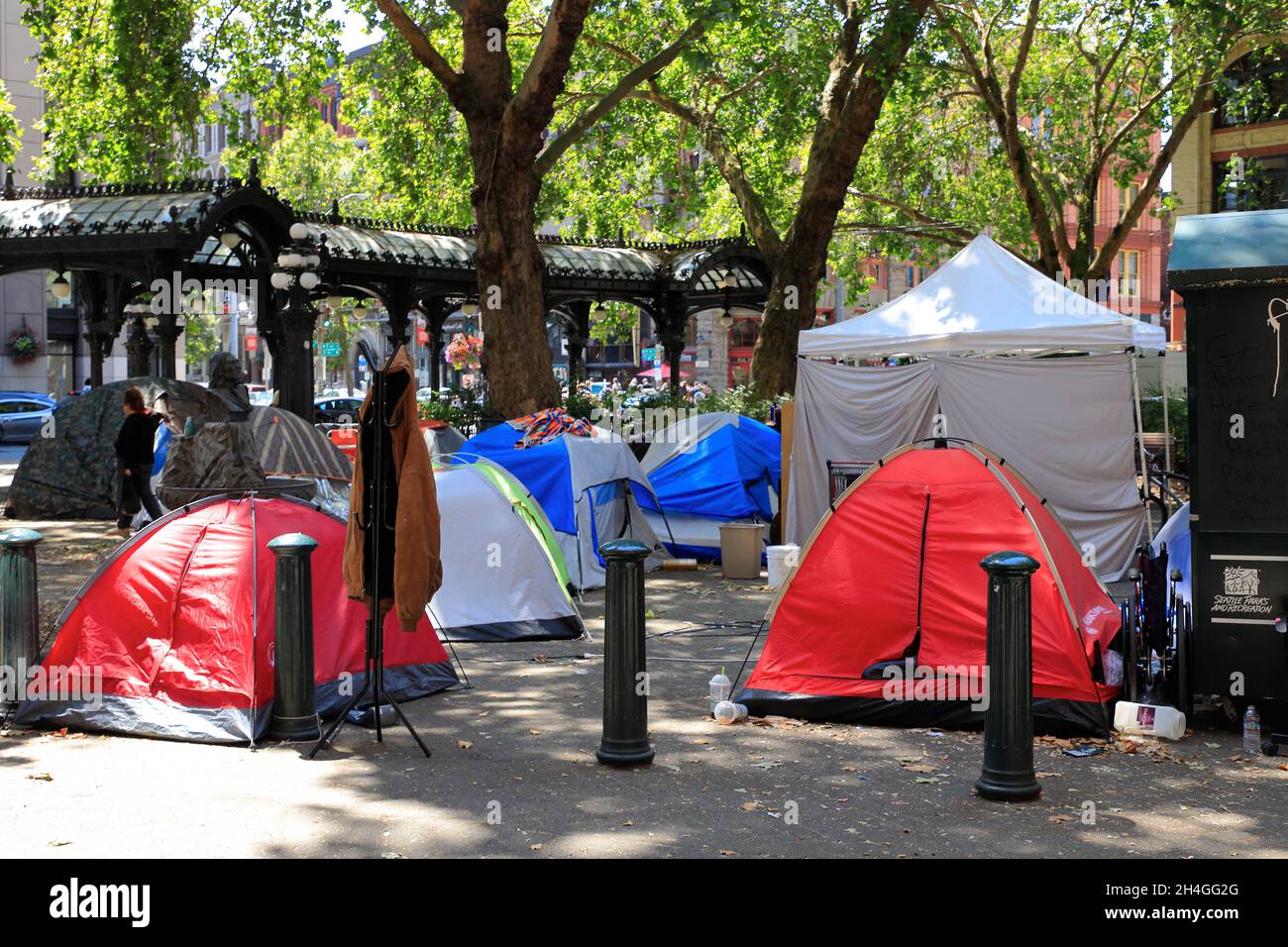
Today, Pioneer Square is home to dozens of organizations that help people who find themselves in difficult circumstances: the homeless, people who have lost their jobs, and those who need food or medical care. There are shelters, free kitchens, and aid centers here. This isn’t an accident—it’s a memory of those workers who were the first to say, “We won’t abandon our own.”
To me, this is one of the most beautiful stories about how a place can carry the soul of the people who lived here long ago. The log road gave the world a word. But even more importantly, it gave the city an example of what it means not to leave anyone alone.
So if you ever find yourself in Seattle and walk along Yesler Way, remember this: beneath your feet is the history of people who figured out that helping others isn’t weakness—it’s strength. And that idea still lives on in the city, the way the roots of an old tree live—out of sight, but deeply strong.