In 2010 biologists noticed something surprising on the Duwamish River, which runs through south Seattle: river otters were playing on its banks. It was a real miracle, because the last time otters had been seen here was more than a century ago. The river had been too dirty, too sick for these clever animals. But where did that pollution come from, and why is Seattle still, decades later, trying to fix what was done to the river? This is the story of how decisions made long ago can affect nature even today.
A river straightened like a ruler
The Duwamish used to be a very different river. It wound like a snake, creating quiet backwaters and marshy banks where birds nested and fish spawned. The Duwamish people, after whom the river is named, fished for salmon here and built their homes along its shores.
But in the early 1900s Seattle experienced an industrial boom. The city grew at an incredible pace, and the river was “improved” for industrial needs. Engineers straightened its meandering channel, turning a natural river into an almost straight canal about 12 kilometers (7.5 miles) long. They removed the bends and filled in the marshes. The river came to resemble an industrial pipe.
Why did they do this? At the time people thought a straight river would be more convenient for ships and factories. No one considered that the river’s bends were important: they slowed the flow, giving fish places to rest and allowing silt and debris to settle where microorganisms could break them down. The straightened river lost its natural self-cleaning system.
When the river became a dump
The next 70 years were a disaster for the Duwamish. Dozens of factories sprang up along its banks: Boeing built airplanes, metalworks smelted metal, chemical plants produced everything from paints to pesticides. And they all dumped waste directly into the river.
That was considered normal at the time. There were no strict environmental protections. People assumed the river would “digest” all the trash and chemicals. But the river couldn’t keep up. Toxic substances accumulated on the bottom: polychlorinated biphenyls (PCBs) — chemicals used in electrical equipment — arsenic, lead, dioxins.
By the 1970s the Duwamish had become one of the most polluted rivers in America. Fish living there accumulated poisons. Bottom-dwelling crabs were covered in strange tumors. Birds that ate river fish laid eggs with thin shells that broke easily. And otters, which need clean water and healthy fish, disappeared entirely.
Cleanup that takes decades
In 2001 the U.S. federal government designated the lower Duwamish River a Superfund site — a special designation for the most contaminated places in the country that require large-scale cleanup. It sounds impressive, but in practice it meant acknowledging: “We have damaged this place so badly that special efforts and massive funding will be needed to fix it.”
Cleanup didn’t actually begin until 2013 — twelve years after the designation. Why the delay? First it was necessary to determine who was responsible and who should pay. Boeing, the City of Seattle, King County — they all fought in court. Scientists then had to study every stretch of the riverbed, map the contamination, and decide what to do with the toxic sediment.
The cleanup plan looks like this: specialized dredgers (machines that operate underwater) pump contaminated sediment from the riverbed. That sediment can’t just be dumped — it’s sealed in special containers and sent to hazardous-waste landfills. Then a layer of clean sand and gravel is placed on the cleared bottom — like applying a clean dressing to a wound.
But here’s the problem: cleaning the entire river will take about 17 years and cost more than $340 million. That’s roughly the cost of building three large schools. And even after that the river won’t be completely clean — some poisons have penetrated sediments so deeply they can’t be entirely removed.
Signs of hope
Despite all the problems, there’s good news. Those same otters that returned in 2010 are a sign the river is beginning to recover. Otters are very picky about water quality. If they’re living here, something is improving.
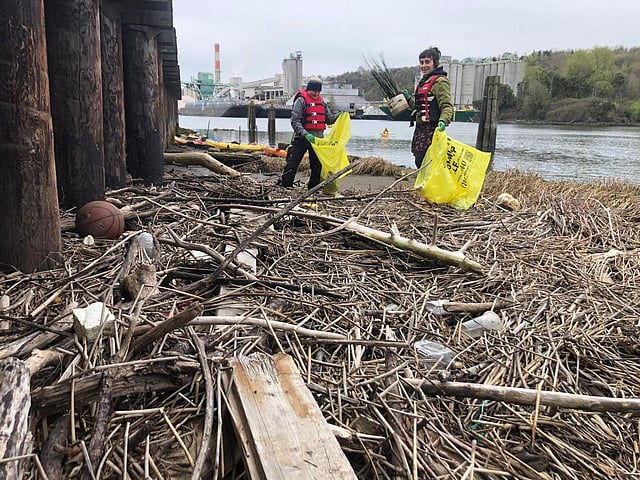
Local activists formed an organization called Duwamish Opportunity. They aren’t just waiting for the government to clean the river — they plant trees along the banks, remove trash, and teach local schoolchildren to care for the river. One activist, Pauline Fong, a descendant of Chinese immigrants who lived by the river, says: “We can’t change the past, but we can change the river’s future.”
In 2020 biologists recorded 23 fish species in the river — more than two decades earlier. Seals have returned, swimming in from Puget Sound. Even salmon, which almost disappeared from the river, are starting to come back, although their numbers remain small.
A lesson for the future
The story of the Duwamish is a lesson about how quickly nature can be damaged and how long it takes to restore. Factories polluted the river for 70 years, and cleanup will take nearly 20 years and huge sums of money. It’s like scattering toys across a room in an hour and spending a whole day picking them up.
Today Seattle has strict laws: factories can no longer simply dump waste into the river. Every facility must treat its effluent. But the Duwamish reminds us that regulations came too late for this river.
When adults make decisions about how to use nature — straightening a river, building a factory, cutting down a forest — they often think only about the present. They assume nature is endless and can endure anything. But the Duwamish shows that nature remembers. Poisons dumped into the river in the 1950s still sit on the bottom. Otters that vanished a century ago are only now beginning to return.
The good news is that nature can forgive and heal — if we help. Every tree planted on the Duwamish’s banks, every kilogram of trash removed, every new bird nest — these are small steps toward recovery. And maybe, many years from now, children will swim in this river without knowing it was once too sick even for otters.