Imagine that inside your body there are two tiny organs—about the size of a fist—that do an enormous job every day. They filter all of your blood, removing everything harmful and unnecessary from it. These are the kidneys. But what happens if they suddenly stop working? Not so long ago, the answer was terrifying: the person would die. Then one night, a doctor from Seattle woke up with an idea—and an engineer helped him turn it into reality.
Kidneys are small, but incredibly important
Imagine a fish tank. If you don’t clean the water, it turns cloudy and toxic, and the fish die. The kidneys are like the filter for such a tank—only inside your body. Every minute, they run about a liter of blood through themselves—roughly five cups—and remove everything extra that has built up.
When the kidneys become sick and can no longer keep up, harmful substances start to accumulate in the blood. The person feels worse and worse. Doctors long knew that blood could be purified outside the body—using a special device called a dialysis machine. It takes the blood, runs it through a filter, and returns it to the body—just like that fish-tank pump.
But there was one huge problem: how to connect a person to this machine not just once, but again and again—for months and years. After each procedure, the veins were damaged, and soon they could no longer be used. People died—not because there were no machines, but because there was no way to connect to them.
The doctor and the master: a great idea from a night-time dream
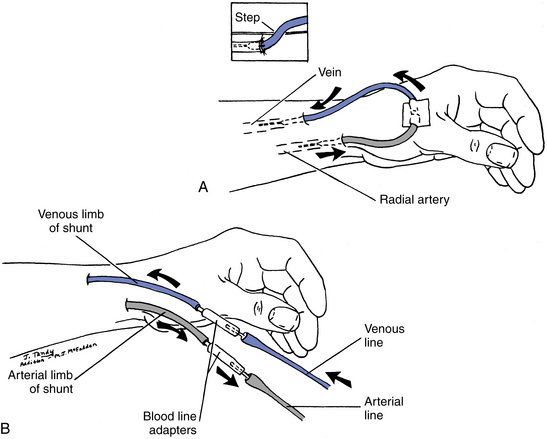
In 1960, a doctor named Belding Scribner worked in Seattle. He treated people with kidney disease and each day saw them leave—because medicine had not yet found a solution. One night, Scribner woke up with a thought that wouldn’t let him go: what if you make a small tube—a shunt—that would permanently connect an artery and a vein in the patient? Then the dialysis machine could be attached to it again and again, without causing harm.
But the doctor didn’t have the necessary tools. That’s when Wayne Quinton came to the rescue—an engineer from the same University of Washington. Quinton was a true craftsman: he knew how to build medical devices with his own hands, understood materials, and had insight into how the body works. Together, they came up with a shunt made from Teflon. You know what nonstick pans are made of? Exactly—that’s Teflon! This smooth material prevented blood from clotting inside the tube.
Their first patient was Clyde Shields—a man doctors said had very little time. After Scribner and Quinton placed the shunt, he lived for another eleven years. Eleven years he simply wouldn’t have had without that tiny Teflon tube. When you read about it, it’s hard not to