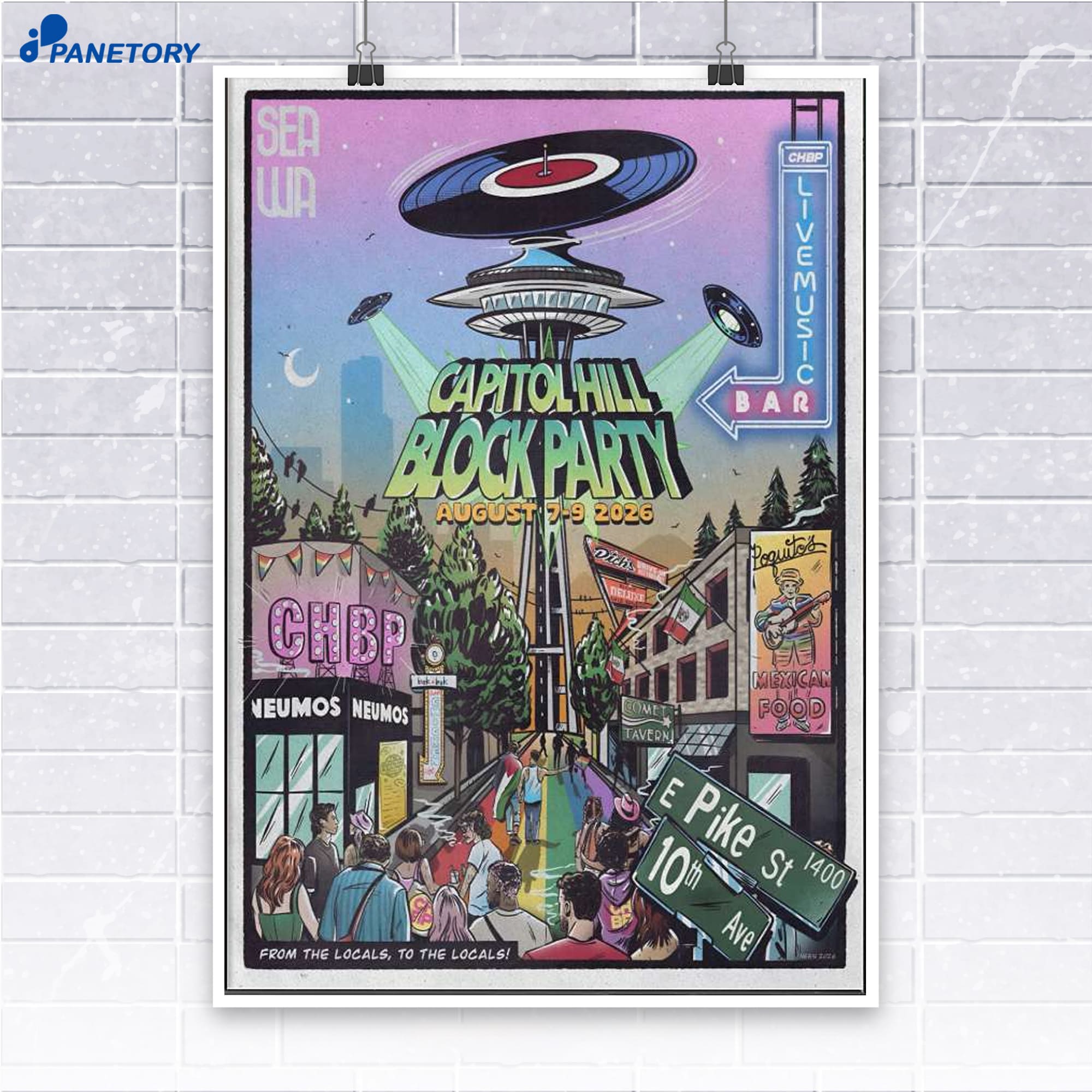
Every summer in Seattle’s Capitol Hill neighborhood, several streets are closed off, stages are set up, and thousands of people come to listen to music. But the festival began very modestly, in 1997, as a neighborhood party. Its early years left almost no trace, so uncovering the truth takes real detective work: piecing together people’s recollections, old newspapers, and chance photographs.
Why So Little Is Known About the First Festival
Imagine throwing a small party in your backyard for friends. You don’t think, “Twenty years from now, this will be in an encyclopedia.” You just hang up some balloons. No one makes a poster for a museum or files the paperwork away.
That’s how it was in 1997. The organizers were local residents, small business owners, and people from the music scene. They were putting on a party for their neighbors, not making history. So today, we don’t have a complete “chronicle” of the first festival. We know the year and the place, and that it was a small neighborhood event. The details have to be pieced together.
The Neighborhood Where It All Happened
To understand where the festival came from, you need to know a little about the streets. Near Capitol Hill is the Pike/Pine neighborhood, named for its two main streets, Pike and Pine. In the early 20th century, car dealerships and repair shops were located there, earning the area the nickname “Auto Row.” Later, fewer cars were sold there, and the spacious buildings became home to clubs, bars, and rehearsal rooms. The neighborhood became a favorite spot for musicians and their fans.
So the festival didn’t spring up out of nowhere. It was a natural extension of neighborhood life: people who listened to music in clubs every week decided to take it out onto the street.
Three Kinds of Clues
“Detective” historians rely on different sources, each with its own strengths and weaknesses.
Eyewitness accounts. These are the most vivid “clues.” People remember the smells, the laughter, and the feeling of celebration. But memories change over time. Two participants may remember differently who came up with what, because each saw the festival from their own perspective. Dave Meinert, a music organizer and prominent figure in the local scene, is often mentioned in these accounts. But it would be inaccurate to conclude that he created the festival on his own.
Newspapers and archives. Local neighborhood and city publications, including The Stranger, covered events on Capitol Hill. Libraries and city archives preserve back issues and documents, such as permits to close the streets, since putting on a festival requires coordinating with the city. Paper records dates better than people do, but they tell us less: a news article won’t say how participants felt.
Posters and photographs. Old flyers and snapshots show who performed, what people looked like, and what the street was like. They’re often kept at home, in attics, or in musicians’ boxes. Finds like these can sometimes turn the story upside down: it turns out something happened earlier, or differently, than everyone thought.
What This Story Teaches Us
When answers about the past don’t match, that doesn’t mean the past “doesn’t exist.” Sources need to be checked against one another: if an archival record confirms someone’s account, it’s more reliable. If the sources conflict, an honest historian writes, “It’s not known for certain.”
What I especially like about this story is that the festival doesn’t belong to just one person. Many people built it: those who set up the speakers, talked with the city, brought food, and came to listen. Things like this are rarely the work of one person, which is why it’s important to remember everyone.
Try It Yourself
You can be a “detective of the past,” too. Ask your grandmother or grandfather how they celebrated when they were your age, and write down what they say. Then find an old photograph and compare the two. You’ll probably notice that they remember the same event differently. That means you’re already working like a real historian.
The Bottom Line
The story of Capitol Hill’s first street party shows that big festivals can have small beginnings, and that their traces are easy to lose. Preserving them takes people who tell the stories and people who write them down. If no one records what happened, a few years later “how it all was” becomes nothing but a pretty legend.