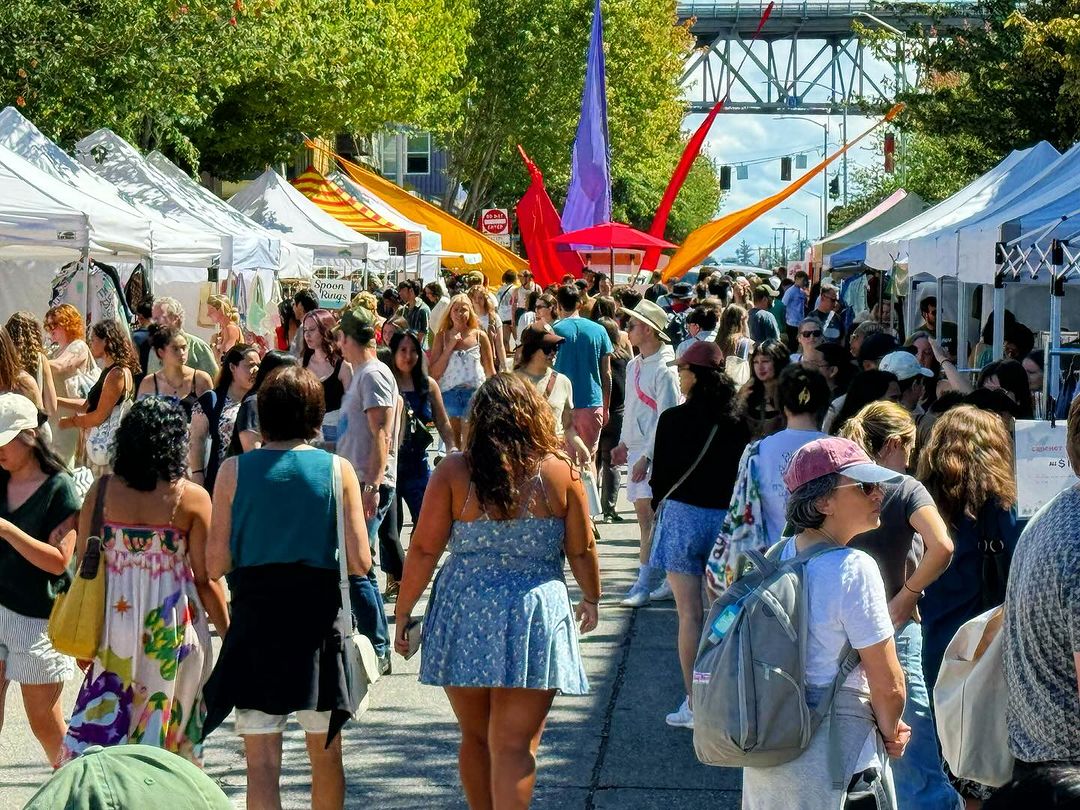
In Seattle’s Fremont neighborhood something unusual happens every Sunday. People come to the market not just for vegetables and old books. They bring strange machines they built at home, solar panels attached to toys, and bicycles that can make cocktails. It’s a place where engineers and artists turn trash into treasures, and ordinary people learn to invent right out on the street.
The Fremont Sunday Market has become more than a shopping destination. It has turned into a living laboratory where technology meets art and discarded items get a second life thanks to human ingenuity. Here you can see real engineering thinking at work—serving everyday people and their dreams rather than large corporations.
Trading inventions instead of money
In the 1990s an unusual tradition emerged at the Fremont Sunday Market. Engineers working at big Seattle tech firms began coming on weekends not to work but to play. They brought their home-made inventions and offered to swap them for other interesting things.
Imagine: one person built a small robot from old computer parts that can draw patterns in the sand. Another assembled a musical instrument out of plumbing pipes. A third figured out how to make an old bicycle spin a blender to make smoothies without electricity. All these inventors met at the market and exchanged not only objects but ideas.
It was a true “barter of the future” — people traded technology for technology, knowledge for knowledge. Money wasn’t the main thing. What mattered was respect for someone else’s inventiveness and the desire to learn from one another. An older engineer who had spent many years working on airplanes said, “In the office I solve the problems I'm given. Here at the market I solve problems I come up with myself, and that makes me a child again.”
Solar sculptures and bicycle wonders
Particularly interesting were inventions that combined art and technology. Kinetic sculptures appeared at the market—works of art that move. But not by motors; by sun or wind.
An artist named Sarah made metal flowers that opened in the morning when sunlight hit them and closed in the evening. She used small solar panels and simple mechanisms that could be assembled from things people throw away. Children would stand for hours by her stall watching the metal petals slowly turn to follow the sun like real sunflowers.
Another inventor turned an old bicycle into a mobile phone-charging station. Pedaling generates electricity that charges batteries. He rode around the market offering people: “Pedal for five minutes—get a free phone charge!” Many agreed, and it became a fun game. People pedaled, laughed, talked to one another, and at the same time learned how electricity works.
There were even stranger things. For example, a musical setup made from old computer disk drives. When the disks spin at different speeds they make different sounds. One programmer taught them to play melodies, and a whole orchestra arose from what was headed for the landfill.
Kid inventors and lessons outdoors
The most important thing happening at this market was learning. The adult inventors didn’t hide their secrets. On the contrary, they happily showed children how everything worked.
In one corner of the market a “Young Engineers Zone” formed. There children could try assembling simple mechanisms from construction kits, old toys, and safe parts. volunteer engineers helped them understand how gears, levers, and electrical circuits work.
A ten-year-old girl named Emily first came to the market with her father in 1998. She saw an inventor making a lamp from a can, an LED, and a small solar panel. “Can I try?” she asked. The inventor nodded and showed her how to connect the wires. Twenty minutes later Emily held her own solar lamp. “I made this myself!” she shouted, and everyone around smiled.
Later Emily said that that day at the market helped her realize: technology isn’t something scary and complex that only grown men in white coats make. It’s something anyone can create with curiosity and a willingness to learn. Today Emily works as an engineer at a company that builds eco-friendly energy sources.
The “fix, don’t toss” philosophy
A special culture of how to treat things and technology grew at the Fremont Sunday Market. People there believed that almost any broken item can be fixed, and any old object can be turned into something new and useful.
There was an elderly craftsman everyone simply called Joe. He brought a toolbox to the market and a sign: “Free repair. Bring what’s broken—let’s try to fix it together.” People brought him toasters, radios, toys, lamps. Joe didn’t just fix things—he explained what was broken and why, how it worked, and how to repair it yourself next time.
“When we throw something away we throw away not just plastic and metal,” Joe said. “We throw away someone’s labor, someone’s knowledge, someone’s time. Every object is a story of how someone invented and made something. Isn’t it more interesting to learn that story and continue it than simply toss it?”
This philosophy turned the market into a place where technology serves people, not the other way around. There was no need to buy a new phone every year or throw away a bicycle for a broken wheel. People were taught to think: “How does this work? What’s broken? How can I fix or improve it?”
How the market changed a whole city
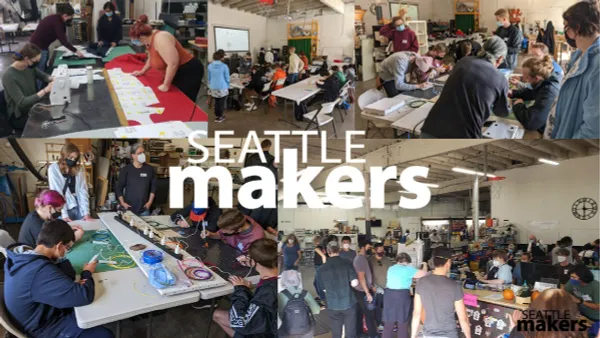
What started at the Fremont Sunday Market gradually spread through Seattle. The idea of “makerspaces”—workshops where people gather to invent and learn—came from here.
Today Seattle has dedicated labs where anyone can go to use tools, 3D printers, wood and metalworking machines. There are schools that teach children not only math and reading but also how to solder electronic circuits, program robots, and make useful things with their hands.
The spirit of the Sunday Market is a spirit of openness, creativity, and belief that technology should be accessible to all. The place proved you don’t have to be a professor or work for a big company to invent. All you need is curiosity, a desire to learn, and a willingness to share knowledge with others.
Every Sunday the market continues. There you can still meet engineers with their home inventions, artists who turn trash into art, and children learning to understand how the world around them works. It’s a reminder that real innovations are born not only in corporate offices but on streets where ordinary people gather to create, learn, and make the world a bit more interesting.