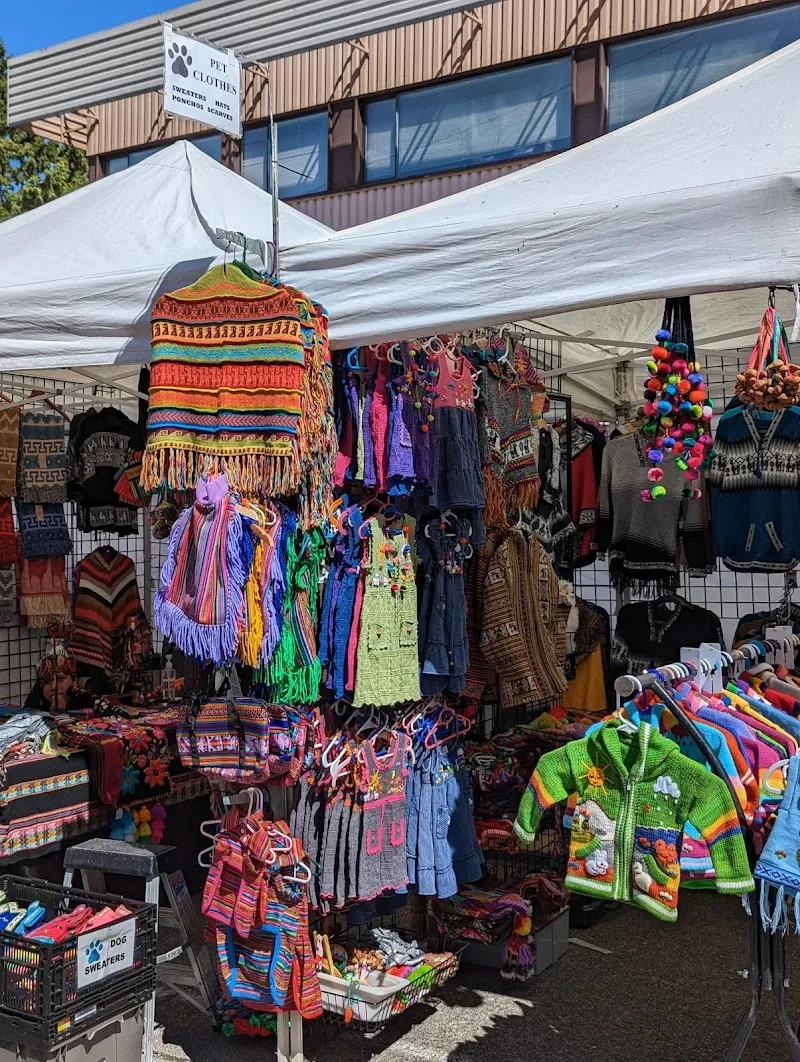
Imagine a Sunday morning. A light drizzle is falling, but stalls are already lining the street: bright scarves for sale here, old records there, and the smell of fresh flatbreads a little farther on. This is the Fremont Sunday Market in Seattle’s Fremont neighborhood. It operates almost year-round, rain or shine, and many people consider it the soul of the neighborhood. But for a place like this to survive, it needs care—and that is the story we are telling.
A Neighborhood Proud of Being Quirky
Fremont calls itself the “Center of the Universe.” It is a joke, but residents make it with a straight face: the neighborhood even has a sign whose arrows show the distances to the most unexpected places. Its motto is in Latin, but with a twist: De Libertas Quirkas. It means “Freedom to Be Quirky.” The words were deliberately invented to sound as though they were Latin, making a joke—and that is very much in Fremont’s spirit.
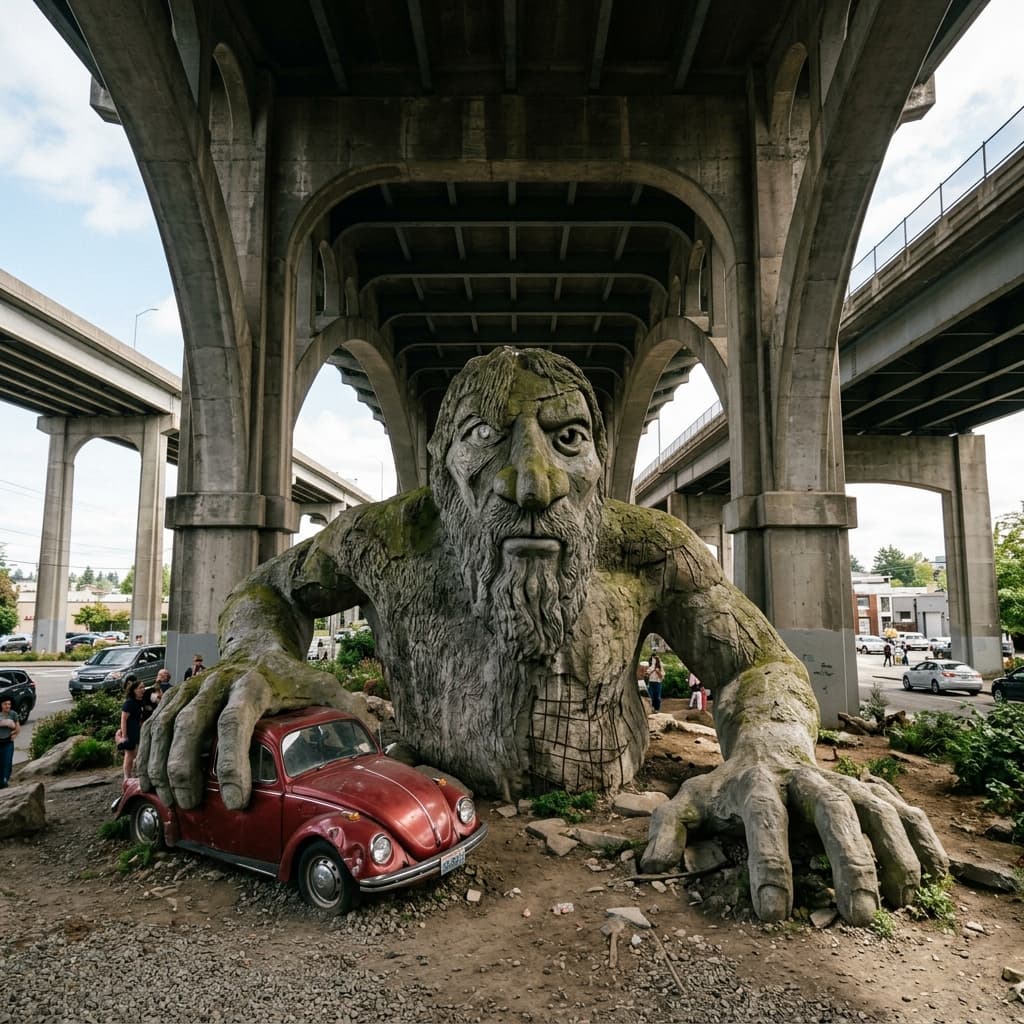
The neighborhood did not become this way by accident. In 1990, residents and artists decided to do something about a dark space beneath the Aurora Bridge. It had once been gloomy, and people dumped trash there. Instead of simply waiting for someone to clean it up, they organized a competition and created a huge concrete troll. It clutches a real old car in its fist. Today, it is one of Seattle’s best-known landmarks; once, the site was abandoned.
Other Fremont traditions appeared around the same time. The annual Solstice Parade adopted some playful rules: no words or written signs, no animals, and no motors. Everything had to be made by hand and powered by imagination. The market grew from the same idea: let the street be filled with things made by hand, found in attics, or invented by the vendors themselves.
The Decisions That Made the Market Special
The Fremont Market is not like an ordinary store. Here, you can find:
- craftspeople who sew, sculpt, and paint their own work;
- collectors selling old things with a story, such as rare badges or books;
- street food and musicians performing right between the stalls.
This kind of market grew out of a few simple agreements: make room for small vendors, do not turn the street into a copy of a shopping mall, and remember that shoppers come not only to buy something, but also for the atmosphere and the conversations. The vendor is often the person who made the item and can explain how it came to be.
Today, these arrangements have become fragile. Land in Seattle is very expensive. Offices belonging to major technology companies, including Google, have grown in the area around Fremont. New homes and cafés have appeared. That is not necessarily a bad thing—people need jobs—but the city is gaining “competitors” to its small markets. On expensive land, it is more profitable to build something tall and costly, while stalls selling scarves and records may not look as lucrative.
A Garden Where Different Flowers Need to Grow
Think about a garden. If you plant only one kind of flower, it may look beautiful in the first spring, but eventually it will become boring. If daisies, mint, and bright sunflowers grow among the tulips, however, the garden remains pleasant to look at all summer—and it will attract more butterflies.
The market is like such a garden. If it is left with only stalls selling the same kinds of goods found in any store, people will have little reason to visit. But if it includes different craftspeople, vintage items, and delicious food, the market will continue to draw people in. To make that possible, it is important:
- that stall space remains affordable for vendors;
- that streets can be closed to traffic for the market on Sundays, even though the city has many other demands;
- that neighbors, vendors, and officials discuss their differences and listen to one another.
People can argue about this for a long time. Some say the city needs to build more homes and offices. Others point out that the market and Fremont’s quirky character are precisely why tourists and residents of other neighborhoods come here. If the market disappears, part of the reason people love the neighborhood will disappear with it. In my view, there are few “villains” in debates like this: each side has its own concerns, but they will still have to find a way to work together.
What Seems Most Important to Me
What I like about this story is that the market survives not because of money, but because of habit. People come on Sundays because they feel good there, while vendors return because familiar faces are waiting for them. The troll beneath the bridge is still standing because someone once decided, “Let’s make this ourselves.”
To find out how the market is operating today, it is best to check its official website or local news sources. Schedules, rules, and locations may change, and I cannot guarantee the most up-to-date details.
In Conclusion
The Fremont Market reminds us that cities are held together by more than large buildings. They are also sustained by small places people want to visit. Turning a gloomy corner into art and giving the street to craftspeople once seemed strange, but that decision is exactly what made the neighborhood special. Now residents face a question: will we have enough courage and patience to preserve it?
If you ever find yourself in Seattle, visit a market like this on a Sunday morning. Buy something handmade and ask the vendor how they came up with the idea. Who knows—perhaps these small conversations are precisely what help places like this continue to live on.